Call Us Today! +86-13761906384

What Are The Misconceptions About 304 Stainless Steel?

304 stainless steel is one of the most widely used stainless steel grades in industries ranging from kitchen equipment to construction. Its corrosion resistance, durability, and versatility make it a top choice for manufacturers and buyers alike. However, misconceptions about its properties and applications often lead to wrong purchasing decisions. In this article, we debunk common myths, highlight its real-world applications, and provide guidance on purchasing 304 stainless steel efficiently.

Top 6 Misconceptions About 304 Stainless Steel

304 stainless steel is the stainless steel grade that we hear the most every day, but often we are prone to some misunderstandings because we don’t know about it. This issue will introduce 6 common misconceptions about 304 stainless steel.

Myth 1: 304 Stainless Steel Will Not Rust

The vast majority of people will think that stainless steel will never rust. This idea is wrong. Stainless steel never rusts, just not easy to rust. Stainless steel surface has a layer of oxide film, that can isolate the oxygen atoms penetrating the oxidation, to obtain the ability to resist rust and corrosion. But once this layer of protective film is damaged, this time the stainless steel will also rust.

Stainless Steel Rust

Stainless Steel Rust

Why will 304 stainless steel rust?304 stainless steel has good corrosion resistance, but if specific conditions also occur in the cause of corrosion, the common reasons are:

First, chloride ions or the presence of other chemicals, result in the material being in a corrosive state thus accelerating the rust;

Second, without proper cleaning and maintenance, if the surface has dirt or other pollutants, it will damage the stainless steel surface passivation layer, putting the surface in a corrosion-prone state;

Third, the presence of iron oxide substances or rust, these substances will also damage the passivation layer on the surface of stainless steel, promoting the occurrence of rust.

Therefore, 304 stainless steel is a kind of steel that is not easy to rust, not a steel that never rusts. Therefore, it should be used in a reasonable application environment, and needs to be often scrubbed, in addition to dust, to keep it clean and dry; secondly, through the solid fusion treatment, so that the alloying elements into the body, increase the alloy content of the organization of the body, and improve the corrosion resistance; and finally is the surface treatment, brushed surface of 304 stainless steel is more prone to rust than the bright surface.

Myth 2: 304 Stainless Steel is Good Steel Without Magnetism

Many people think that stainless steel without magnetism is good stainless steel, proving that it is not easy to rust. This statement is very unscientific, stainless steel with or without magnetism is determined by its internal structure, stainless steel is in the process of smelting, due to the different temperatures of steel solidification, resulting in its internal structure being different.

Because there are many types of stainless steel, not all stainless steel is non-magnetic, such as martensitic stainless steel or ferritic stainless steel is magnetic, such as 430, 420, 410, and so on. No magnetic stainless steel refers to austenitic stainless steel, austenitic stainless steel is generally reflected in the non-magnetic or weakly magnetic, such as 304, 316.

304 stainless steel belongs to the austenitic structure of stainless steel, its magnetism is lower than a certain standard value, not that completely non-magnetic. But in the smelting process, easy to produce compositional segregation, or, in the process of cold processing, there will be a part of the austenitic structure to the ferrite structure to transform, that is, our common mechanical magnetism, which makes the 304 stainless steel will have a weak magnetic.

Myth 3: 304 Stainless Steel is Food Grade Stainless Steel

In the daily purchase of tableware, soup pots, and thermos cups, often see the logo printed on the top of the 304, do not be misled by the label, in fact, 304 stainless steel, is a common stainless steel, to meet market demand, it extends the 304L, 304N, 304H and so on.

First of all, 304 it is a U.S. brand, that appeared in China the manufacture itself is not right. 304 stainless steel Chinese brand, is 06Cr19Ni10, this represents, is the composition of its alloy.
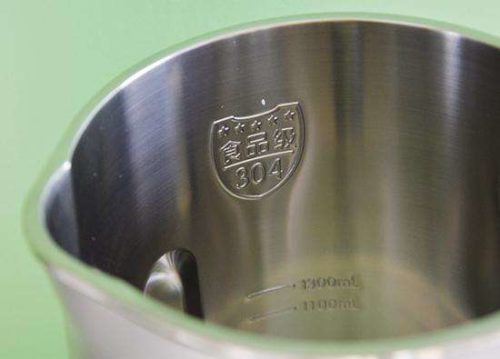
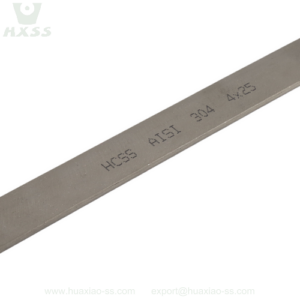
304 grade stainless steel, food grade stainless steel

Secondly, food-grade stainless steel to comply with national standards for lead, chromium, cadmium, nickel, and arsenic requirements, because heavy metals can not be degraded into the human body, they will interact with proteins and enzymes, so they are inactive, will also be precipitated in some organs of the human body, resulting in chronic poisoning.

So 304 stainless steel is not equal to food-grade stainless steel, to comply with GB4806.9-2016, which is the national definition of food-grade stainless steel.
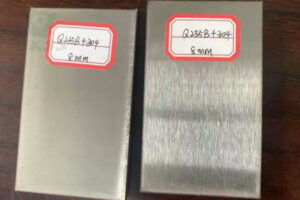
Misconception 4: All 304 Stainless Steel Is the Same

Some buyers think every 304 stainless steel product has identical properties. In reality, 304 has variants like 304L (low carbon) and 304H (high carbon), each with specific advantages.

  • 304L: Lower carbon content reduces carbide precipitation during welding, ideal for welded structures.

  • 304H: Higher carbon improves strength at high temperatures.
    Why it matters for buyers: Choosing the correct variant ensures structural integrity, weld quality, and application performance.

Misconception 5: 304 Stainless Steel Is Expensive

Another common misconception is that 304 stainless steel is too costly for most applications. While it may cost more than some carbon steels or aluminum, its durability, corrosion resistance, and low maintenance make it cost-effective in the long run.

Reality: For industrial, construction, and kitchen uses, 304 stainless steel often proves cheaper over time due to fewer replacements and repairs.

Why it matters for buyers: Understanding the true value can justify bulk purchases and long-term planning.

Misconception 6: 304 Has Poor Mechanical Strength

Some believe 304 stainless steel is too soft or weak for structural applications. On the contrary, 304 has excellent tensile strength, toughness, and formability. It can withstand heavy loads, pressure, and temperature variations in industrial and construction applications.

Reality: It is suitable for structural frames, pipelines, machinery, and even decorative architectural components.

Why it matters for buyers: Selecting 304 allows for versatile use without sacrificing performance, reducing the need for alternative alloys.

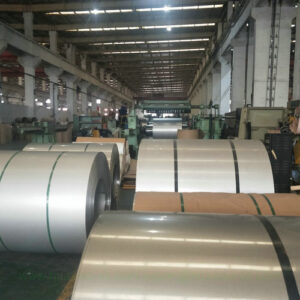
Need 304 stainless steel with high mechanical strength? Get a quote now for your sheets, strips, or coils.

Applications of 304 Stainless Steel

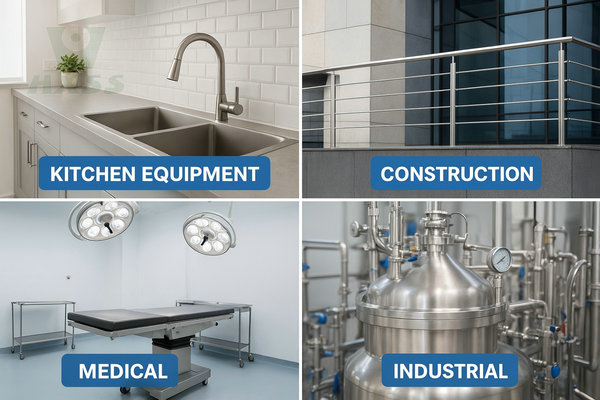
304 stainless steel is highly versatile. Below are the key industries and applications:

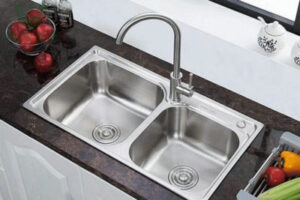
  1. Kitchen & Food Processing: sinks, cookware, storage tanks, conveyors.

  2. Construction & Architecture: railings, doors, windows, decorative panels.

  3. Medical & Pharmaceutical: surgical tools, workstations, cleanroom equipment.

  4. Industrial Equipment: chemical tanks, pipelines, heat exchangers.

Applications of 304 Stainless Steel

FAQ

Yes, it is widely used in kitchen equipment and food processing.

While corrosion-resistant, prolonged exposure to chloride environments may cause rust. Use 316 for better resistance.

304L has lower carbon content, ideal for welding without carbide precipitation.

Contact suppliers like Huaxiao Metal for sheets, coils, or custom sizes.

Sheets, coils, and strips from 0.3mm to 12mm and custom sizes are available.

Conclusion

304 stainless steel remains a top choice for many industries due to its balance of strength, corrosion resistance, and affordability. By understanding the common misconceptions, real applications, and market trends, buyers can make informed decisions.

Ready to purchase 304 stainless steel? Get a competitive quote from Huaxiao Metal now.

Facebook
Twitter
LinkedIn
Pinterest
Reddit

Table of Contents

We will answer your email in 24 hours!

Related Posts

Request a Quote

Fill out the form below, and we will be in touch shortly.