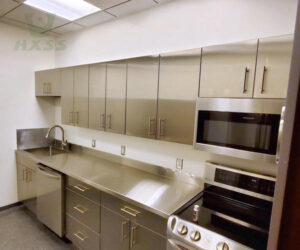
In the global stainless steel market, the choice between 304 vs 201 stainless steel is more than just a matter of price—it is a critical engineering decision that balances cost-efficiency against long-term durability.
As a premier manufacturer with decades of industry expertise, Huaxiao Metal has consolidated this deep knowledge into a definitive guide, designed to help buyers, engineers, and procurement professionals navigate the technical, financial, and practical differences between these two commonly compared austenitic grades. This resource will explain why 201 stainless steel is typically cheaper than 304, compare their performance in real-world environments, and provide the insights needed to make an informed material decision based on budget, service conditions, and long-term project requirements.
- Chemical composition
- Mechanical properties
- Corrosion resistance
- Applications
- Price differences
- How to choose the right grade
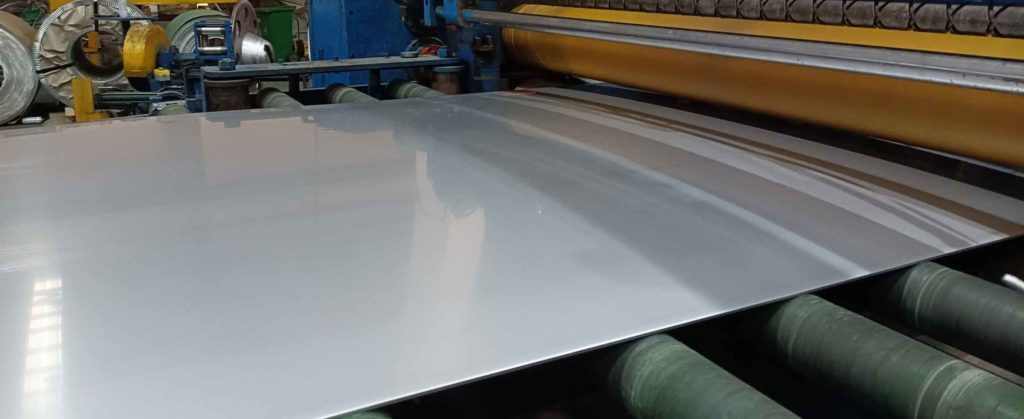
If you are sourcing stainless steel materials, contact Huaxiao Metal for the latest price and stock availability.
304 vs 201 Stainless Steel - What’s the Difference
Chemical Composition of 304 vs 201 Stainless Steel:
The main distinction between 201 and 304 stainless steel lies in their nickel and manganese content.
| Element | 201 Stainless Steel | 304 Stainless Steel |
|---|---|---|
| Chromium (Cr) | 16–18% | 18–20% |
| Nickel (Ni) | 3.5–5.5% | 8–10.5% |
| Manganese (Mn) | 5.5–7.5% | ≤ 2% |
| Carbon (C) | ≤ 0.15% | ≤ 0.08% |
| Iron (Fe) | Balance | Balance |
- 304 Stainless Steel: This grade is austenitic stainless steel composed of 18% chromium and 8% nickel, making it highly corrosion-resistant and suitable for a wide range of applications.
- 201 Stainless Steel: As a less expensive alternative, 201 stainless steel contains 16%-18% chromium and 3.5%-5.5% nickel, resulting in lower corrosion resistance compared to 304. It also contains manganese and nitrogen, which contribute to its distinctive properties.
Mechanical Properties of 304 vs 201 Stainless Steel
| Property | 201 Stainless Steel | 304 Stainless Steel |
|---|---|---|
| Tensile Strength | ~ 620 MPa | ~ 520 MPa |
| Yield Strength | ~ 275 MPa | ~ 215 MPa |
| Elongation | 40% | 45–50% |
| Hardness (HRB) | ≤ 95 | ≤ 92 |
- 201 stainless steel is slightly harder and stronger, but 304 offers better ductility and easier processing.
Performance Characteristics of 304 vs 201 Stainless Steel:
- Corrosion Resistance: 304 stainless steel excels in resisting corrosion, making it ideal for applications exposed to harsh environments or corrosive substances. On the other hand, 201 stainless steel is less resistant to corrosion and may not be the best choice for certain aggressive conditions.
- Strength and Toughness: 304 stainless steel exhibits higher strength and toughness compared to 201, making it more durable and reliable in demanding applications.
- Formability: While both grades are formable, 201 stainless steel is more malleable and easier to shape, which can be advantageous in certain manufacturing processes.
Corrosion Resistance in Real Environments
Corrosion resistance is where 304 stainless steel clearly outperforms 201.
| Environment | 201 Stainless Steel | 304 Stainless Steel |
|---|---|---|
| Indoor / Dry | Suitable | Excellent |
| Humid Indoor | Acceptable | Excellent |
| Outdoor (Urban) | Limited | Very Good |
| Coastal / Marine | Not recommended | Recommended |
| Chemical Exposure | Limited | Strong |
Summary:
201 stainless steel performs well in indoor, low-corrosion environments.
304 stainless steel is the better choice for long-term outdoor, marine, food, or chemical exposure.
Global Standards & Grade Equivalents
Understanding international equivalents is essential for global sourcing.
| Region / Standard | 201 Stainless Steel | 304 Stainless Steel |
|---|---|---|
| ASTM / UNS | UNS S20100 | UNS S30400 |
| China (GB) | 1Cr17Mn6Ni5N | 06Cr19Ni10 |
| JIS (Japan) | SUS201 | SUS304 |
| EN (Europe) | X12CrMnNiN17-7-5 | 1.4301 |
| ISO | X12CrMnNiN17-7-5 | X5CrNi18-10 |
This equivalency allows buyers to source confidently across different regions while maintaining consistent material performance.
Aesthetic Differences: Color and Finish
Can you tell them apart by looking at them?
- Color Tone: Due to the high Manganese, 201 has a slightly darker, colder, or grayish hue. 304 has a higher Nickel content, giving it a warmer, brighter, and slightly yellowish brilliance.
- Polishing: 304 can be polished to a higher “True Mirror” (8K) finish more easily. 201 may show a slightly different grain texture when subjected to high-grit polishing.
Cost Considerations of 304 vs 201 Stainless Steel:
- 201 Stainless Steel: Due to its lower content of nickel and other alloying elements, 201 stainless steel is generally more cost-effective than 304, making it a popular choice for budget-conscious projects.
- 304 Stainless Steel: Despite being relatively more expensive, the superior corrosion resistance and overall performance of 304 justify its higher cost for critical applications where longevity and reliability are paramount.
At Huaxiao Metal, we provide competitive 304 stainless steel prices and 201 stainless steel prices, ensuring customers can choose the most cost-effective solution for their projects.
Contact us for 304 stainless steel prices!
Contact us for 201 stainless steel prices!
Manufacturing & Processing: A Practical Guide
Welding
- 304: Excellent weldability. Not prone to cracking.
- 201: Can be welded, but high carbon content may lead to intergranular corrosion in the heat-affected zone. Post-weld cleaning is mandatory.
Deep Drawing
- 304: The gold standard for deep sinks and complex pots.
- 201: High work-hardening rate. If you draw it too deeply without annealing, the material may “spring back” or crack.
Why 201 Stainless Steel Is Cheaper Than 304
The price difference between 201 and 304 stainless steel is structural, not accidental.
Raw Material Cost Structure
Nickel is one of the most expensive alloying elements in stainless steel.
304 stainless steel relies heavily on nickel for corrosion resistance and stability.
201 stainless steel replaces part of the nickel with manganese and nitrogen, which are significantly cheaper.
Market Price Volatility
Nickel prices fluctuate sharply in global commodity markets.
304 stainless steel prices are, therefore, more volatile.
201 stainless steel pricing is more stable, making it attractive for cost-controlled projects.
Overall Cost Result
In most markets, 201 stainless steel is 15–30% cheaper than 304, depending on thickness, surface finish, and order quantity.
Application of 304 vs 201 Stainless Steel
The difference in applications between 304 and 201 stainless steel lies primarily in their respective properties and performance characteristics. Let’s explore the specific areas where each grade is commonly utilized:
1. 304 Stainless Steel Applications:
– Food and Beverage Industry: 304 stainless steel is widely used in the food and beverage industry due to its excellent corrosion resistance, hygienic properties, and ability to withstand acidic and alkaline environments. It is commonly employed in food processing equipment, storage tanks, and kitchen appliances.
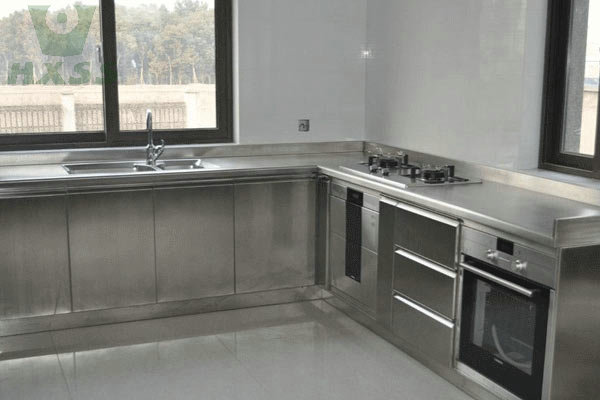
– Chemical and Pharmaceutical Industries: With its high resistance to corrosive chemicals, 304 stainless steel finds extensive use in chemical processing equipment, pharmaceutical manufacturing, and laboratory applications.
– Construction and Architecture: In architectural applications, 304 stainless steel is preferred for its aesthetic appeal, durability, and resistance to atmospheric corrosion. It is used in facades, handrails, decorative elements, and structural components.
– Automotive Industry: Components requiring excellent corrosion resistance, such as exhaust systems and trim parts, often utilize 304 stainless steel.
2. 201 Stainless Steel Applications:
– Cookware and Kitchen Utensils: 201 stainless steel’s lower cost and acceptable corrosion resistance make it a popular choice for cookware and kitchen utensils, where the demand for high corrosion resistance may not be as critical.
– Home Appliances: Household appliances, such as sinks, microwave ovens, and refrigerator panels, often use 201 stainless steel due to their affordability and decent corrosion resistance in less aggressive environments.
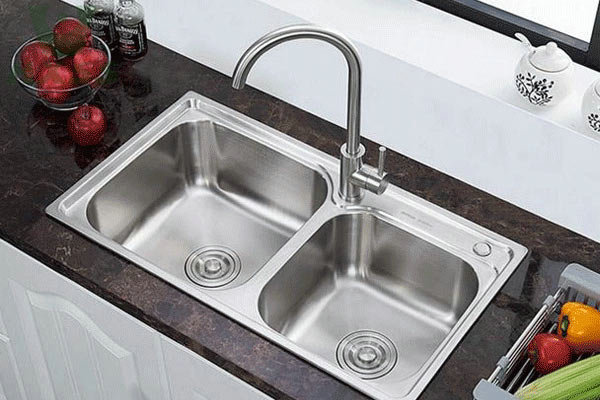
– Decorative Purposes: 201 stainless steel is sometimes used for decorative applications, including furniture, trim, and ornamental elements, where its lower cost can be advantageous without compromising the aesthetics.
– Automotive Trim: Certain non-critical automotive components, such as trim pieces and exhaust tips, may employ 201 stainless steel due to its cost-effectiveness.
Overall, 304 stainless steel is favored for applications that require superior corrosion resistance, strength, and longevity, especially in demanding environments like the food industry, chemical processing, and architecture. On the other hand, 201 stainless steel finds its niche in applications where cost considerations play a significant role, such as in household items, decorative elements, and non-critical automotive components. It’s essential to choose the appropriate grade based on the specific needs of the application to ensure optimal performance and cost-effectiveness.
Application-Based Selection Guide
Choosing between 201 and 304 stainless steel should always be application-driven.
| Application Scenario | Recommended Grade | Reason |
|---|---|---|
| Indoor decoration & trims | 201 | Cost-effective, sufficient corrosion resistance |
| Kitchen equipment (non-food contact) | 201 | Budget optimization |
| Food processing equipment | 304 | Food safety & corrosion resistance |
| Architectural outdoor components | 304 | Weather durability |
| Coastal or marine use | 304 | Salt resistance |
| Large-volume, cost-sensitive projects | 201 | Price advantage |
| Long-term critical structures | 304 | Stability & lifespan |
Common Misunderstandings About 304 vs 201 Stainless Steel
“201 stainless steel will always rust.”
❌ Not true. In indoor or dry environments, 201 performs reliably.
“201 stainless steel cannot be welded.”
❌ Incorrect. 201 has excellent weldability when proper procedures are used.
“304 is always the better choice.”
❌ Not necessarily. In cost-driven, non-corrosive applications, 304 may be over-specified.
Understanding these nuances prevents over-engineering or premature corrosion failures.
Which Should You Choose?
Choose 201 Stainless Steel if:
- Cost efficiency is crucial
- Application is indoors and not exposed to corrosive environments
Choose 304 Stainless Steel if:
- You require superior corrosion resistance
- Application involves food, chemicals, marine, or outdoor exposure
- Long-term durability is a priority
FAQ: 304 vs 201 Stainless Steel: A Complete Comparison
Is 201 stainless steel rust-proof?
201 stainless steel offers basic corrosion resistance, but it’s not completely rustproof. In humid, salty, or acidic environments, 201 stainless steel is more susceptible to rust than 304 stainless steel. It performs well for indoor applications, but 304 stainless steel is recommended for outdoor or marine applications.
Which stainless steel is best suited for outdoor use?
Due to its excellent corrosion resistance, 304 stainless steel is the best choice for outdoor environments, chemical equipment, and marine applications. 201 stainless steel is suitable for indoor furniture, appliances, and decorative components, where the risk of rust is lower.
Where can I buy 201 and 304 stainless steel at a competitive price?
Huaxiao Metal is a trusted supplier of 201 and 304 stainless steel, offering global shipping services. We offer competitive stainless steel prices, stable inventory, and professional service to meet the needs of various industries.
Is 201 stainless steel food-grade?
Although 201 stainless steel is used in many tableware products, it is not strictly considered a high-grade food-grade material. Due to its weak corrosion resistance, metal ions such as manganese may leach out in acidic or high-salt environments. In contrast, 304 stainless steel has more stable corrosion resistance and is widely recognized as a safer food-grade material.
How can I quickly distinguish between 304 and 201 stainless steel?
The easiest way is to use a stainless steel identification solution. When the solution is dropped on the surface, 304 stainless steel will remain unchanged or change color quickly, while 201 stainless steel will quickly turn red or even black. Another method is to examine the cut surface; the cut surface of 201 stainless steel is typically darker than that of 304 stainless steel.
Will 201 stainless steel rust?
Yes, 201 stainless steel can rust. It is prone to rusting in humid, salty, acidic, or chloride-rich environments (such as the seaside or by a swimming pool). Therefore, 201 stainless steel is more suitable for dry indoor environments.
Why is 304 stainless steel more expensive than 201?
The main reason for the high price of 304 stainless steel is its high nickel content. Nickel is an expensive and rare metal, and 201 stainless steel replaces most of the nickel with relatively inexpensive manganese, making it much less expensive than 304.
Which is better, 304 or 201 stainless steel?
304 stainless steel is better due to its superior corrosion resistance, durability, and wider application range.
In Conclusion
In summary, the choice between 304 vs 201 stainless steel hinges upon the specific requirements of your application. 304 stainless steel, with its higher nickel and chromium content, offers superior corrosion resistance, strength, and durability, making it suitable for diverse applications where performance is paramount. Conversely, 201 stainless steel is a cost-effective option that serves well in less demanding environments or applications where formability and affordability are essential.
By understanding the differences in their chemical composition, performance characteristics, and costs, you can make an informed decision and select the most suitable stainless steel grade for your project, ensuring optimal performance and longevity.
Huaxiao Metal is a professional supplier of 201 and 304 stainless steel, offering high-quality materials at competitive prices. Contact us today to inquire about stainless steel pricing, request samples, or place a bulk order to meet your project needs.