A practical material guide for stainless steel cabinet manufacturers, OEM/ODM fabricators and commercial kitchen equipment suppliers. Learn how to choose the right grade, thickness and finish to produce cabinets that meet food-safety standards and win bids in Europe, South America and beyond.
Why Cabinet Manufacturers Choose Stainless Steel?
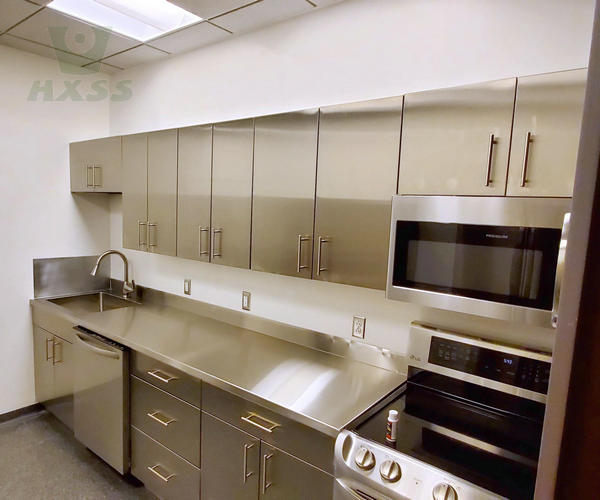
Commercial kitchen cabinets must pass food-safety audits, withstand daily washdowns and support heavy equipment. For manufacturers, stainless steel sheet and coil offer a proven material platform that meets these demands while simplifying production and improving the resale value of the final product.
Unlike wood, laminate or powder-coated steel, stainless steel does not absorb moisture, delaminate or release particles under steam and grease. Its weldability allows manufacturers to build seamless, hygienic enclosures with no gaps where bacteria can hide. For OEM/ODM factories supplying restaurants, hotels, hospitals and food processing plants, this means fewer warranty claims, stronger customer retention and higher average selling prices.
Key takeaway for manufacturers: Stainless steel is not just a raw material — it is a product-positioning tool. Specifying the right grade, thickness and finish helps your cabinets win bids, pass inspections and command premium pricing in commercial kitchen projects.
As a stainless steel sheet and coil supplier, Huaxiao supports commercial kitchen cabinet manufacturers with food-grade 304, 316 and 430 materials. We provide mill test certificates, standard and custom sizes, slit coils and cut-to-length sheets for manufacturers exporting to South America, Europe, Southeast Asia and the Middle East.
8 Material Advantages for Cabinet Manufacturers
For stainless steel cabinet manufacturers, these eight advantages translate directly into better product performance, easier sales and higher margins.
1. Proven food-safety compliance
304 and 316 grades meet FDA, NSF, HACCP and EU food contact requirements. This makes it easy to certify cabinets for restaurants, hospitals and food processing facilities without expensive material substitutions.
2. Excellent corrosion resistance
Stainless steel resists moisture, grease, salt and food acids. This reduces warranty claims from rust, swelling or delamination — common problems with wood or coated steel cabinets.
3. Strong weldability and formability
304 and 316 can be TIG welded, bent, rolled and deep-drawn into cabinet bodies, drawers, sinks and backsplashes. This gives manufacturers design flexibility without switching material types.
4. High temperature and fire resistance
Stainless steel will not warp, burn or emit toxic fumes near ovens, fryers or steam lines. This is a strong selling point for safety inspectors and fire-code compliance.
5. Long product life and low warranty risk
Commercial stainless steel cabinets last 10–15 years or more. For manufacturers, this means fewer field repairs, lower warranty reserves and stronger references for repeat business.
6. Premium market positioning
Stainless steel signals hygiene, durability and professionalism. It allows manufacturers to bid higher-value projects such as hotels, central kitchens and hospital dietary facilities.
7. Wide range of finishes
From 2B mill finish to #4 brushed, #8 mirror and bead-blasted, stainless steel offers options for every price point and visual requirement. Different finishes can be mixed within the same project to optimize cost and appearance.
8. 100% recyclable and sustainable
At end of life, stainless steel retains value as scrap. This supports customers’ sustainability goals and can be highlighted in marketing and tender responses.
6 Manufacturing Challenges & How to Manage them
Stainless steel offers many advantages, but manufacturers should understand the following challenges before quoting and production planning.
1. Material cost and nickel price volatility
304 and 316 prices move with nickel and molybdenum markets. Mitigation: lock pricing with supplier contracts, use 430 for non-contact parts, and optimize nesting to reduce scrap.
2. Scratches and fingerprints on visible surfaces
Polished and brushed finishes show handling marks. Mitigation: specify #4 brushed or bead-blasted finishes for customer-facing panels and apply protective PVC film during fabrication.
3. Need for skilled welding and finishing
Stainless steel cabinets require TIG welding, weld cleaning and passivation. Mitigation: train welders on stainless-specific techniques, use matching filler wire and invest in proper grinding/polishing equipment.
4. Noise during cabinet operation
Steel doors and drawers are louder than composite materials. Mitigation: specify soft-close hinges, rubber bumpers and nylon drawer glides as standard accessories in your bill of materials.
5. Limited color options
Raw stainless steel is silver-gray. Mitigation: offer PVD colored coatings, powder-coated panels or vinyl-wrapped doors while keeping food-contact surfaces in plain stainless steel.
6. Heavier weight and higher freight cost
Stainless steel cabinets weigh more than laminate or aluminum alternatives. Mitigation: design with thinner gauges where structural loads allow, and optimize packaging and container loading.
304 vs 316 vs 430: Material Selection Guide
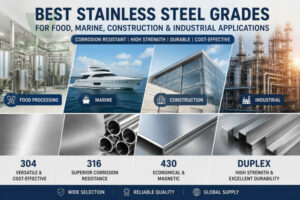
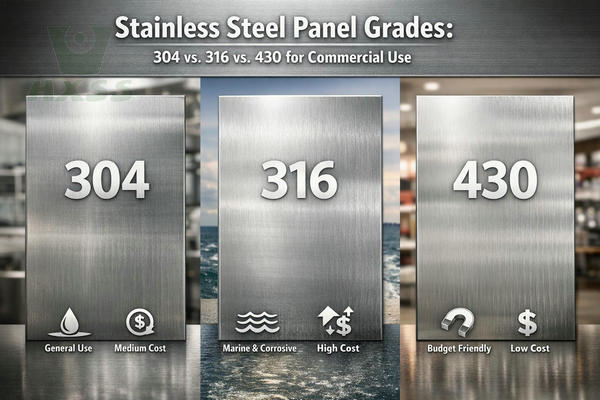
The grade of stainless steel you choose affects cabinet performance, compliance, cost and marketability. The table below compares the three most common grades used in commercial kitchen cabinet manufacturing.
| Property | 304 Stainless Steel | 316 Stainless Steel | 430 Stainless Steel |
|---|---|---|---|
| Structure | Austenitic, non-magnetic | Austenitic, non-magnetic | Ferritic, magnetic |
| Corrosion resistance | Excellent in food and water environments | Superior, especially in salt and acid environments | Good in dry, low-corrosion areas |
| Key alloy | 18% Cr, 8% Ni | 16% Cr, 10% Ni, 2% Mo | 16–18% Cr, no nickel |
| Food-grade compliance | FDA, NSF, EU food contact compliant | FDA, NSF, EU food contact compliant | Suitable for dry storage, limited food contact |
| Weldability | Excellent | Excellent, use 316L filler recommended | Good, less ductile than 304 |
| Cost level | Medium | High | Low |
| Best use in cabinets | Worktops, sinks, food-contact panels, bodies | Coastal kitchens, marine galleys, chemical plants | Dry storage, shelving, backsplashes, budget frames |
Manufacturing recommendation: For 90% of commercial kitchen cabinet production, 304 stainless steel is the optimal balance of corrosion resistance, weldability, food-grade safety and cost. Choose 316 for coastal or chemically aggressive end-use environments. Use 430 for dry storage, frames and non-food-contact parts to reduce overall material cost.
Sheet Specifications: Thickness, Width, Finish & Standards
When sourcing stainless steel sheet or coil for commercial kitchen cabinet production, specify the following parameters to match your tooling, customer requirements and export market standards.
Thickness
- 0.8 mm (22 gauge): Light-duty wall cabinets, shelves, trim
- 1.0 mm (20 gauge): Standard upper cabinets and drawer fronts
- 1.2 mm (18 gauge): Base cabinets, worktops, sinks
- 1.5 mm (16 gauge): Heavy-duty base cabinets and equipment supports
- 2.0 mm (14 gauge): Industrial platforms, structural supports
Width & Coil Options
- 1219 mm (4 ft): Common mill width, good for nesting
- 1500 mm (5 ft): Better yield for wide panels and long worktops
- Slit coils: For high-volume blanking and roll-forming lines
- Cut-to-length sheets: For low-volume or custom-size orders
Surface Finish
- 2B mill finish: Smooth, cost-effective, used for hidden parts
- #4 brushed finish: Hides fingerprints, popular for visible panels
- #8 mirror finish: Premium display kitchens, requires care
- Bead-blasted / embossed: Anti-slip, low-reflection, hides wear
Standards & Certifications
- ASTM A240: Standard for stainless steel sheet and plate
- EN 10088-2: European stainless steel technical delivery conditions
- GB/T 3280: Chinese cold-rolled stainless steel sheet standard
- NSF / FDA / HACCP: Food safety and sanitation compliance
- EN 10204 3.1 MTC: Mill test certificate for EU exports
End Markets for Stainless Steel Kitchen Cabinets
Commercial kitchen cabinet manufacturers sell into a wide range of end-use industries. Understanding these markets helps you choose the right material specification and pricing strategy for each customer segment.
🍽️ Restaurants & Catering
High-volume prep stations, dishwashing areas, under-counter storage and serving counters. Demand is price-sensitive but volume is high.
🏨 Hotels & Resorts
Central kitchens, banquet prep rooms and room-service pantries. Often require a mix of #4 brushed visible panels and 2B structural parts.
🏥 Hospitals & Healthcare
Dietary kitchens and sterile storage areas. Strict sanitation standards favor 304 or 316 with seamless welded construction.
🏭 Food Processing Plants
Washdown stations, ingredient storage and packaging-area cabinets. Heavy-duty 1.5 mm+ construction is common.
🎓 Schools & Corporate Canteens
High-traffic serving lines and tray storage. Budget-conscious but requires durability and easy cleaning.
🧁 Bakeries & Pastry Shops
Cooling racks, decorating stations and flour storage. Requires cleanable surfaces and corrosion resistance to sugars and fats.
Sourcing Guide for Stainless Steel Sheet and Coil
Buying stainless steel for cabinet production requires more than comparing price per kilogram. Use this checklist to avoid material mismatches, delivery delays and quality disputes.
Match the grade to the end-use environment. Use 304 for general food-contact surfaces. Use 316 for coastal or chemically aggressive kitchens. Use 430 for dry storage and frames to cut cost.
Choose the right thickness for each component. Do not over-specify. Use 0.8–1.0 mm for wall cabinets, 1.2–1.5 mm for base cabinets and worktops, and 2.0 mm only for structural supports.
Optimize sheet size and nesting. Choose 1219 mm or 1500 mm widths that match your laser/punch blanking layouts. Request coil slitting to reduce scrap and handling.
Request material certificates. For every batch, ask for mill test certificates (MTC) showing chemical composition, mechanical properties and compliance with ASTM A240 or EN 10088-2.
Confirm food-safety compliance. Verify the grade is suitable for FDA, NSF or EU food contact requirements. Keep certificates on file for customer audits.
Plan for surface protection. Specify PVC film or paper interleaving for brushed and mirror finishes to prevent scratches during transport and fabrication.
Negotiate terms and lead time. Standard stock material ships in 7–14 days. Custom gauges or finishes require 3–6 weeks. FOB, CIF and DDP terms should be clarified before order confirmation.
Supplier evaluation checklist
✅ ISO 9001 certified material supplier or mill
✅ Provides Mill Test Certificates (MTC / EN 10204 3.1)
✅ Stock availability for 304, 316 and 430 standard sizes
✅ Can slit coils and cut sheets to your required dimensions
✅ Experience exporting to your target markets (Europe, South America, etc.)
✅ Clear packing, labeling and shipping documentation standards
Fabrication Tips for Quality Cabinets
Small differences in fabrication technique can determine whether your cabinets pass a food-safety audit or fail after one year. Share these standards with your production team.
Welding
- Use TIG welding with matching-grade filler wire
- Clean welds and remove heat tint
- Passivate welded areas to restore corrosion resistance
- Avoid carbon steel contamination on stainless surfaces
Cutting & forming
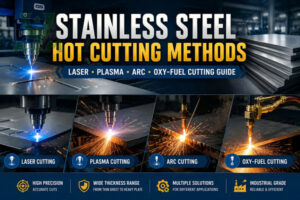
- Use laser, plasma or shear cutters dedicated to stainless steel
- Deburr all edges to prevent injury and corrosion initiation
- Form internal corners with minimum radius R25 for cleaning
- Protect brushed finishes with film during bending
Surface finishing
- Polish welds in the direction of the grain
- Use separate grinding tools for stainless and carbon steel
- Apply anti-fingerprint coating for #4 brushed panels
- Inspect for scratches before final assembly
Never use: Steel wool, abrasive powders mixed with iron, or chlorine-based cleaners on stainless steel cabinets. These can damage the passive layer and cause pitting corrosion. If rust spots appear, clean with a paste of baking soda and water, then re-passivate the surface with citric acid solution.
FAQ
Which stainless steel grade is best for manufacturing commercial kitchen cabinets?
304 stainless steel is the standard choice for most cabinet manufacturers due to its excellent corrosion resistance, food-grade safety, weldability and cost balance. For coastal areas, high-salt environments or heavy chemical exposure, 316 stainless steel is recommended. 430 is a budget option for dry storage cabinets and non-food-contact parts.
What thickness of stainless steel sheet is commonly used for kitchen cabinets?
Standard commercial kitchen cabinets use 0.8 mm to 1.5 mm (20–16 gauge) stainless steel sheet. Light-duty wall cabinets and shelves use 0.8–1.0 mm. Base cabinets and worktops use 1.2–1.5 mm. Structural supports and equipment platforms may use 2.0 mm or thicker.
What surface finish should cabinet manufacturers specify?
2B mill finish is common for hidden structural parts and back-of-house cabinets.
#4 brushed finish is preferred for visible areas because it hides fingerprints and scratches.
#8 mirror is used for premium display kitchens.
Bead-blasted or embossed finishes add anti-slip and low-reflection properties.
How can stainless steel cabinet manufacturers reduce material costs?
Optimize sheet nesting and cutting patterns to reduce scrap. Use 430 for dry storage and non-contact parts. Choose 304 as the standard grade for food-contact surfaces. Buy mill-width coils (1219 mm or 1500 mm) and standard gauges. Partner with a supplier that offers mill-direct pricing and flexible MOQ.
What certifications are needed for stainless steel used in commercial kitchen cabinets?
Food-contact surfaces should use grades that meet FDA, NSF and EU food contact requirements. ASTM A240 or EN 10088-2 material certificates are standard. For European exports, EN 10204 3.1 Mill Test Certificate is commonly required. ISO 9001 certification of the material supplier is also expected.
How should stainless steel cabinets be welded to prevent corrosion?
Use TIG welding with stainless steel filler wire matching the base grade. Clean welds thoroughly, remove heat tint and restore the passive layer by passivation. Avoid carbon steel contamination, which can cause galvanic corrosion. For 316 cabinets in aggressive environments, use 316L filler for improved intergranular corrosion resistance.
What is the typical MOQ and lead time for stainless steel sheet from China?
For standard 304/430 stainless steel sheet, MOQ typically starts at 1 ton per thickness. Standard sizes in stock can ship within 7–14 days. Custom gauges, finishes or slitting services usually require 3–6 weeks production plus 25–40 days sea freight. Coil orders often offer better pricing than sheet orders for high-volume cabinet manufacturers.
How should stainless steel sheet be packaged to avoid surface damage during shipping?
Use waterproof kraft paper or plastic film interleaving between sheets. Pack on wooden pallets with steel strapping and edge protectors. For brushed or mirror finishes, use PVC protective film. Keep containers dry and ventilated to prevent condensation and salt-air corrosion during sea transport.