
Call Us Today! +86-13761906384

304 vs 321 Stainless Steel: Key Differences, Price & Best Choice Guide (2026)

If your company uses metal for its products, you’ve probably heard of the terms “321 Stainless Steel” and “304 Stainless Steel.” But what do these two materials mean? This blog post will discuss the differences between 304 vs 321 stainless steel to help you understand which type of material is best for your project.

👉 Choose 304 for cost-effective, everyday use
👉 Choose 321 for high heat (>500°C) or welding applications

Huaxiao Metal, as a professional stainless steel supplier in China, provides both 304 and 321 stainless steel products with stable quality and competitive factory pricing for global customers.

Need help choosing between 304 and 321 stainless steel?

👉 Send us your application or specifications — our engineers will recommend the most cost-effective solution within 24 hours.

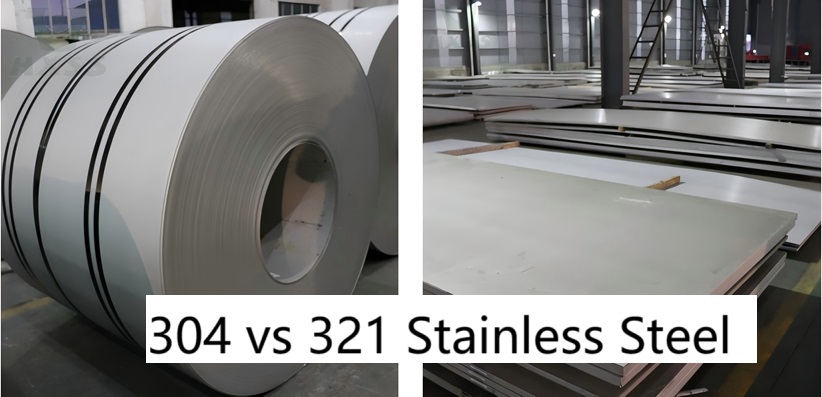
304 vs 321 Stainless Steel

Definition of 304 vs 321 Stainless Steel

304 Stainless Steel

304 stainless steel is a widely used grade of austenitic stainless steel known for its excellent corrosion resistance. It contains 18% chromium and 8% nickel, providing good durability and formability. This stainless steel is commonly used in various applications such as kitchen equipment, food processing, architectural components, and industrial equipment.

At Huaxiao Metal, 304 stainless steel is one of our most popular grades, widely exported to Europe, Southeast Asia, and the Middle East for general industrial and construction applications.

Contact us for 304 stainless steel prices!

321 Stainless Steel

321 stainless steel is an austenitic stainless steel alloy that contains titanium as an alloying element. This addition of titanium enhances its resistance to intergranular corrosion, particularly during welding and high-temperature operations. Due to its improved corrosion resistance at elevated temperatures, 321 stainless steel is often employed in applications such as exhaust systems, jet engine components, and high-temperature chemical processing.

In summary, 304 stainless steel offers general corrosion resistance and versatility, while 321 stainless steel provides enhanced resistance to intergranular corrosion and is well-suited for high-temperature environments.

Huaxiao Metal supplies high-quality 321 stainless steel with strict control of titanium content, ensuring excellent performance in high-temperature and welding environments.

Contact us for 321 stainless steel prices!

 304 vs 321 Stainless Steel – What’s the Difference

Both belong to the austenitic stainless steel family, have similar appearance and similar basic corrosion resistance, but subtle compositional differences will result in different performance and applications under high temperature, welding and specific corrosion scenarios.

Chemical Composition of 304, 321, 321H

GradesCSiMnCrNiSPNTi
3040.081.02.018.0~20.08.0~10.50.030.045//
3210.081.02.017.0-19.09.0-12.00.030.0450.15C-0.70
321H0.04-0.11.02.017.0-19.09.0-12.00.030.0450.10.16-0.7
 

 Physical Properties of 304 vs 321 Stainless Steel:

Property304 Stainless Steel321 Stainless Steel
Crystal StructureFCCFCC
Tensile StrengthHighHigh
Yield StrengthHighHigh
Density~8 g/cm³~8 g/cm³
Melting Point1400-1450°C1400-1450°C
Thermal Conductivity16.2 W/m·K16.3 W/m·K

 Chemical Properties of 304 vs 321 Stainless Steel:

Property304 Stainless Steel321 Stainless Steel
Corrosion ResistanceGoodGood
Intergranular CorrosionLimited (After Welding)Superior (Due to Titanium)
Oxidation ResistanceGoodExcellent
Maximum Service Temperature~870°C~900°C

Welding Performance Comparison

Feature304321
WeldabilityEasyEasy
Post-weld corrosion riskHigherLower
Heat-affected zone stabilityMediumExcellent

👉 If welding + heat exposure → 321 is strongly recommended

Cost of 304 vs 321 Stainless Steel:

2026 Market Price Reference:

  • 304 stainless steel: $2,000 – $2,800 / ton
  • 321 stainless steel: $2,500 – $3,500 / ton

👉 321 is typically 15–30% more expensive due to titanium content

Corrosion Resistance of 304 vs 321 Stainless Steel:

​304:

  • Excellent general corrosion resistance (nitric acid, organic acid, fresh water), but easy to sensitize after welding (chromium depletion at grain boundaries).
  • Salt spray test (5% NaCl): >720 hours without red rust (2B surface).

​321:

  • Comparable to 304 in basic corrosion resistance, but significantly improved in intergranular corrosion resistance, especially suitable for welded parts or high temperature environments.
  • Performs better in environments containing sulfides (such as automobile exhaust).

High Temperature Performance of 304 vs 321 Stainless Steel:

Parameters304321
Continuous Operating Temperature​≤870°C≤900°C
​Oxidation Resistance​Easy to oxidize and peel at high temperatureTitanium slows down the oxidation rate
​Creep Strength​Low (quickly softens at >540°C)High (suitable for long-term use below 800°C)

Not sure whether 304 or 321 is better for your project?

👉 Send us:
– Temperature requirements
– Application scenario
– Quantity

We’ll recommend the best option and provide a competitive quote within 24 hours.

 Advantages of 304 Stainless Steel:

  • Good general corrosion resistance and is suitable for many environments.
  • Good weldability and processability, suitable for a variety of manufacturing processes.
  • Suitable for general industrial applications, such as food processing, construction, kitchen equipment, etc.

Disadvantages of 304 Stainless Steel:

  • Limited high-temperature resistance, prone to intergranular corrosion above 800°C.
  • Intergranular corrosion may occur after welding, especially at high temperatures.

 Advantages of 321 Stainless Steel:

  • Excellent high-temperature resistance, suitable for high-temperature environments and high-temperature chemical treatment.
  • Excellent weldability, reducing the risk of intergranular corrosion after welding.
  • Due to the titanium content, it has excellent resistance to intergranular corrosion.

Disadvantages of 321 Stainless Steel:

  • Compared with 304 stainless steel, it may be more expensive.
  • The corrosion performance in some general environments may be relatively weak.

 Application of 304 vs 321 Stainless Steel

Here’s a comparison of the applications for 304 vs 321 stainless steel:

304 Stainless Steel Applications:
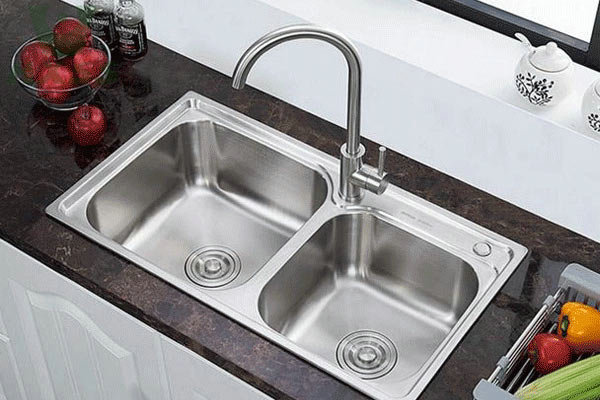
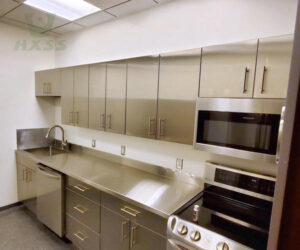
stainless steel coil sheet kitchenware water sink

  • Food Processing Equipment: 304 stainless steel is commonly used in the food industry for equipment such as sinks, countertops, utensils, and storage tanks due to its good corrosion resistance and hygienic properties.
  • Architectural Components: It’s used for decorative elements like handrails, facades, and fixtures due to its aesthetic appeal and durability.
  • Kitchen Appliances: Many household kitchen appliances are made from 304 stainless steel because of its corrosion resistance and easy-to-clean surface.
  • Industrial Equipment: It’s used in various industrial applications like storage tanks, pressure vessels, and valves where resistance to corrosion and wide compatibility with different substances are important.
  • Automotive Parts: Certain automotive components like exhaust systems and trim elements utilize 304 stainless steel for its corrosion resistance and appearance.
  • Medical Equipment: 304 stainless steel is suitable for medical instruments and equipment that require corrosion resistance and ease of sterilization.

 321 Stainless Steel Applications:
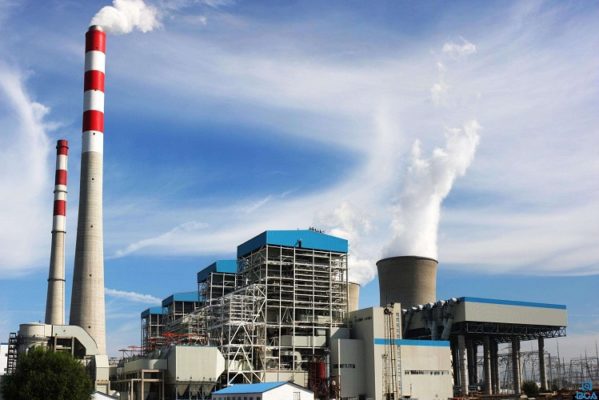
Pulp and paper bleaching equipment

  • High-Temperature Environments: 321 stainless steel excels in high-temperature applications where it is exposed to elevated temperatures, such as exhaust systems, headers, and manifolds in automobiles and aircraft.
  • Jet Engine Components: Due to its excellent high-temperature strength and resistance to oxidation, 321 stainless steel is used in components like exhaust nozzles and flanges within jet engines.
  • Chemical Processing: 321 stainless steel is chosen for equipment used in high-temperature chemical processing, where its corrosion resistance and ability to withstand aggressive chemical environments are important.
  • Heat Exchangers: It’s suitable for heat exchangers that operate in corrosive and high-temperature environments.
  • Oil and Gas Industry: 321 stainless steel can be used in components and equipment for oil refining, particularly in sections exposed to high temperatures.
  • Welded Tubing and Piping: The improved intergranular corrosion resistance of 321 stainless steel makes it a good choice for welded tubing and piping used in high-temperature and corrosive environments.

In conclusion, the choice of 304 vs 321 stainless steel depends on your specific needs and applications. If high-temperature resistance and intergranular corrosion resistance are required, 321 stainless steel is a better choice. If general corrosion resistance and versatility are primary requirements, 304 stainless steel is a widely adopted option.
Which One Should You Choose?

Choose 304 Stainless Steel if:

  • Your application operates at room temperature or below 800°F.

  • Budget is a primary concern for high-volume consumer goods (kitchenware, architectural panels).

  • The environment is mildly corrosive but doesn’t involve extreme heat cycles.

Choose 321 Stainless Steel if:

  • The material will be used in the 800°F – 1500°F range.

  • You are manufacturing Aircraft Exhaust Stacks, Jet Engine Parts, or heavy-duty welded equipment.

  • Post-weld annealing is not possible, but intergranular corrosion must be avoided.

Want a precise recommendation based on your project?

👉 Tell us your working temperature, environment, and budget — we’ll suggest the best stainless steel grade and quote you directly.

Why choose Huaxiao Metal?

Looking for a reliable stainless steel supplier?

Huaxiao Metal provides:

✔ 15+ years stainless steel export experience

✔ Serving 60+ countries

✔ Strict quality inspection system

✔ Competitive factory-direct pricing

✔ Fast response & professional support

FAQ — 304 vs 321 Stainless Steel

Not always. 321 is better for high-temperature and welded applications, while 304 is more cost-effective for general use.

Yes, but not in high-temperature environments where welding is involved.

321 stainless steel is typically 15–30% more expensive.

  • 304: Suitable for general high-temperature use
  • 321: Better for long-term exposure to 425–850°C

Yes. When welding 304 to 321, it is generally recommended to use ER347 or ER321 filler metal to maintain stabilization in the weld joint.

Neither is ideal for direct seawater contact. For marine environments, Grade 316 is superior due to its Molybdenum content which resists pitting.

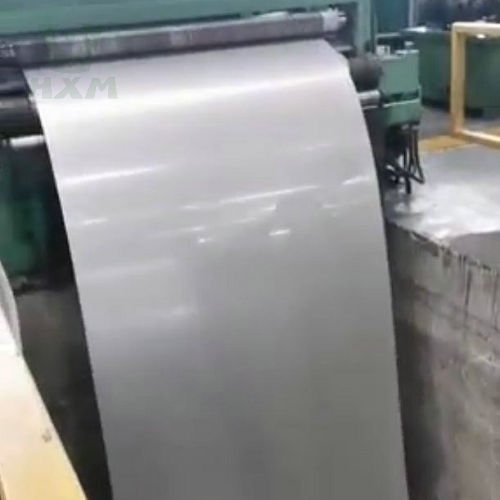
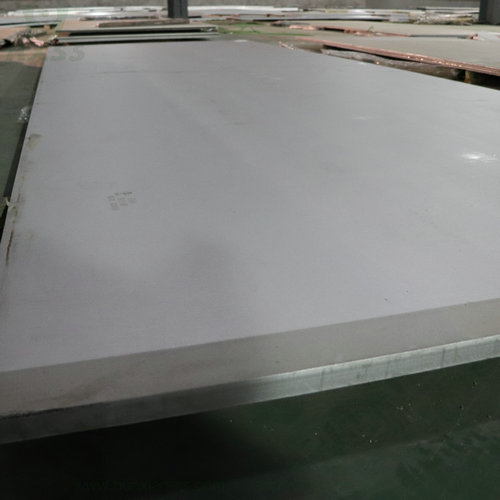
Yes, Huaxiao Metal supplies a full range of stainless steel products, including sheets, coils, strips, pipes, and bars, with customized sizes available.

Facebook
Twitter
LinkedIn
Pinterest
Reddit

Table of Contents

We will answer your email in 24 hours!

Related Posts

Request a Quote

Fill out the form below, and we will be in touch shortly.