Stainless steel grades 316 vs 316L are two of the most widely used austenitic stainless steels in the world. Known for their excellent corrosion resistance, high strength, and reliable performance in chloride-rich, chemical, and marine environments, these two alloys are often considered interchangeable—yet their differences can significantly impact real-world applications.
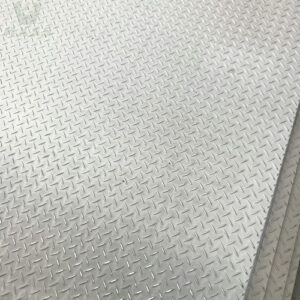
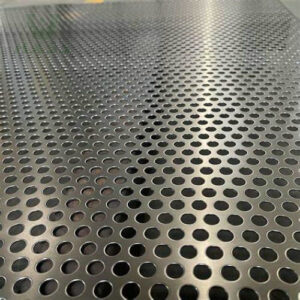
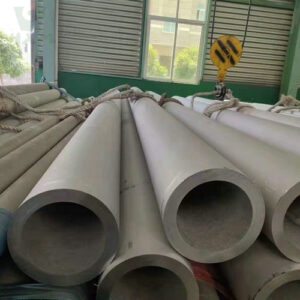
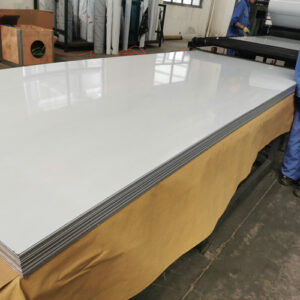
As a global stainless steel supplier, Huaxiao Metal provides both 316 and 316L stainless steel coils, sheets, plates, pipes, tubes, bars, and custom-processed parts to industries including marine engineering, petrochemicals, pharmaceuticals, food equipment, power plants, pressure vessels, and more.
This guide provides a complete and authoritative comparison between 316 and 316L stainless steel based on metallurgy, engineering performance, corrosion resistance, welding behavior, high-temperature performance, international equivalents, market pricing, and industrial applications—helping you choose the right grade for your project.
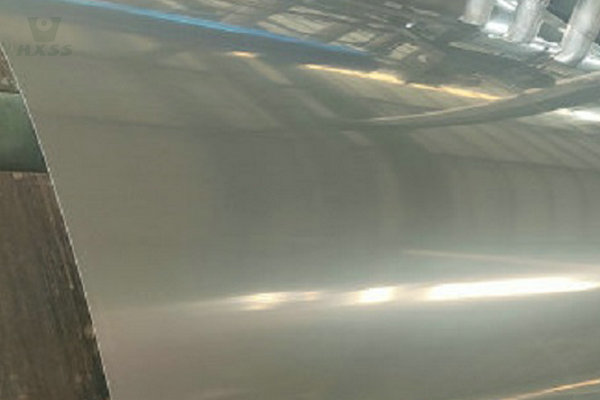
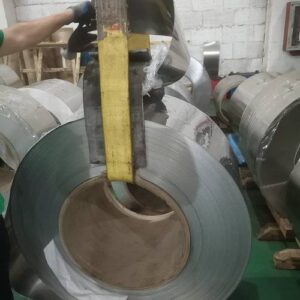
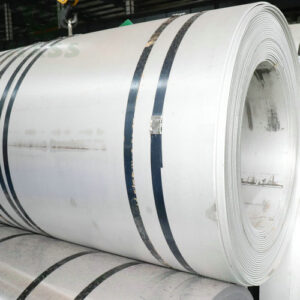
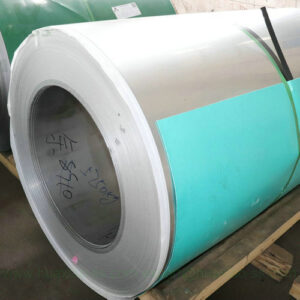
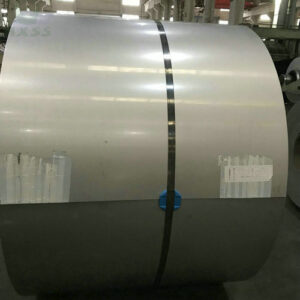
316L Stainless Steel Coil
What Is 316 Stainless Steel?
316 stainless steel is a molybdenum-bearing austenitic stainless steel designed for superior corrosion resistance compared to 304. It contains 2–3% Mo, which significantly enhances resistance to pitting, crevice corrosion, and chloride attack.
Key Features of 316 Stainless Steel
- High resistance to chlorides and seawater
- Excellent mechanical strength and toughness
- Good high-temperature performance
- Suitable for chemical processing, marine structures, and food/pharma equipment
Typical Forms Supplied by Huaxiao Metal
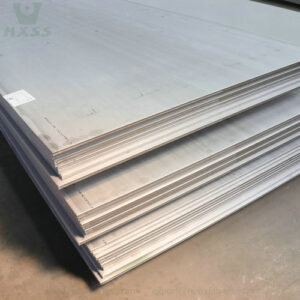
- 316 stainless steel sheets and plates
- 316 stainless steel coils and strips
- 316 stainless steel pipes and tubes
- 316 stainless steel rods and bars
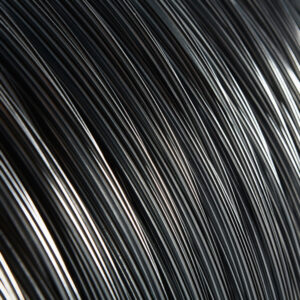
- 316 stainless steel wires
- Custom-cut 316 stainless steel components
What Is 316L Stainless Steel?
316L stainless steel is the low-carbon version of 316, with a maximum carbon content of 0.03%.
The “L” stands for Low Carbon.
Why Lower Carbon Content Matters
Low-carbon stainless steel:
- Reduces the risk of carbide precipitation during welding
- Increases resistance to intergranular corrosion
- Makes the alloy safer for pressure vessels and welded structures
- Improves durability in chloride or corrosive chemical environments
Key Features of 316L Stainless Steel
- Excellent weldability
- Superior corrosion resistance after welding
- Ideal for pharmaceutical, medical, and food processing equipment
- Preferred for heavy-welded tanks, piping systems, and marine components
Typical Forms Supplied by Huaxiao Metal
- 316L stainless steel sheets and plates
- 316L stainless steel coils and strips
- 316L stainless steel pipes and tubes
- 316L stainless steel rods and bars
- 316L stainless steel wires
- Custom-cut 316L stainless steel components
316 vs 316L Stainless Steel
316 and 316L stainless steel are two popular types of stainless steel, especially known for their excellent corrosion resistance, strength, and versatility. Although they belong to the same family and have many similarities, their differences in composition, properties, and applications make each unique. Understanding these distinctions can help you choose the most suitable material for specific environments or applications.
| Feature | 316 Stainless Steel | 316L Stainless Steel | The Huaxiao Expert Verdict |
| Weldability | Good, but risks sensitization | Excellent | Choose 316L for all welded applications to prevent weld decay and ensure long-term integrity. |
| Corrosion Resistance | Excellent | Excellent (Superior in as-welded state) | In a non-welded state, their performance is identical. After welding, 316L is far more reliable. |
| Mechanical Strength | Slightly Higher (Yield & Tensile) | Slightly Lower | The difference is minimal and often not a deciding factor in most applications. |
| Cost | Slightly Lower | Slightly Higher | The small price premium for 316L is excellent insurance against weld-related corrosion failure. |
Composition Differences
The “L” in 316L stands for “Low Carbon.” This is the single most important distinction between the two grades.
316 Stainless Steel: Maximum carbon content of 0.08%.
316L Stainless Steel: Maximum carbon content of 0.03%.
The lower carbon content in 316L helps to prevent carbide precipitation during welding, reducing the risk of corrosion at the welded joints. This makes 316L a preferred choice for applications requiring welding and high corrosion resistance.
Mechanical Properties: 316 vs 316L Stainless Steel
| Property | 316 | 316L |
|---|---|---|
| Tensile Strength (MPa) | ~515 | ~485 |
| Yield Strength (MPa) | ~205 | ~170 |
| Elongation (%) | 40 | 40 |
| Hardness (HV) | ~150 | ~150 |
Summary
316 has slightly higher strength
316L has superior corrosion resistance in welded conditions
Both grades maintain excellent toughness at low temperatures and stability at high temperatures.
Properties of 316 and 316L Stainless Steel
| Property | 316 Stainless Steel | 316L Stainless Steel |
|---|---|---|
| Corrosion Resistance | High | Very high, especially in welded joints |
| Strength | Slightly stronger than 316L | Slightly less due to lower carbon |
| Weldability | Good | Excellent, due to lower carbon |
| Hardness | Slightly harder than 316L | Slightly less hard due to carbon reduction |
| Cost | Slightly lower than 316L | Higher, due to specialized low-carbon processing |
316 vs 316L Stainless Steel Equivalent Grades
| Standard / Country | 316 Equivalent Grade | 316L Equivalent Grade |
|---|---|---|
| ASTM / ASME | 316 | 316L |
| EN / DIN | X5CrNiMo17-12-2 (1.4401) | X2CrNiMo17-12-2 (1.4404) |
| JIS (Japan) | SUS316 | SUS316L |
| GB / China | 022Cr17Ni12Mo2 | 022Cr17Ni12Mo2 (Same grade, but different carbon content range) |
| BS (British Standard) | 316S31 | 316S11 |
| ISO | 316 | 316L |
| AFNOR (France) | Z6CND17-12 | Z2CND17-12 |
316 vs 316L Stainless Steel Corrosion Resistance in Various Environments
Both 316 and 316L stainless steels are known for their outstanding corrosion resistance, especially in marine environments and chemical processing industries. However, 316L offers enhanced resistance to intergranular corrosion due to its low carbon content. It is a better choice for applications where welding is needed and exposure to aggressive environments is expected.
316 vs 316L Stainless Steel Applications in Harsh Conditions:
- 316 Stainless Steel: Used in situations with mild to moderate corrosion. Ideal for marine environments, industrial kitchens, and chemical processing equipment.
- 316L Stainless Steel: Best for aggressive environments, including exposure to chlorides, salts, and acid. Commonly found in pharmaceutical and chemical processing, petrochemical plants, and food production facilities, where frequent welding or joint areas require extra corrosion protection.
316 vs 316L Stainless Steel Weldability and Fabrication Differences
316L‘s lower carbon content reduces the likelihood of carbide precipitation at heat-affected zones, which is crucial during welding. Carbide precipitation at grain boundaries in standard 316 stainless steel can lead to sensitization, increasing the risk of localized corrosion. As a result:
- 316 Stainless Steel: Suitable for applications that require limited welding, with additional post-weld heat treatment.
- 316L Stainless Steel: Preferred for components that involve extensive welding without the need for post-weld heat treatment, which simplifies the manufacturing process.
316 vs 316L Stainless Steel Mechanical Strength Comparison
316 stainless steel has slightly higher strength and hardness compared to 316L due to its greater carbon content. However, 316L’s improved ductility makes it suitable for forming and fabrication tasks where flexibility is essential. While both types have excellent toughness, 316L performs better in cold work due to its enhanced flexibility.
Common Applications for 316 and 316L Stainless Steel
Both 316 and 316L are commonly used in environments that require high corrosion resistance, including:
- 316 Stainless Steel Applications: Marine hardware, industrial piping, medical devices, food preparation equipment, and kitchen fixtures.
- 316L Stainless Steel Applications: Pharmaceutical equipment, food and beverage processing, chemical transport containers, architectural applications, and high-corrosion industrial settings.
Heat Resistance Comparison
316 and 316L share similar temperature performance:
Continuous service: up to 870°C (1600°F)
Intermittent service: up to 925°C (1700°F)
However:
At High Temperatures
316 (higher carbon) performs slightly better mechanically
316L performs better after welding at elevated temperatures
Why Low Carbon is Critical for Welding
When stainless steel is heated during welding (between 425-870°C), the carbon can combine with chromium to form chromium carbide at the grain boundaries. This process, known as sensitization, depletes the chromium from the surrounding area, compromising its protective layer. The result is a high risk of intergranular corrosion (corrosion along the grain boundaries) in the heat-affected zone of the weld.
316L’s Advantage: With its significantly lower carbon content, 316L minimizes carbide precipitation during welding. This means it maintains its corrosion resistance in the “as-welded” condition, without the need for post-weld heat treatment (annealing).
Key Takeaway: If your project requires welding, 316L is almost always the superior choice.
Choosing Between 316 and 316L Stainless Steel
Selecting between 316 and 316L stainless steel often depends on factors like weldability requirements, corrosion resistance needs, and budget:
For Welded Components: 316L is the better choice due to its resistance to carbide precipitation and the need for post-weld heat treatment.
For Non-Welded Parts with Higher Strength Needs: 316 may be a more economical choice, as its slightly higher carbon content offers increased strength without compromising on cost.
For Environments with High Chloride Exposure: Both types perform well, but 316L’s added resistance to intergranular corrosion makes it preferable in aggressive environments.
Why Buy 316 & 316L Stainless Steel from Huaxiao Metal?
At Huaxiao Metal, we supply high-quality 316 and 316L stainless steel products with global export experience.
Our Advantages
Large stock of 316/316L coils, sheets, plates, pipes, bars
Factory-direct pricing for large-volume buyers
Cut-to-size service & deep processing
ISO & SGS certified materials
Professional export packaging
Fast delivery to Europe, the Middle East, Southeast Asia, and South America
If you need reliable 316 or 316L stainless steel materials, contact Huaxiao Metal today for the best prices and technical support.
FAQs About 316 vs. 316L Stainless Steel
Can 316 stainless steel rust?
While 316 stainless steel has high corrosion resistance, it can still rust under extreme conditions, such as prolonged exposure to saltwater, chlorides, or acids. For maximum rust prevention, 316L is recommended for welded applications due to its enhanced resistance.
Is 316L stainless steel magnetic?
Both 316 and 316L stainless steel are austenitic grades, meaning they are generally non-magnetic. However, slight magnetism can occur in certain conditions, such as when they undergo heavy cold work.
Which is more expensive, 316 or 316L stainless steel?
316L is generally more expensive than 316 stainless steel due to its lower carbon content and specialized manufacturing process.
What is the temperature tolerance of 316 and 316L stainless steel?
Both 316 and 316L can withstand temperatures up to around 870°C (1600°F). However, prolonged exposure to high temperatures can impact mechanical properties.
Can I use 316L stainless steel in place of 316?
Yes, 316L can be used as a substitute for 316, especially in applications involving welding or extreme corrosion resistance requirements. It offers comparable strength with better weldability.
Why is 316L preferred for pressure vessels?
Because 316L has a low carbon content, this low carbon content can prevent corrosion after welding.
Is 316 or 316L better for seawater?
316L is usually preferred for welded marine environments.
Can 316L handle high temperatures?
Yes, but 316 performs slightly better mechanically.
What are the surface finishes available?
2B, BA, No.4, HL, Mirror 8K, No.1 hot-rolled.
What is the PREN value of 316/316L?
Typically 24–26, higher than 304 (PREN 17–18).
In Conclusion
316 and 316L stainless steels are both excellent materials for corrosive environments. 316 stainless steel offers a balance of strength and corrosion resistance, while 316L, with its lower carbon content, is the preferred choice for applications requiring extensive welding. Whether you need marine-grade hardware, chemical processing equipment, or durable kitchen fixtures, both types serve specific purposes that can meet a wide range of demands.
If you’re looking for 316 or 316L stainless steel suppliers or have questions about pricing, stock, or applications, feel free to contact our team!