In cost-sensitive stainless steel applications, 201 vs 430 stainless steel are often compared due to their similar pricing but very different material structures.
As a leading stainless steel raw material supplier, Huaxiao Metal provides high-quality stainless steel products, including sheets, coils, strips, bars, tubes, and wires. Understanding the differences between stainless steel grades is crucial for selecting the right material for your application.
Two of the most commonly used stainless steel grades are 201 and 430. Both have unique properties and applications that make them suitable for different industries. In this article, we will provide a detailed comparison between 201 vs 430 stainless steel, including their chemical composition, mechanical properties, corrosion resistance, and typical applications, helping buyers make the right material decision.
Overview of 201 Stainless Steel
201 Stainless Steel is an austenitic stainless steel with a high nickel content replaced by manganese and nitrogen. It is widely used in kitchen utensils, food processing equipment, and decorative applications due to its attractive appearance and moderate corrosion resistance.
Key Features of 201 Stainless Steel:
High corrosion resistance: Suitable for mild corrosive environments.
Aesthetic finish: Available in 2B, BA, and mirror finishes for decorative purposes.
Good formability: Can be easily bent, drawn, or stamped.
Moderate magnetic properties: Usually non-magnetic in annealed condition, but may exhibit slight magnetism after cold working.
Cost-effective: Lower cost compared to 304 stainless steel due to reduced nickel content.
Applications:
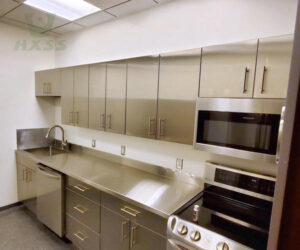
Kitchen equipment: sinks, utensils, appliances.
Architectural trim and decorative panels.
Automotive trim and components.
Food processing equipment.
Tubes and pipes for water supply in non-aggressive environments.

Overview of 430 Stainless Steel
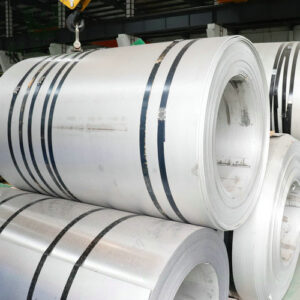
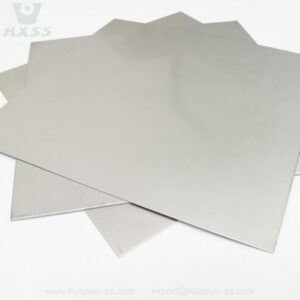
430 Stainless Steel is a ferritic stainless steel known for its excellent corrosion resistance, high strength, and magnetic properties. It is widely used in applications where moderate corrosion resistance and good formability are required, often in automotive, kitchen, and industrial equipment.
Key Features of 430 Stainless Steel:
Magnetic: Strongly magnetic, making it suitable for applications that require magnetic properties.
Good corrosion resistance: Performs well in mildly corrosive environments.
High strength and hardness: Provides durability in structural applications.
Lower ductility than 201: Less suitable for deep drawing or bending.
Cost-effective: Cheaper than 304 stainless steel, making it ideal for budget-conscious projects.
Applications:
Automotive trim and parts.
Kitchen appliances: ovens, dishwashers, and refrigerator panels.
Decorative panels in architecture.
Tubes, bars, and sheets for industrial equipment.
Magnetic applications like sensors or instruments.

201 vs 430 Stainless Steel: Detailed Comparison
Composition & Structure
| Feature | 201 Stainless Steel | 430 Stainless Steel |
|---|---|---|
| Type | Austenitic (FCC) | Ferritic (BCC) |
| Chromium (Cr) | 16–18% | 16–18% |
| Nickel (Ni) | 3.5–5.5% | 0–0.75% |
| Manganese (Mn) | 5.5–7.5% | 0.5% max |
| Carbon (C) | ≤0.15% | ≤0.12% |
| Nitrogen (N) | 0.25–0.35% | ≤0.1% |
201 is an austenitic stainless steel, uses manganese and nitrogen to partially replace nickel.
430 is a ferritic stainless steel, almost nickel-free, with magnetic properties.
The composition affects corrosion resistance, price, and fabrication.
Equivalent Grades / International Standards
| Grade | ASTM / AISI | EN / DIN | JIS (Japan) | GB / China | UNS | Typical Notes |
|---|---|---|---|---|---|---|
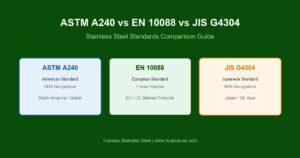
| 201 | ASTM A240, A240M | EN 10088-1 X3CrNiMn16-5-1 | SUS201 | 1Cr17Mn6Ni5N | S20100 | Austenitic stainless steel, used as 304 alternative with lower Ni |
| 430 | ASTM A240, A240M | EN 10088-2 X6Cr17 | SUS430 | 0Cr17 | S43000 | Ferritic stainless steel, magnetic, widely used in appliances and indoor panels |
Corrosion & Oxidation Resistance
Both grades are designed for “mild” environments, but they react differently to heat and moisture.
201 Performance: Relies on a combination of Chromium and Nickel. It performs well in dry, indoor architectural settings but may develop “tea staining” or pitting in humid or coastal areas.
430 Performance: Contains no nickel but has high chromium. It offers superior oxidation resistance at high temperatures, making it a favorite for appliance interiors and automotive trim.
Internal Note: If your project requires even higher corrosion resistance, we recommend reading our 201 vs. 304 Stainless Steel Deep Comparison.
Mechanical Properties
| Property | 201 Stainless Steel | 430 Stainless Steel |
|---|---|---|
| Tensile Strength | 515–720 MPa | 450–550 MPa |
| Yield Strength | 205 MPa | 210–275 MPa |
| Elongation | 40% | 22% |
| Hardness | 70–90 HRB | 80–95 HRB |
| Magnetic | Slightly magnetic after cold working | Strongly magnetic |
Summary: 201 stainless steel is more ductile and suitable for forming processes, while 430 is stronger and magnetic but less flexible.
Cost Comparison
430 stainless steel often has a lower purchase price than 201 due to zero nickel content, making it cost-effective for indoor and non-corrosive applications. However, in humid or corrosive environments, 201 may incur higher maintenance or replacement costs, making 430 the more economical choice over time.
While 201 has a lower nickel content than the 300 series and is a more economical choice than 304, its cost advantage over 430 is not always stable. This is because 201 still contains nickel (Ni ~3.5–5.5%) and a relatively high amount of manganese (Mn), while 430 contains virtually no nickel.
Actual market prices are influenced not only by alloy composition but also by fluctuations in the prices of raw materials such as nickel, chromium, and manganese, processing costs (cold rolling, hot rolling, surface treatment), specifications (thickness, width), and inventory/supply and demand factors. Sometimes, a batch of 201 may be quoted lower than a batch of 430 due to excess inventory and lower raw material prices, but this is not a universal rule.
Contact Huaxiao Metal to get custom quotes based on your exact project requirements.
Fabrication and Welding
201 Stainless Steel: Easier to weld and form due to austenitic structure. Suitable for deep drawing and bending.
430 Stainless Steel: Welding is possible but requires careful preheating. Forming is limited to moderate bending.
Magnetic Properties
201 Stainless Steel: Non-magnetic in the annealed state; slight magnetism after cold work.
430 Stainless Steel: Strongly magnetic, which can be advantageous in certain applications like electronic components or magnetic sensors.
Choosing Between 201 and 430 Stainless Steel
When selecting stainless steel for your project, consider the following factors:
Corrosion Environment: If exposure to moisture or mild chemicals is expected, 430 may offer better performance. For decorative indoor use, 201 is a cost-effective choice.
Forming Requirements: 201 stainless steel is ideal for deep drawing, stamping, and bending. 430 is suitable for flat or moderately bent applications.
Magnetic Requirement: 430 is ideal for applications that require magnetic properties; 201 is mostly non-magnetic.
Cost Considerations: 430 is generally cheaper and more budget-friendly; 201 provides a balance between cost and performance.
Aesthetic Finish: Both grades can be polished or brushed; 201 has a slightly brighter appearance due to higher nickel content.
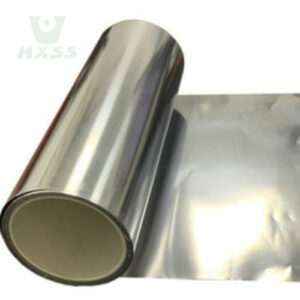
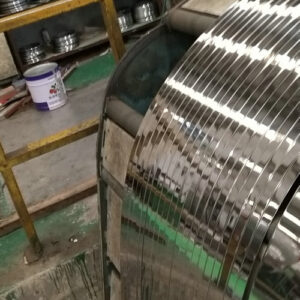
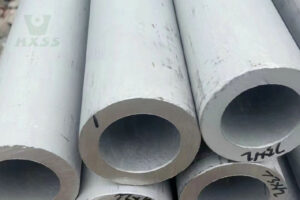
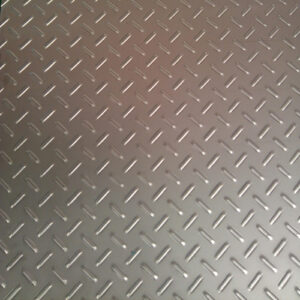
At Huaxiao Metal, we provide both 201 and 430 stainless steel in a variety of forms, including sheets, coils, narrow strips, bars, tubes, and wires. We help our clients choose the right grade and product type for their specific application while offering competitive pricing and prompt delivery.
Applications of 201 and 430 Stainless Steel
Sheets and Coils
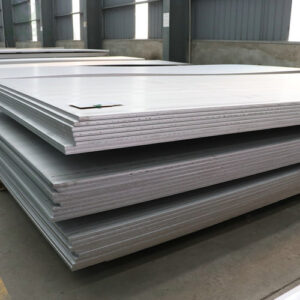
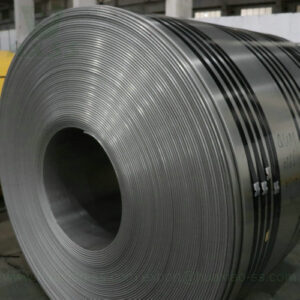
Used in kitchen equipment, automotive trim, and decorative panels.
201 is often preferred for deep drawing and stamping applications.
430 is suitable for flat panels, appliance panels, and decorative trim.
Narrow Strips
Ideal for springs, clips, and small structural components.
201 provides flexibility for precision forming.
430 offers strength and magnetic properties.
Bars and Rods
Structural applications, machinery components, and fasteners.
430 bars are magnetic and corrosion-resistant.
201 rods are ductile and suitable for machining.
Tubes and Pipes
Water supply, chemical transport, and structural tubes.
201 tubes are widely used in indoor plumbing and mild chemical environments.
430 tubes are used in appliance tubes, automotive exhausts, and structural applications requiring magnetic properties.
Wire
Spring wires, fasteners, and electronic components.
201 wire: flexible and corrosion-resistant for general use.
430 wire: magnetic and durable, suitable for electronic and industrial applications.
FAQ – 201 vs 430 Stainless Steel
What are the international equivalent grades for 201 and 430?
201 corresponds to SUS201 (JIS), 1Cr17Mn6Ni5N (GB), S20100 (UNS).
430 corresponds to SUS430 (JIS), 0Cr17 (GB), S43000 (UNS).
Which is better for bending or deep drawing?
201 is preferred for deep drawing or complex shapes; 430 is suitable only for simple forming.
Is 201 stainless steel magnetic?
201 stainless steel is generally non-magnetic in annealed condition but may exhibit slight magnetism after cold working.
Is 430 stainless steel suitable for outdoor use?
430 stainless steel performs well in mildly corrosive environments, but prolonged exposure to saltwater or highly corrosive conditions may lead to rust.
Can 201 stainless steel be welded?
Yes, 201 stainless steel can be welded easily due to its austenitic structure.
What is the main difference between 201 and 430 stainless steel?
201 is austenitic, slightly magnetic, more ductile, and suitable for deep drawing. 430 is ferritic, strongly magnetic, stronger, and better for flat or structural applications.
Which stainless steel is more cost-effective?
430 stainless steel is generally cheaper than 201 due to minimal nickel content, while 201 is slightly more expensive but offers higher ductility and a bright finish.
Which is more corrosion-resistant, 201 or 430?
In mild indoor environments, both perform similarly. Neither is suitable for marine or highly corrosive environments.
Does 430 stainless steel rust faster than 201?
Not necessarily. In dry environments, both perform similarly. However, 430 has better resistance to high-temperature oxidation, while 201 is slightly better at resisting acidic cleaning agents due to its nickel content.
Can 201 stainless steel replace 430 in all applications?
Only in indoor, low-corrosion environments. For humid or mildly corrosive environments, 430 is preferred.
Can Huaxiao Metal supply 201 and 430 stainless steel in all forms?
Yes, we supply sheets, coils, narrow strips, bars, tubes, and wires to meet diverse customer requirements.
How can I get a quote for 201 or 430 stainless steel?
Contact Huaxiao Metal via our website or email. We provide competitive pricing, inventory availability, and professional guidance on material selection.
In Conclusion
Both 201 vs 430 stainless steel have their unique advantages and applications. Choosing the right grade depends on factors such as corrosion environment, forming requirements, magnetic properties, and budget.
At Huaxiao Metal, we specialize in supplying high-quality stainless steel raw materials, including sheets, coils, narrow strips, bars, tubes, and wires. Our experienced team can guide you to select the optimal stainless steel grade for your specific needs, ensuring the best balance of performance, aesthetics, and cost-effectiveness.
Contact Huaxiao Metal today for your stainless steel requirements and request a competitive quote for 201 or 430 stainless steel products.