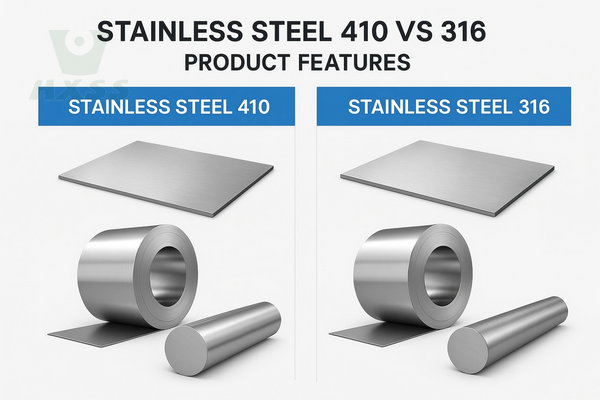
Welcome to Huaxiao Metal’s explanation of the differences between stainless steel 410 vs 316. As a leading authority in metal manufacturing and distribution, Huaxiao Metal understands the importance of selecting the right materials for every application. In this blog post, our company will explain the differences between stainless steel grade 410 and grade 316.
Drawing on our decades of expertise, we illuminate the unique properties, applications, and benefits of each stainless steel model, allowing you to make an informed decision based on your specific needs. Join us to understand the intricacies of stainless steel composition, properties, and suitability for different industries. Let’s take a closer look at the differences between these two extraordinary alloys.
Definition of Stainless Steel 410 vs 316
316 Stainless Steel
– Grade 316 stainless steel, also known as marine grade stainless steel, contains 16-18% chromium, 10-14% nickel, and 2-3% molybdenum.
– The presence of molybdenum enhances its corrosion resistance, especially against chloride and other corrosive environments, making it suitable for marine and chemical processing applications.
– Excellent resistance to corrosion, pitting, and crevice corrosion in chloride environments, making it ideal for use in coastal areas, areas in contact with seawater, and chemical processing plants.
– 316 stainless steel is also known for its excellent formability and weldability, making it suitable for a variety of manufacturing processes.
410 Stainless Steel
– Grade 410 stainless steel is a martensitic stainless steel containing 11.5-13.5% chromium and has good corrosion resistance.
– It also contains about 0.15-0.65% carbon and smaller amounts of other elements such as manganese and silicon.
– This grade is known for its high strength, hardness, and wear resistance, making it suitable for applications requiring good mechanical properties.
– It is often used in applications such as valves, pump components, and kitchen appliances where corrosion resistance is not a major consideration but strength and durability are crucial.
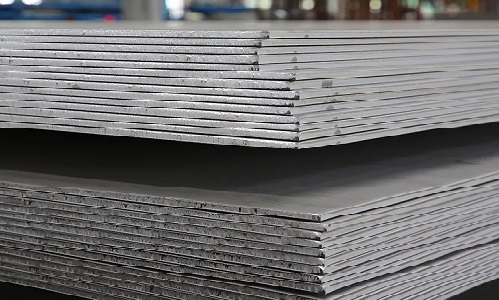
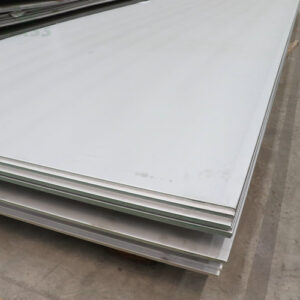
Stainless Steel 410 vs 316 – What’s the Difference
For a quick summary, here is a direct comparison of the key characteristics that define these two materials.
| Feature | 410 Stainless Steel (Martensitic) | 316 Stainless Steel (Austenitic) |
| Primary Advantage | High Strength, Hardness & Wear Resistance | Superior Corrosion & Heat Resistance |
| Corrosion Resistance | Fair (Good in mild, dry environments) | Excellent, especially against chlorides (saltwater) |
| Magnetism | Magnetic | Non-Magnetic |
| Key Alloying Elements | Chromium (Cr), Carbon (C) | Chromium (Cr), Nickel (Ni), Molybdenum (Mo) |
| Cost | More Economical | Higher (due to Nickel and Molybdenum content) |
| Weldability | Fair (Requires pre-heating and post-weld treatment) | Excellent |
| Typical Applications | Cutlery, Valves, Fasteners, Pump Parts | Marine Hardware, Chemical Tanks, Medical Devices |
Stainless Steel 410 vs 316 International Equivalent Grades Comparison
| Standard System | 410 Stainless Steel (Martensitic) | 316 Stainless Steel (Austenitic) |
| UNS (Unified Numbering System) | S41000 | S31600 |
| AISI/SAE (USA) | 410 | 316 |
| EN (Numeric) (European Standard) | 1.4006 | 1.4401 |
| EN (Name) (European Standard) | X12Cr13 | X5CrNiMo17-12-2 |
| JIS (Japanese Industrial Standard) | SUS 410 | SUS 316 |
| GB (Chinese National Standard) | 12Cr13 (New) / 1Cr13 (Old) | S31608 (New) / 0Cr17Ni12Mo2 (Old) |
| ASTM Casting Equivalent | CA15 | CF8M |
| Common Industry Nickname | – | Marine Grade / A4 Stainless Steel |
Chemical Composition of Stainless Steel 410 vs 316
| Element | 316 Stainless Steel | 410 Stainless Steel | Impact on performance |
| Cr | 16.00 – 18.00 | 11.5 – 13.5 | Provides basic corrosion resistance and forms a surface passivation layer |
| Ni | 10.00 – 14.00 | ≤ 0.75 | Stabilizes the austenite structure, significantly improving ductility and cost |
| Mo | 2.00 – 3.00 | None or trace | Core difference! Greatly enhanced resistance to pitting and crevice corrosion |
| C | ≤ 0.08 | 0.08 – 0.15 | Increases hardness and strength, but reduces weldability and toughness |
- The Mo content of 316 is the source of its “marine grade” reputation. This additional 2-3% molybdenum contributes to 316’s exceptional corrosion resistance in harsh environments containing chlorides, such as seawater, salt spray, and bleach.
The C content of 410, combined with its martensitic structure, gives 410 stainless steel the ability to achieve high hardness and strength through heat treatment, making it a top choice for wear-resistant components such as cutting tools and fasteners.
Mechanical Properties of Stainless Steel 410 vs 316
Here is a comparison of the mechanical properties of 316 and 410 stainless steel:
| Property | 316 Stainless Steel | 410 Stainless Steel |
|---|---|---|
| Tensile Strength | 520-700 MPa | 480-700 MPa |
| Yield Strength | 205 MPa (min) | 205 MPa (min) |
| Elongation | 40% (min) | 18% (min) |
| Hardness | HRB 90-95 | HRB 80-90 |
| Impact Toughness | Good | Poor |
| Fatigue Strength | High | Low |
| High-Temperature Performance | Suitable for high-temperature environments (up to 870°C) | Suitable for medium to high temperatures (up to 600°C) |
| Corrosion Resistance | Excellent (resistant to acids, saltwater) | Fair (poor resistance to acids) |
Physical Properties of 316 vs 410 Stainless Steel
| Property | Stainless Steel 316 | Stainless Steel 410 |
|---|---|---|
| Density (g/cm³) | ~7.99 | ~7.75 |
| Melting Point (°C) | 1370-1400 | 1480-1530 |
| Thermal Conductivity (W/m·K) | ~16.2 at 100°C | ~24.9 at 100°C |
| Electrical Resistivity (ohm·m) | ~7.4 x 10^-7 at 20°C | ~5.7 x 10^-7 at 20°C |
| Coefficient of Thermal Expansion (µm/m·K) | ~16.5 (20-100°C) | ~10.8 (20-100°C) |
| Specific Heat Capacity (J/kg·K) | ~500 at 20°C | ~460 at 20°C |
| Magnetic Properties | Non-magnetic (Annealed) | Magnetic (All Conditions) |
Cost of Stainless Steel 410 vs 316
Generally speaking, 316 stainless steel tends to be more expensive than 410 stainless steel because of its higher nickel and molybdenum content, which contribute to its superior corrosion resistance and other enhanced properties.
While stainless steel 316 is generally more expensive than stainless steel 410 due to its superior corrosion resistance and higher alloy content, the actual cost difference may vary based on a variety of factors specific to the application and market conditions.
Corrosion Resistance: The Clear Winner is 316
This is the most critical distinction. If your project will be exposed to harsh environments—especially marine, coastal, or chemical processing settings—316 stainless steel is the only reliable choice. Its molybdenum content prevents pitting and crevice corrosion caused by chlorides. In contrast, 410 steel performs well in mild atmospheres and fresh water but will rust in more demanding conditions.
Strength & Hardness: The Advantage Goes to 410
If your primary need is mechanical performance, 410 stainless steel is superior. Its ability to be heat-treated gives it a hardness and strength that 316 cannot achieve. This makes it ideal for applications requiring resistance to abrasion and wear, such as blades, fasteners, and structural components.
Fabrication & Welding: 316 is Easier to Work With
316 stainless steel offers excellent formability and weldability, making it easy to shape and join without requiring post-weld heat treatment. 410 steel, due to its martensitic structure, is more challenging to weld and typically requires additional steps to prevent cracking.
Application of 316 vs 410 Stainless Steel
Stainless steel 316 and 410 are used in various applications due to their unique properties. Here’s how they’re commonly used:
Applications of 316 Stainless Steel:
Marine equipment: Stainless steel 316 is often used in marine environments due to its excellent corrosion resistance to seawater and chloride-containing environments. It is used in marine accessories, marine hardware, and shipbuilding.
Chemical Processing Equipment: The excellent corrosion resistance of 316 stainless steel makes it suitable for use in chemical processing equipment that is frequently exposed to corrosive chemicals.
Food and Beverage Industry: Stainless steel 316 is widely used in the food processing and beverage industry due to its hygienic properties, corrosion resistance, and ease of cleaning. It is used in equipment such as food processing machinery, storage tanks, and pipelines.
Medical Devices: 316 stainless steel is used in medical devices and surgical instruments because of its biocompatibility, corrosion resistance, and sterilizability.
Pharmaceutical industry: Equipment used in pharmaceutical production, such as reactors, storage tanks, and pipelines, is often made of 316 stainless steel due to its corrosion resistance and hygienic properties.
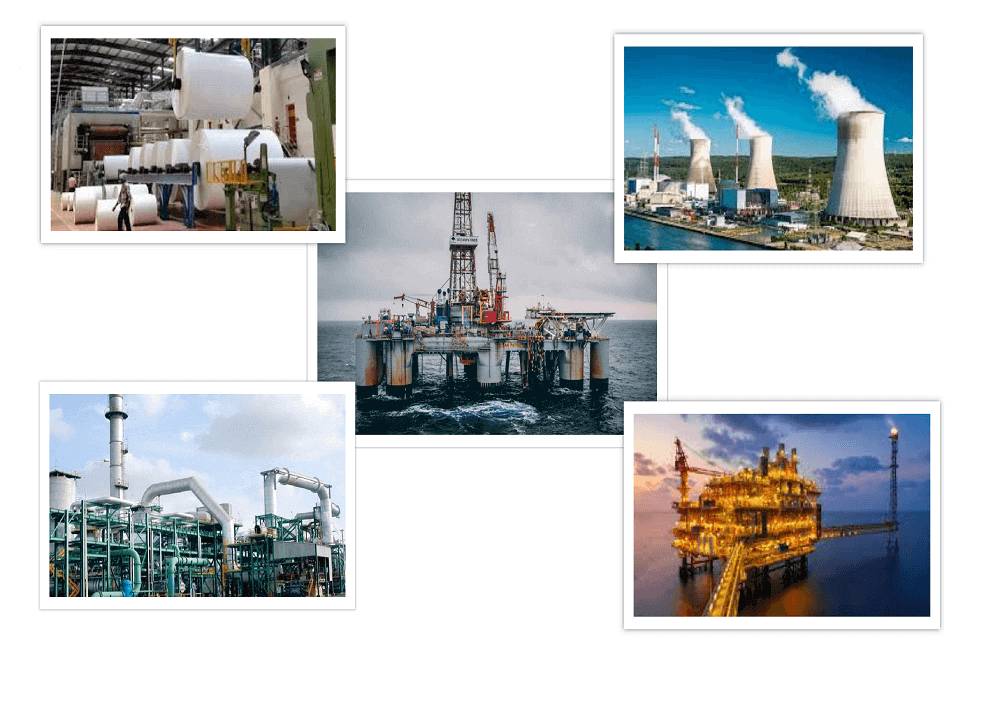
Applications of 410 Stainless Steel:
Valves and Pump Parts: The high strength and hardness of stainless steel 410 make it suitable for valves, pump parts, and other components subject to wear and tear.
Tableware and Kitchen Utensils: Due to its hardness and corrosion resistance, 410 stainless steel is used in the production of kitchen utensils, tableware, and cookware.
Fasteners: Stainless steel 410 is used to manufacture fasteners such as bolts, screws, and nuts that require strength and corrosion resistance.
Industrial Equipment: It is used in a variety of industrial equipment components, including shafts, gears, and bearings, where its mechanical properties provide advantages.
Oil and Gas Industry: 410 stainless steel is used in components and equipment in the oil and gas industry for its strength, corrosion resistance, and resistance to sulfide stress cracking.
Essentially, while both stainless steel grades are corrosion-resistant, 316 is preferred in environments with frequent exposure to chlorides, such as marine and chemical processing applications. 410 stainless steel, on the other hand, is chosen for its strength, hardness, and wear resistance, making it suitable for applications where mechanical properties are critical.
FAQ
Will 410 stainless steel rust? How does it compare to 304?
Yes. While 410 stainless steel boasts “stainless” properties, its corrosion resistance is relatively weak. In humid, salty, or acidic environments, 410 stainless steel can easily rust. In contrast, 304 stainless steel (austenitic) has a higher chromium and nickel content and offers significantly better corrosion resistance than 410. If your application environment is humid or exposed outdoors, we recommend 304 at a minimum. 316 is recommended for environments with chloride ions.
What is the maximum hardness of 410 stainless steel after heat treatment?
410 stainless steel is one of the few stainless steels whose hardness can be significantly increased through heat treatment (quenching and tempering). After proper heat treatment, its hardness can typically reach HRC 40 or above, making it suitable for applications with high wear resistance requirements, such as cutting tools and turbine blades.
Can 316 stainless steel be welded to 410 stainless steel?
Yes, but professional guidance is required. Generally, we prefer to use a filler wire that matches the parent material. If welding is necessary and the application is not demanding, an austenitic wire (such as 309 or 316) can be used to weld these two very different steels. However, please note that 410 is a martensitic steel and must be preheated before welding. Tempering may be required after welding to relieve stress, improve weld toughness, and prevent cracking.
How can you easily distinguish between 410 and 316 stainless steel?
The quickest and most non-destructive method is to use a magnet.
410 stainless steel is highly magnetic in all conditions (strongly attracted to a magnet).
316 stainless steel is non-magnetic or weakly magnetic in the annealed state (not attracted to a magnet or only weakly attracted to a magnet). Of course, the most accurate method is to perform a chemical composition analysis or consult the MTC report provided by Huaxiao Metal.
Why is 316 stainless steel considered "marine grade"?
The key to 316 stainless steel lies in its 2% to 3% molybdenum (Mo) content. This element, molybdenum, forms an extremely stable corrosion barrier in chloride environments (such as the salt in seawater), effectively resisting pitting and crevice corrosion caused by chloride ions. This is a property that steels like 304, which do not contain Mo, cannot match.
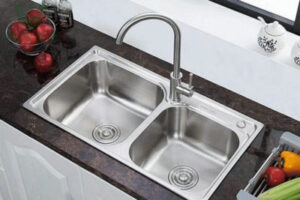
Can 410 stainless steel be used in kitchen sinks or countertops?
It is not recommended for use in kitchen environments with prolonged contact with water or food. Although 410 has high hardness, its corrosion resistance is insufficient. It is susceptible to pitting and rusting under the long-term effects of detergents, food residue, and water. The standard choice for kitchen environments is 304 or 316 stainless steel.
What should I consider when choosing 410 stainless steel?
1. Environment: Ensure the application environment is dry or only in contact with fresh water.
2. Heat Treatment: Proper quenching and tempering are required to achieve high strength.
3. Welding: If welding is required, preheating and post-weld tempering are required.
How does Huaxiao Metal ensure that 316 stainless steel meets marine-grade standards?
Huaxiao Metal implements strict quality control on the procurement and delivery of 316 stainless steel. We ensure that the molybdenum (Mo) content of all 316 steel is within the specified range of 2.0% to 3.0%. We provide an authoritative MTC (Material Test Certificate) that lists all chemical components in detail to ensure its “marine-grade” performance and reliability.
I'd like to purchase a batch of 316L stainless steel plates. What sizes and finishes does Huaxiao Metal offer?
Huaxiao Metal offers 316L stainless steel plates in a variety of thicknesses (from 0.3mm precision plate to 100mm thick plate). Standard finishes include 2B (bright annealed), BA (mirror finish), No. 4 (brushed), and HL (hairline finish). Please feel free to contact our sales team with your specific requirements, and we’ll tailor the best supply solution for you.
In Conclusion
In summary, while both 410 stainless steel and 316 stainless steel are corrosion-resistant, there are significant differences in their composition and properties. 410 stainless steel is known for its strength and hardness and is used in applications where corrosion resistance is less important, while 316 stainless steel offers superior corrosion resistance and is the first choice for harsh environment applications such as marine and chemical processing.
In the end, there is no “better” steel, only the “right” steel for the job. The choice is simple:
For cost-effectiveness, high strength, and wear resistance in low-corrosion environments → Choose 410 Stainless Steel.
For superior corrosion resistance against harsh environments (especially salt and chemicals) → Choose 316 Stainless Steel. It is a necessary investment in durability.
Still Unsure? Let Huaxiao Metal’s Experts Guide You!
Our team has decades of experience helping clients select the perfect stainless steel grade for their unique applications. We can analyze your requirements, operating conditions, and budget to provide a recommendation you can trust.