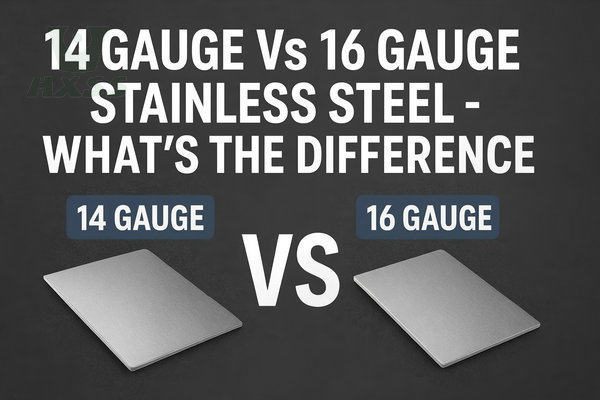
When discussing stainless steel thickness, the terms 14 gauge vs 16 gauge stainless steel often arise. These two gauges are widely used in industries such as kitchen equipment, architecture, automotive, and heavy machinery. Understanding the difference between 14 gauge stainless steel and 16 gauge stainless steel is essential for buyers, engineers, and manufacturers when making decisions related to durability, weight, performance, and cost.
At Huaxiao Metal, we supply high-quality stainless steel products to international clients worldwide. As a trusted stainless steel supplier and manufacturer, we often receive inquiries from customers asking: Should I choose 14 gauge or 16 gauge stainless steel? What’s the price difference? Which gauge is better for my project?
This article provides a detailed comparison between 14 gauge vs 16 gauge stainless steel, covering thickness, applications, price, advantages, disadvantages, and FAQs. By the end, you’ll know exactly which option suits your project, and you can contact Huaxiao Metal for professional support and quotation.
Understanding Stainless Steel Gauge
What is Gauge in Stainless Steel?
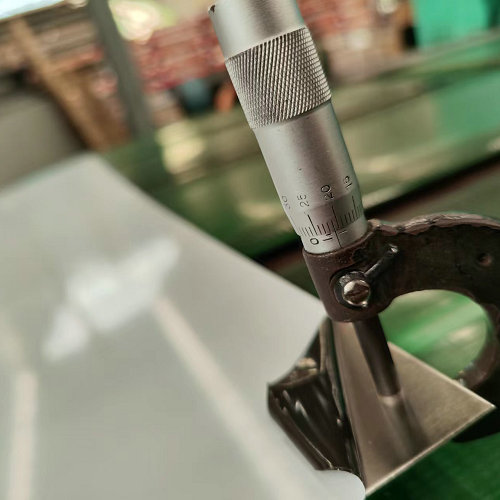
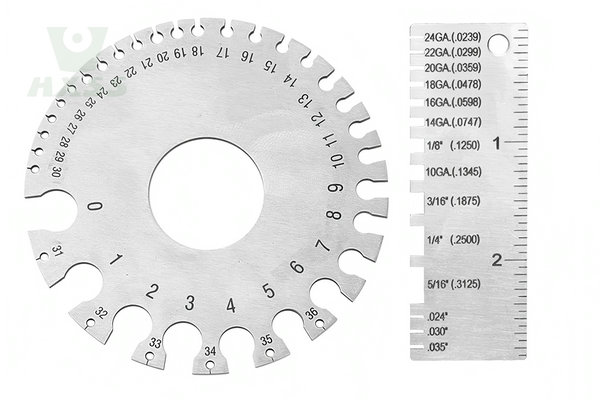
Gauge is a measurement standard used to describe the thickness of stainless steel sheets or products.
The lower the gauge number, the thicker the material. For example, 14 gauge stainless steel is thicker and stronger than 16 gauge stainless steel.
Gauge values differ slightly depending on whether the steel is measured in US standard gauge or metric system.
| Gauge | Thickness (inches) | Thickness (mm) |
|---|---|---|
| 14 Gauge | 0.0781 in | 1.98 mm |
| 16 Gauge | 0.0625 in | 1.59 mm |
As seen above, 14 gauge stainless steel is approximately 25% thicker than 16 gauge stainless steel.
Key Differences Between 14 Gauge and 16 Gauge Stainless Steel
1. Thickness and Strength
14 gauge stainless steel: Thicker, stronger, and more resistant to bending or denting.
16 gauge stainless steel: Slightly thinner, lighter, and easier to fabricate or cut.
2. Applications
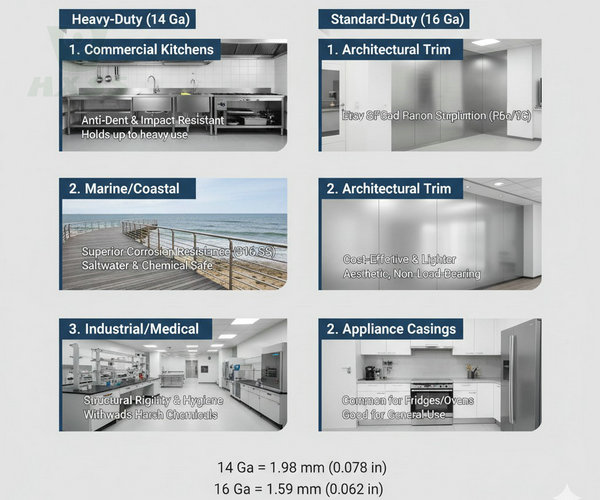
14 Gauge Stainless Steel Uses:
Heavy-duty sinks for commercial kitchens
Industrial equipment
Outdoor structural components
Construction projects requiring durability
16 Gauge Stainless Steel Uses:
Residential kitchen sinks
Light-duty food preparation tables
Decorative panels and cladding
Automotive parts where weight reduction is important
3. Price Considerations
Since 14 gauge stainless steel uses more raw material, it is typically more expensive than 16 gauge.
However, the long-term durability of 14 gauge can offset the initial cost.
At Huaxiao Metal, we offer competitive 14 gauge vs 16 gauge stainless steel prices, ensuring that clients receive both quality and value.
4. Corrosion Resistance Differences
Although both are stainless steel, their thicknesses vary, resulting in varying lifespans in acidic, alkaline, and humid environments.
14-gauge stainless steel is thicker and offers longer resistance to pitting and puncture.
16-gauge stainless steel is durable enough for normal household and light industrial environments, but its lifespan is slightly shorter in extreme environments.
5. Sound Isolation and Vibration Control
The thicker 14-gauge steel better absorbs shock and reduces noise, such as the clatter of heavy pots and pans in commercial kitchens.
The thinner 16-gauge steel has a more pronounced sound reverberation, making it suitable for lightweight applications but less effective in noise-sensitive environments.
6. Welding and Processing Performance
The thinner 16-gauge steel makes it easier to control heat input during welding, making it suitable for small fabrication plants.
The thicker 14-gauge steel requires more skill and equipment for welding, but the finished product is stronger.
7. Transportation and Installation Costs
14-gauge steel is heavier, resulting in higher shipping costs and requiring more labor for installation.
The lighter 16-gauge steel is easier to transport and install, saving costs.
8. Industry Standards and Customer Preferences
Some international industry standards (such as NSF, ASTM, and EN) recommend different thicknesses for different applications.
In the European and American markets, 16 gauge is more widely used in residential kitchens; whereas, in the Middle East and among industrial customers, 14 gauge is more popular.
14 Gauge vs 16 Gauge Stainless Steel: Detailed Comparison
| Feature | 14 Gauge | 16 Gauge |
|---|---|---|
| Thickness | 1.98 mm | 1.59 mm |
| Durability | Very high | Medium-high |
| Resistance to Denting | Excellent | Good |
| Weight | Heavier | Lighter |
| Cost | Higher | Lower |
| Common Applications | Industrial sinks, structural components, heavy equipment | Residential sinks, panels, light-duty applications |
Pros and Cons of 14 Gauge Vs 16 Gauge Stainless Steel
Pros and Cons of 14 Gauge Stainless Steel
Advantages
Stronger and more durable
Withstands heavy usage and impacts
Longer lifespan in demanding environments
Disadvantages
More expensive than thinner gauges
Heavier, making fabrication and handling more challenging
Pros and Cons of 16 Gauge Stainless Steel
Advantages
More affordable compared to 14 gauge
Lighter and easier to handle
Suitable for residential and light commercial applications
Disadvantages
Less durable than 14 gauge
Can dent under heavy usage
Choosing Between 14 Gauge and 16 Gauge Stainless Steel
When deciding between 16 gauge vs 14 gauge stainless steel, consider:
Application environment: Heavy-duty industrial use favors 14 gauge, while household use often prefers 16 gauge.
Budget: If cost is a concern, 16 gauge offers a good balance.
Longevity: For long-term durability, 14 gauge provides better performance.
At Huaxiao Metal, our engineers can guide you on selecting the right gauge stainless steel for your project, ensuring you balance cost, performance, and application needs.
FAQ
Which is better: 14 gauge or 16 gauge stainless steel?
It depends on the application. For industrial strength and durability, 14 gauge stainless steel is better. For residential and light-duty use, 16 gauge is sufficient.
What is the price difference between 14 gauge vs 16 gauge stainless steel?
14 gauge is usually more expensive due to its thickness and higher raw material usage. Contact Huaxiao Metal to get the latest gauge stainless steel price based on your order quantity and specifications.
Are 14 gauge stainless steel sinks better than 16 gauge sinks?
Yes, 14 gauge sinks are stronger and more resistant to dents. However, 16 gauge sinks are still durable and often more cost-effective.
Where can I buy 14 gauge and 16 gauge stainless steel from reliable manufacturers?
Huaxiao Metal is one of the leading gauge stainless steel manufacturers, supplying both 14 and 16 gauge stainless steel worldwide.
Can 14 gauge and 16 gauge stainless steel be used interchangeably?
In some applications, yes. But in heavy-duty industries, 14 gauge is recommended for its durability.
is 16 gauge smaller than 14
Correct. 16 gauge stainless steel is thinner and lighter compared to 14 gauge stainless steel. While it is still durable, it has less resistance to denting and bending compared to the thicker 14 gauge option.
is 14 gauge bigger than 16 gauge
Yes. 14 gauge stainless steel is thicker and stronger than 16 gauge stainless steel. The lower the gauge number, the thicker the steel sheet. For example, 14 gauge is about 1.98 mm thick, while 16 gauge is about 1.59 mm.
In Conclusion
In summary, the main difference between 14 gauge vs 16 gauge stainless steel lies in thickness, strength, and cost. 14 gauge stainless steel is thicker, more durable, and ideal for industrial or heavy-duty use, while 16 gauge stainless steel is slightly thinner, lighter, and cost-effective for residential and light commercial projects.
At Huaxiao Metal, we specialize in supplying high-quality gauge stainless steel products to international customers. Whether you need 14 gauge vs 16 gauge stainless steel price, or you are looking for reliable gauge stainless steel manufacturers, our team is ready to support you with competitive pricing, fast delivery, and professional guidance.
Contact Huaxiao Metal today to request a quote and get expert advice on your stainless steel requirements.