When it comes to stainless steel products used in construction, kitchen equipment, and industrial manufacturing, 16 gauge stainless steel is one of the most common and versatile choices. Many customers often ask questions such as: how thick is 16 gauge stainless steel, is 16 gauge or 18 gauge stainless steel better, and what is the price of 16 gauge stainless steel sheet. At Huaxiao Metal, we understand the importance of selecting the right thickness and grade of stainless steel for your project. This guide will provide you with a comprehensive overview of 16 gauge stainless steel sheets, sheet metal, and thickness, including specifications, advantages, applications, and buying considerations, to help you make informed purchasing decisions.
What is 16 Gauge Stainless Steel?
What is “Gauge“? The Science Behind Thickness
To understand 16-gauge stainless steel, one must first understand the “Gauge” system. This is an industry standard for measuring the thickness of sheet metal. Notably, this system follows an inverse relationship: the lower the gauge, the thicker the metal. This means that a sheet of 14-gauge stainless steel is thicker than a 16-gauge, which in turn is denser than an 18-gauge. This measurement method is widely used across many industries in the United States and around the world.
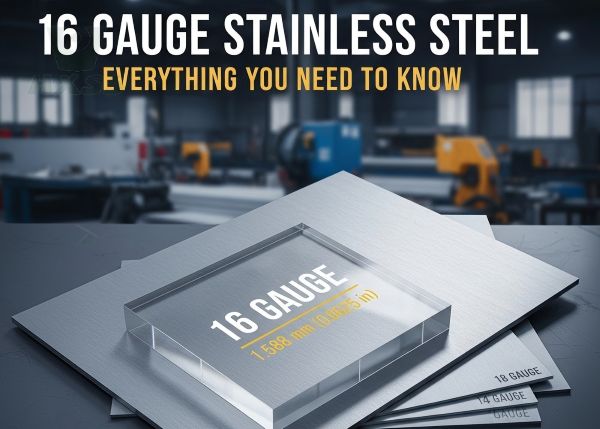
When it comes to the thickness of 16-gauge stainless steel, there’s a precise measurement. Typically, 16-gauge stainless steel measures 0.0625 inches, or approximately 1.588 millimeters. This thickness strikes a perfect balance, providing sufficient structural strength and impact resistance without being as bulky or difficult to work with as thicker sheet metal. It’s this perfect balance that makes 16-gauge stainless steel so effective in so many applications.
In addition to thickness, the “grade” of stainless steel is also crucial. Common grades include 304, 316, and 430, which determine the chemical composition and properties of stainless steel. For example:
304 stainless steel: The most common and widely used austenitic stainless steel. It contains 18% chromium and 8% nickel, offering excellent corrosion resistance and good ductility, making it the preferred choice for most indoor and general environmental applications.
316 stainless steel: Commonly known as “marine-grade” stainless steel. It adds molybdenum to 304, making it more resistant to pitting and crevice corrosion in chloride environments (such as seawater, salt spray, or certain chemicals).
430 stainless steel: A ferritic stainless steel with 17% chromium and no nickel. Its corrosion resistance is lower than that of 304 and 316, but it is less expensive and has magnetic properties, making it suitable for certain applications.
When selecting 16-gauge stainless steel sheet, it is crucial to consider its thickness and grade. For example, a 16-gauge piece of 316 stainless steel will combine the strength of 16-gauge with the excellent corrosion resistance of the 316 grade, making it an ideal choice for harsh environments.
16 Gauge Stainless Steel Thickness Explained
Gauge vs. Thickness
The gauge system can be confusing because it does not follow a simple linear progression. The higher the gauge number, the thinner the sheet:
14 gauge stainless steel thickness: ~2.0 mm
16 gauge stainless steel thickness: ~1.6 mm
18 gauge stainless steel thickness: ~1.3 mm
This explains why buyers often ask: which is thicker 16 or 14 gauge stainless steel? The answer is 14 gauge is thicker, while 18 gauge is thinner than 16 gauge.
Conversion Table for Stainless Steel Gauges
| Gauge | Thickness (inches) | Thickness (mm) | Common Applications |
|---|---|---|---|
| 14 | 0.0781 in | 1.98 mm | Heavy-duty countertops, industrial tanks |
| 16 | 0.0625 in | 1.59 mm | Kitchen sinks, commercial equipment |
| 18 | 0.0478 in | 1.27 mm | Residential kitchen sinks, lightweight panels |
| 20 | 0.0359 in | 0.91 mm | Automotive panels, decorative applications |

Why Choose 16 Gauge Stainless Steel? - 6 Core Advantages of 16 Ga Stainless Steel
The popularity of 16-gauge stainless steel is no accident. Its numerous unique advantages set it apart from other materials, providing a sturdy, reliable, and aesthetically pleasing solution for a wide range of projects.
1. Extraordinary Strength and Durability
16-gauge stainless steel is renowned for its exceptional strength. Its thickness is sufficient to resist the dents, scratches, and deformations of everyday use, making it an ideal choice for high-traffic areas and heavy-duty applications. Whether it’s a commercial kitchen countertop, a protective cover for industrial equipment, or a handrail in a public space, 16-gauge stainless steel withstands the elements, maintaining its structural integrity and aesthetics over time. Compared to thinner 18-gauge or 20-gauge stainless steel, 16-gauge stainless steel offers significantly greater impact resistance.
2. Excellent Corrosion Resistance
Stainless steel is best known for its corrosion resistance, and 16-gauge stainless steel is no exception. Depending on the grade selected (such as 304 or 316), it effectively resists moisture, chemicals, food acids, and even salt spray. This makes it a preferred material for wet or corrosive environments, such as food processing plants, medical facilities, and coastal structures. It won’t rust, discolor, or degrade, ensuring long-term performance and aesthetics.
3. Excellent Machinability and Versatility
While 16-gauge stainless steel is exceptionally strong, it’s also highly machinable. It can be cut, bent, stamped, and welded using standard equipment, allowing manufacturers and designers to customize it to their project’s needs. This flexibility allows 16-gauge stainless steel to be formed into a wide variety of complex shapes and components, from simple flat sheets to intricate custom products.
4. Easy Cleaning and Maintenance
Stainless steel’s smooth, non-porous surface makes it an ideal material for hygiene-sensitive environments. Bacteria, dirt, and stains are difficult to adhere to and can be easily removed with a simple wipe or detergent. This is crucial for environments requiring stringent hygiene standards, such as commercial kitchens, hospitals, and laboratories. Its low maintenance and easy cleaning make 16-gauge stainless steel cost-effective over the long term.
5. Attractive, Modern Appearance
Stainless steel inherently possesses a timeless, industrial aesthetic. The heft and sheen of 16-gauge stainless steel lend it a refined, high-end appearance. Available in a variety of finishes, such as brushed (#4 Finish), mirrored (BA), or matte (2B), it suits diverse aesthetics. Whether used for building exteriors, interior decoration, or appliances, it adds a touch of modern style to any space.
6. Cost-Effective Investment
Although 16-gauge stainless steel sheet prices may be slightly higher than thinner sheets, its unparalleled durability, low maintenance, and exceptionally long lifespan make it a highly cost-effective long-term investment. Choosing 16-gauge stainless steel means reducing future replacement and repair costs, saving your project significant money in the long run.
Common Applications of 16 Gauge Stainless Steel
16 gauge stainless steel sheet, with its unparalleled versatility, is used in a variety of key industries, valued equally for its functionality and aesthetic value.
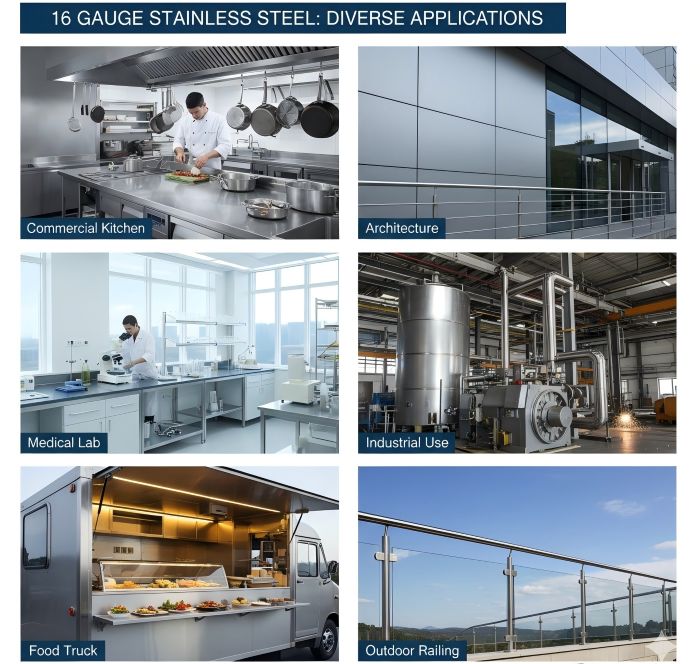
1. Commercial Kitchens and Food Service
Undoubtedly, this is one of the most well-known applications for 16 gauge stainless steel.
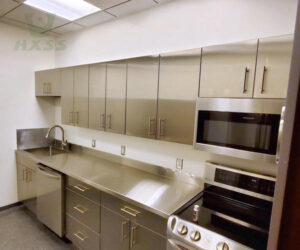
- Commercial kitchen countertops and sinks: They need to withstand daily handling, such as cutting, smashing, and heat, and the thickness of 16-gauge provides perfect protection.
- Countertops and backsplashes: The easy-to-clean, non-porous, and germ-free surface makes it an ideal choice for meeting hygienic standards.
- Equipment Housings and Containers: Many food processing equipment, ovens, and refrigerators utilize 16-gauge stainless steel for its durability and cleanability.
2. Architecture and Structural Design
The aesthetics and strength of 16 gauge stainless steel make it a popular choice in modern buildings.
- Handrails and Railings: Its durability ensures safety and long-lasting use in high-traffic public spaces.
- Exterior Siding and Decorative Elements: It resists weathering and provides a sleek, modern look.
- Custom Metal Products: Window frames, door frames, and interior trim.
3. Medical and Pharmaceutical Industries
In these environments, where hygiene is paramount, 16 ga stainless steel is indispensable.
- Operating Tables and Medical Carts: Easy to sterilize and durable.
- Laboratory Workbenches and Equipment: Resistant to chemicals and corrosive substances.
- Cleanroom Wall Panels and Equipment: Ensure a clean and sterile environment.
4. Industrial Manufacturing and Transportation
16 gauge stainless steel also plays a key role in these heavy industrial sectors.
- Component Manufacturing: Suitable for mechanical components requiring corrosion resistance and high strength.
- Tanks and Containers: Used to store a variety of liquids and chemicals.
- Transportation Equipment: Such as certain truck body components and boat parts, designed to withstand harsh environments.
16 Gauge Stainless Steel vs. Other Gauges
When choosing a stainless steel sheet, a common dilemma arises: is 16 gauge, 18 gauge, or 14 gauge stainless steel better? The key to answering this lies in understanding their respective thicknesses and ideal applications. This section will provide a detailed comparison of these common gauges to help you make the most suitable choice.
16 Gauge vs. 18 Gauge Stainless Steel: Which Is Better?
This is a frequently asked question, especially for applications like kitchen countertops and sinks. To answer is 16 gauge or 18 gauge stainless steel better, we need to consider several factors:
| Feature | 16 Gauge Stainless Steel (0.0625 inches / 1.588 mm) | 18 Gauge Stainless Steel (0.0500 inches / 1.27 mm) |
| Thickness | Thicker, heavier | Thinner, lighter |
| Durability | Significantly more rigid, with a higher resistance to dents and deformation | Sufficiently durable, but may dent under heavy impact |
| Typical Use | Commercial kitchen countertops, heavy-duty sinks, industrial equipment, and high-traffic areas | Residential kitchen sinks, backsplashes, appliance panels, light-duty work surfaces |
| Cost | Generally more expensive due to more material used | Relatively lower cost, more economical |
| Lifespan | More resilient under heavy use, with a longer service life | Durable for light use, but with slightly less long-term resistance to wear and tear |
Conclusion: For projects that require frequent impact, high-intensity use, or need to maintain a flat surface over time—such as commercial kitchen countertops or large sinks—16 gauge stainless steel is the superior choice. Its added thickness provides unmatched durability. For home kitchen sinks or decorative applications, 18 gauge stainless steel offers sufficient strength and durability at a more budget-friendly price.
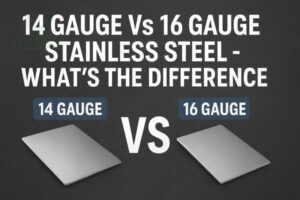
16 Gauge vs. 14 Gauge Stainless Steel: When is Thicker Necessary?
When it comes to which is thicker 16 or 14 gauge stainless steel, the answer is clear: 14 gauge. At approximately 0.0781 inches (1.981 mm), 14 gauge is about 25% thicker than 16 gauge. So, when is this extra thickness needed?
Applications:
14 Gauge Stainless Steel: Typically used for applications requiring maximum strength and load-bearing capacity, such as industrial storage tanks, heavy machinery frames, structural supports, and certain specialized custom equipment. Its extra thickness allows it to withstand greater loads and more extreme conditions.
16 Gauge Stainless Steel: More commonly used for general-purpose stainless steel sheet metal, as it strikes an ideal balance between strength, cost, and weight. For the vast majority of commercial and architectural projects, the strength provided by 16 gauge is more than sufficient.
Conclusion: In most cases, the strength and durability offered by 16 gauge stainless steel are perfectly adequate. You should only consider using the thicker, heavier, and more expensive 14 gauge when your project explicitly needs to withstand extremely high loads or pressures.
16 Gauge Stainless Steel Sheet Price
Understanding 16-gauge stainless steel sheet prices is a critical step in any project planning. Prices are not fixed and are influenced by a variety of factors. Here are the key points you need to understand:
1. Stainless Steel Grade
This is the most important factor influencing price.
- 304 Stainless Steel: The most common grade, popular for its excellent performance and relatively affordable price.
- 316 Stainless Steel: Due to the addition of the expensive element molybdenum, it offers enhanced corrosion resistance, resulting in a price that is typically 15%-30% higher than 304.
- 430 Stainless Steel: Nickel-free, it offers lower costs and is generally the lowest price of all stainless steel grades.
2. Surface Treatment
Different surface treatments result in different costs.
- 2B/BA Finish: A standard cold-rolled finish with a relatively basic price.
- Brushed (No. 4 Finish): Achieved through a grinding and polishing process, this increases processing costs and is generally more expensive.
- Mirror Finish (No. 8 Finish): Requires multiple polishing steps and is a complex process, making it one of the most expensive surface treatments.
3. Plate Size and Customization Requirements
- Standard sizes: Generally more cost-effective due to higher production efficiency.
- Custom sizes: If your project requires non-standard dimensions, such as extra-long or extra-wide 16-gauge stainless steel plates, the additional costs of cutting and customizing can increase the total cost.
- Order volume: Bulk purchases typically offer more favorable unit prices, while smaller orders can result in higher unit costs.
4. Market Fluctuations
- Global price fluctuations for stainless steel raw materials such as nickel, chromium, and molybdenum can directly impact the final plate price. Understanding current market trends can help you identify the best purchasing opportunities.
At Huaxiao Metal, we offer competitive prices and maintain sufficient stock to support both small and bulk orders. Customers are encouraged to contact us directly for the latest 16 gauge stainless steel sheet price and customized quotations.
Buying Guide: How to Select 16 Gauge Stainless Steel
When choosing 16 gauge stainless steel sheet metal, consider:
Grade: 304 for general use, 316 for marine or chemical environments.
Finish: brushed finish for kitchen equipment, polished finish for decorative use.
Size & Dimensions: check standard sheet sizes or request custom cutting.
Quantity: wholesale purchasing lowers overall costs.
Huaxiao Metal provides professional consultation, cutting, and packaging services, ensuring every order meets international quality standards.
Huaxiao Metal – Your Reliable 16 Gauge Stainless Steel Supplier
As a global supplier of stainless steel, Huaxiao Metal has extensive experience in providing 16 gauge stainless steel sheets and sheet metal to industries worldwide.
Large inventory and quick delivery
Custom sizes and finishes available
Competitive prices with quality assurance
Professional packaging for safe international shipping
Whether you need small quantities for a project or bulk orders for industrial use, Huaxiao Metal is ready to serve.
FAQ About 16 Ga Stainless Steel
How thick is 16 gauge stainless steel?
16 gauge stainless steel has a thickness of approximately 0.0625 inches or 1.59 mm.
Is 16 gauge or 18 gauge stainless steel better?
For commercial use, 16 gauge is stronger and more resistant to dents. For residential use, 18 gauge may be sufficient and more affordable.
Which is thicker 16 or 14 gauge stainless steel?
14 gauge stainless steel is thicker (about 1.98 mm) compared to 16 gauge (1.59 mm).
What is the price of 16 gauge stainless steel sheet?
Prices vary depending on stainelss steel grade, finish, and quantity. Contact Huaxiao Metal for the latest quotation.
Can 16 gauge stainless steel sheet metal be custom cut?
Yes. At Huaxiao Metal, we offer cutting services to provide sheets in the exact size and finish you need.
Is 16-gauge or 18-gauge stainless steel better for kitchen sinks?
For kitchen sinks requiring greater resistance to dents and wear, especially in commercial settings, 16-gauge stainless steel is a better choice. For everyday home use, 18-gauge stainless steel is generally sufficient.
Will 16-gauge stainless steel rust?
Under normal conditions, 16-gauge stainless steel made from high-quality grades such as 304 or 316 is extremely corrosion-resistant and resistant to rust. However, in particularly corrosive environments (such as long-term exposure to chlorides), 316 is recommended for enhanced protection.
What finish should I choose when purchasing 16 gauge stainless steel?
It depends on your application. For countertops or kitchen appliances that require frequent cleaning, a brushed (No. 4) finish is recommended for ease of maintenance. For applications requiring high reflectivity or a decorative effect, a BA or mirror finish is recommended.
In Conclusion
16 gauge stainless steel sheet metal is one of the most practical and widely used materials in kitchens, construction, and industrial projects. Its thickness offers the perfect balance between strength, corrosion resistance, and affordability. Whether you are comparing 16 gauge stainless steel sheet price, evaluating whether 16 gauge or 18 gauge stainless steel is better, or considering custom fabrication, Huaxiao Metal is your trusted supplier.
Contact Huaxiao Metal today to request a quotation for 16 gauge stainless steel sheets and discover how we can support your next project with high-quality materials and professional service.