Stainless steel coils are the indispensable backbone of modern industrial manufacturing. Among the various grades available, the 316 stainless steel coil is globally recognized as the “gold standard” for its exceptional corrosion resistance, superior durability, and multi-sector versatility.
As we progress through 2026, the global demand for high-performance, corrosion-resistant alloys is surging across the marine, medical, and chemical processing industries. For manufacturers, OEMs, and distributors, staying ahead of material trends is no longer optional—it is a prerequisite for cost-effective decision-making and high-quality production.
In this comprehensive 2026 guide, we break down the technical DNA of 316 coils, provide a critical comparison with its closest rivals (304 vs. 316L), and offer professional sourcing strategies to navigate the current international market.
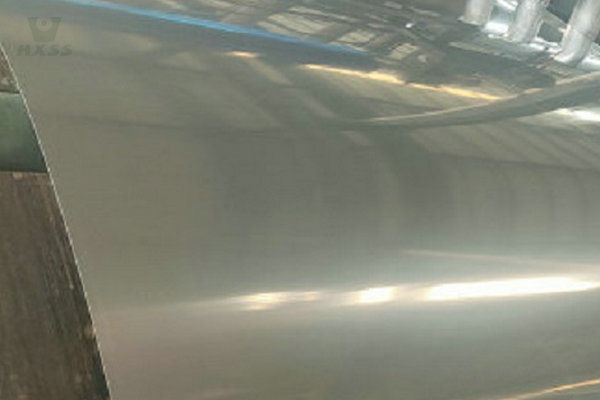
What Is 316 Stainless Steel Coil?
316 stainless steel coil is an austenitic stainless steel alloy containing 16–18% chromium, 10–14% nickel, and 2–3% molybdenum. The addition of molybdenum significantly improves resistance to pitting and corrosion in chloride environments, such as marine or chemical applications.
Key Properties:
Excellent corrosion resistance against acids, saltwater, and chlorine
High ductility and toughness
Good weldability and formability
Moderate wear resistance and strength
For detailed technical specifications, refer to our 316 stainless steel coil product page
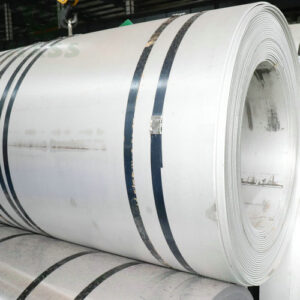
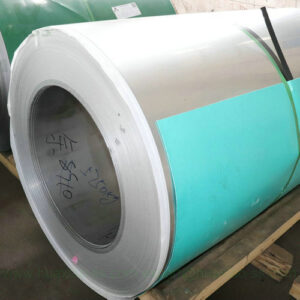
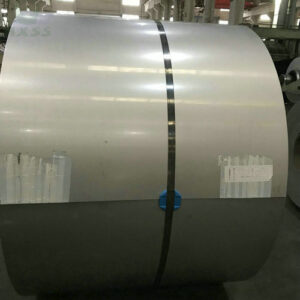
Key Properties of 316 Stainless Steel Coil
Chemical Composition
The “magic” of 316 lies in its chemistry. Typically, it consists of:
Chromium (Cr): 16% – 18% (Provides oxidation resistance)
Nickel (Ni): 10% – 14% (Ensures an austenitic structure)
Molybdenum (Mo): 2% – 3% (The key to chloride resistance)
Corrosion Resistance
The primary reason to choose 316 is its resistance to chloride-ion solutions (like seawater or de-icing salts). It outperforms almost all other 300-series steels in acidic and saline environments.
Mechanical & Physical Properties
High Creep Strength: Excellent performance at elevated temperatures.
Non-Magnetic: In its annealed state, 316 is non-magnetic, making it ideal for sensitive electronic or medical equipment.
316 vs. 304 vs. 316L: What’s the Difference?
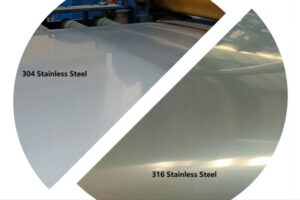
Understanding the differences among these commonly used stainless steels helps you choose the right material for your application:
| Feature | 304 Stainless Steel | 316 Stainless Steel | 316L Stainless Steel |
| Molybdenum | No | 2.0% – 3.0% | 2.0% – 3.0% |
| Carbon Content | Max 0.08% | Max 0.08% | Max 0.03% (Extra Low) |
| Corrosion Level | Moderate | High | High |
| Weldability | Good | Fair (Risk of carbide precipitation) | Excellent (No annealing needed) |
| Best For | General kitchenware, indoor use | Marine parts, chemical tanks | Heavy-gauge welded structures |
Pro Insight: For marine, chemical, and high-salinity environments, 316 is the standard choice. For applications involving extensive welding, 316L may be preferred to prevent sensitization.
Common Surface Finishes for 316 Coils
The finish is not just about aesthetics; it affects corrosion resistance and cleanability:
2B (Cold Rolled): The most popular functional finish—smooth and slightly reflective.
No. 4 (Brushed): Ideal for architectural features and food equipment.
BA (Bright Annealed): Mirror-like finish for high-end decorative applications.
8K (Mirror): Maximum reflectivity, often used in luxury coastal construction.
Manufacturing and Processing Tips
Welding: If your project involves heavy welding, always opt for 316L to prevent “weld decay.”
Slitting & Cutting: Precision is key. Modern 2026 manufacturing requires tight tolerances for automated assembly lines. Ensure your supplier uses high-precision slitting machines to avoid edge burrs.
Key Industrial Applications in 2026
316 stainless steel coil is used in a wide range of industries:
Marine & Offshore Equipment – Ideal for shipbuilding, pipelines, and saltwater-exposed components due to excellent chloride resistance.
Chemical & Petrochemical Processing – Resistant to acids, alkalis, and corrosive chemicals, widely used in tanks, reactors, and piping systems.
Food & Pharmaceutical Industry – Ensures hygienic, corrosion-free surfaces for storage and processing equipment.
Medical Equipment – 316L is often used for surgical instruments, implants, and lab equipment due to biocompatibility.
Architectural & Industrial Construction – Decorative facades, roofing, and structural elements in harsh environments.
Tip: Consider environmental exposure and required service life when selecting between 316 and 316L.
Technical Tips for Sourcing 316 Stainless Steel Coil
Choosing high-quality 316 stainless steel is crucial for durable, high-performing production. Consider these factors:
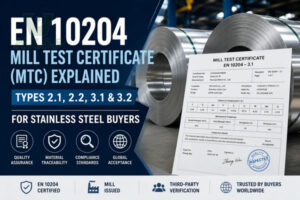
Mill Certification: Always request a Mill Test Certificate (MTC) to verify chemical composition and mechanical properties.
Thickness & Width: Standard coils range from 0.3 mm to 6 mm in thickness, but custom sizing may be required for specific projects.
Surface Finish: Options include 2B, BA, No.4, depending on application (industrial vs decorative).
Heat Treatment: Annealing improves ductility and formability for fabrication.
Supplier Reliability: Ensure the supplier has stock, fast delivery, and export capabilities.
Pro Tip: Partner with suppliers like Huaxiao Metal, who maintain global inventory, certified quality, and custom cutting services for industrial clients.
Why Source from Huaxiao Metal?
As a leading global supplier, Huaxiao Metal provides more than just raw materials; we provide supply chain security:
Massive Inventory: We maintain a 100,000+ ton stock, ensuring that your 316 coil orders are ready for shipment in 7–15 days.
Top-Tier Partnerships: We source directly from giants like TISCO, Baosteel, and ZPSS, giving you “Big Mill” quality at competitive prices.
Custom Processing: Our in-house service center offers precision slitting, surface polishing, and custom protective filming.
Proven Track Record: Exporting to over 60 countries, we understand the specific compliance and logistics requirements of the South American, EU, and Southeast Asian markets.
How to Buy 316 Stainless Steel Coil in 2026
Assess Your Application – Determine whether your project requires standard 316 or low-carbon 316L.
Check Supplier Stock & Lead Times – Stocked materials reduce delays and production downtime.
Verify Technical Compliance – Confirm composition, hardness, and certifications.
Evaluate Price vs Performance – Avoid overpaying for high-end grades if standard 316 meets your requirements.
Consider Custom Processing – Cutting, slitting, and surface finishing may optimize your manufacturing efficiency.
FAQ – 316 Stainless Steel Coils
Can 316 stainless steel coil be welded?
Yes, 316 and 316L have excellent weldability. 316L is preferred for high-precision welding to prevent carbide precipitation.
Is 316 resistant to saltwater?
Yes, it has superior chloride and pitting resistance, making it ideal for marine applications.
What thicknesses are commonly available for 316 coil?
Typically 0.3 mm to 6 mm, with widths from 1000 mm to 2000 mm, but custom sizing is available.
How does 316 compare to 304 in corrosion resistance?
316 contains molybdenum, which significantly improves resistance to chloride-induced corrosion compared to 304.
In Conclusion
316 stainless steel coil is a high-value investment. By understanding the technical nuances and choosing a reliable partner like Huaxiao Metal, you ensure the longevity and safety of your industrial projects.
Looking for a real-time quote or a technical consultation? Contact Huaxiao Metal Today — Our experts will respond within 24 hours with the best market rates for 2026.