Call Us Today! +86-13761906384

SUS304 VS SS304 Stainless Steel: What is the Difference?

SUS304 vs SS304 Stainless Steel: Are They the Same?

SUS304 and SS304 are essentially the same stainless steel in chemical composition and performance, but they belong to different standard systems. Understanding the differences can help you make the right choice for your project and avoid procurement mistakes.

  • SUS304 = Japanese JIS standard

  • SS304 = ASTM / international naming

👉 ✅ They are essentially the SAME material (18/8 stainless steel)
👉 ❗ The real difference is standard system, not performance

📩 Not sure which standard your project requires? Contact Huaxiao Metal for certified SUS304 / SS304 and fast quotes.
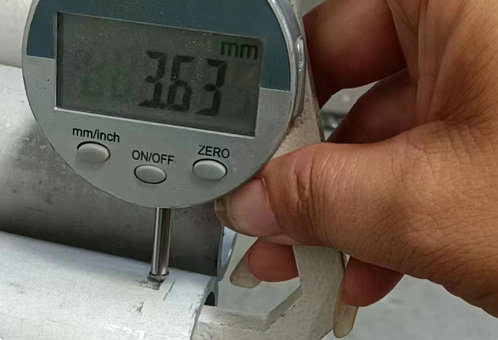
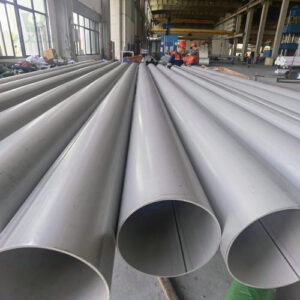
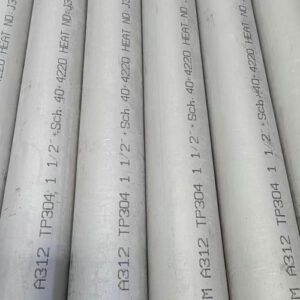
SS304 Stainless Steel Seamless Pipe Thickness

What are SUS304 and SS304?

SUS304:

SUS stands for “Steel Use Stainless” and is a mark for stainless steel in the Japanese Industrial Standard (JIS). SUS304 is mainly composed of chromium and nickel and has good corrosion resistance and formability.

SS304:

SS is the abbreviation of “Stainless Steel”, which is commonly used in standards in the United States and other regions. The composition of SS304 is similar to SUS304, and it also has excellent corrosion resistance and mechanical properties.

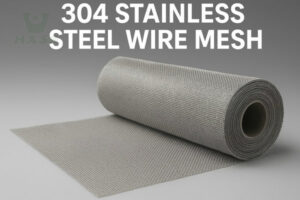
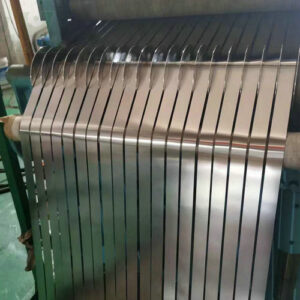
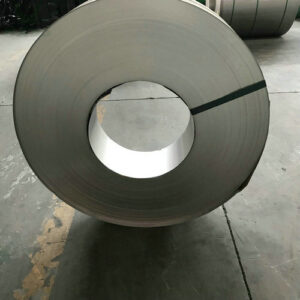
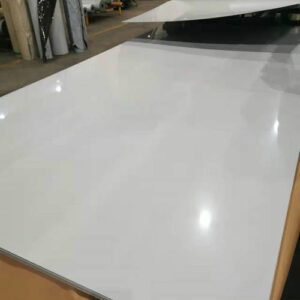
See also our 304 Stainless Steel Products:

Comparison between SUS304 and SS304

Chemical Composition SUS304 VS SS304 Stainless Steel:

Although SUS304 and SS304 are identical in most cases, there are slight differences in their chemical composition that may affect their performance:

ElementSUS304 (JIS)SS304 (ASTM/International)Notes
Chromium (Cr)18–20%17.5–19.5%Higher Cr range in SUS304 provides stable corrosion resistance
Nickel (Ni)8–10.5%8–10.5%Nearly identical
Carbon (C)≤0.08%≤0.08%Low carbon = good weldability
Manganese (Mn)≤2%≤2%Same
Silicon (Si)≤1%≤1%Same

The chemical composition of SUS304 and SS304 is virtually identical, with only slight differences in standard ranges due to JIS vs ASTM.

Global Equivalent Standards:

RegionStandardGrade
JapanJISSUS304
USAASTM / AISI304 / SS304
EuropeEN1.4301
GermanyDINX5CrNi18-10

👉 ✔ Conclusion:

SUS304 = SS304 = EN 1.4301 = Globally Equivalent Material

Performance Comparison SUS304 VS SS304 Stainless Steel:

  • Corrosion Resistance: Both have excellent corrosion resistance and are suitable for use in a variety of environments, especially in high humidity and chemical corrosion.
  • Strength and Toughness: Both SUS304 and SS304 exhibit good strength and toughness and can withstand high temperatures and pressures.
  • Processability: SUS304 may be slightly superior in cold working, especially in the forming process of thin sheets.

Application Areas SUS304 VS SS304 Stainless Steel:

  • SUS304: Widely used in food processing equipment, medical equipment, architectural decoration, and the chemical industry.
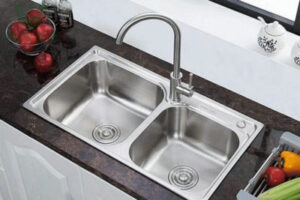
  • SS304: Mostly used in the manufacture of automotive parts, home appliances, and kitchen utensils.

Weldability SUS304 VS SS304 Stainless Steel:

  • SUS304: Generally has good weldability and is suitable for a variety of welding methods, such as arc welding, argon arc welding, etc. Due to its high nickel content, it is not easy to become brittle after welding.
  • SS304: Also has good weldability and is suitable for various welding techniques. Its toughness and strength are well maintained after welding.

Machinability SUS304 VS SS304 Stainless Steel:

SUS304 and SS304 are similar in machinability, but there may be slight differences under certain conditions. Choosing the right processing tools and processes can ensure the best processing results when using these two stainless steels. In specific applications, it is recommended to test and evaluate according to actual needs to ensure processing quality and efficiency.

Cost SUS304 VS SS304 Stainless Steel:

  • SUS304: As part of the Japanese Industrial Standard (JIS), SUS304 is relatively common in manufacturing and supply chains in and around Japan. Therefore, its price may be affected by market conditions in Japan.
  • SS304: As a US standard, SS304 is more common in North America and around the world. Its price is usually closely related to factors such as global market demand and raw material costs.

What’s the Real Difference?

The main differences between SUS304 and SS304 are:

  • SUS304 = Japanese JIS standard

  • SS304 = American/ASTM standard

The performance, composition, and characteristics are virtually identical. The key determining factor lies in project specifications and compliance.

Selection Guide - How to Choose: SUS304 or SS304?

When choosing between SUS304 or SS304, consider the following factors:

Application environment:

If you are in Japan or need to follow Japanese standards, SUS304 is a more suitable choice; In other regions, projects need to comply with ASTM/EN standards, with SS304 being more common.

Budget and availability:

Sometimes, price and supply chain issues will also affect your choice. Choose a more cost-effective product based on market conditions.

Procurement Risks When Buying SUS304 or SS304 Stainless Steel

When sourcing stainless steel for your projects, it’s not enough to know the material name—understanding procurement risks is critical. Even though SUS304 and SS304 are chemically similar, mistakes in selection can lead to costly issues.

1️⃣ Incorrect Standard or Naming

  • Risk: Ordering SUS304 when your project specification requires ASTM SS304, or vice versa.

  • Impact: Material may not meet local or international compliance standards.

  • Tip: Always confirm the required standard (JIS, ASTM, EN, or DIN) before purchase.

2️⃣ Counterfeit or Low-Quality Material

  • Risk: Some suppliers may label lower-grade stainless steel (e.g., 201 or 430) as 304 to reduce costs.

  • Impact: Poor corrosion resistance, reduced durability, and potential project failures.

  • Tip: Request a Mill Test Certificate (MTC) or certified test report for every batch.

3️⃣ Improper Processing

  • Risk: Stainless steel that has been improperly cold-worked, welded, or heat-treated.

  • Impact: Reduced corrosion resistance, increased risk of cracking or warping.

  • Tip: Work with reputable suppliers who provide quality-controlled processing.

4️⃣ Regional Supply Chain Differences

  • Risk: SUS304 is primarily used in Asia, while SS304 terminology is common internationally.

  • Impact: Miscommunication can lead to delivery delays, pricing errors, or project rejection.

  • Tip: Always confirm material designation with your supplier, especially for global projects.

5️⃣ Cost Implications

  • Risk: Choosing based on price alone without verifying compliance and quality.

  • Impact: Short-term savings may result in higher long-term costs due to replacement, maintenance, or warranty claims.

  • Tip: Evaluate both material cost and total project risk when selecting SUS304 or SS304.

✅ How Huaxiao Metal Helps You Avoid Risks

  • Provides certified SUS304 and SS304 stainless steel from trusted mills

  • Supplies full Mill Test Certificates (MTC) and international standard compliance

  • Offers expert guidance on standard selection, global equivalents, and pricing

  • Ensures fast shipping and proper packaging for safe delivery

📩 Contact Huaxiao Metal today to ensure your SUS304 or SS304 purchase is safe, compliant, and cost-effective.

FAQ: SUS304 VS SS304 Stainless Steel

In most cases, they can be used interchangeably, but it is best to confirm based on specific standards.

No. Both have the same durability, corrosion resistance, and strength. The difference is just in naming convention.

No. Both grades offer the same long-term corrosion resistance and mechanical stability.

If the project is international, SS304 is safer to specify, as it is the most globally recognized standard.

Use warm water and neutral detergents, and avoid abrasive materials such as steel wool.

Although stainless steel is corrosion-resistant, it may still rust in extreme environments.

The price depends on the market (LME Nickel prices) and the origin, not the naming convention. Contact Huaxiao Metal for Today’s 304 Stainless Steel Price.

Always request a Mill Test Certificate (MTC) and check the “Standard” column for JIS or ASTM markings.

Because different countries use different standard systems.

It is mainly used in Asia, while SS304 is more global.

In Conclusion

There is no technical difference between SUS304 and SS304 stainless steel. Both provide excellent corrosion resistance, strength, and versatility.

The key is understanding your regional standard and project requirements:

  • SUS304 = JIS (Asia/Japan)

  • SS304 = ASTM/International (USA, EU, Global)

Although SUS304 and SS304 are very similar in composition and performance, understanding the subtle differences between them can help you make the best choice in actual applications. No matter which stainless steel you choose, it will provide excellent corrosion resistance and mechanical properties for your project.

At Huaxiao Metal, we supply both SUS304 stainless steel and SS304 stainless steel products, ensuring compliance with your project standards.

Contact us today to request a quote or technical datasheet. Our experts will help you choose the right grade for your industry.

Facebook
Twitter
LinkedIn
Pinterest
Reddit

Table of Contents

We will answer your email in 24 hours!

Related Posts

Request a Quote

Fill out the form below, and we will be in touch shortly.