
Call Us Today! +86-13761906384
300 Series Stainless Steel is the most widely used family of austenitic stainless steels, prized for its exceptional corrosion resistance, high-temperature oxidation resistance, and excellent formability. As a premier 300 series stainless steel manufacturer, Huaxiao Metal provides a comprehensive inventory including 304, 316, 309, 310, and 321 grades.
Whether you are looking for the cost-effective versatility of 304 SS or the superior chloride resistance of 316 SS for marine environments, our products meet strict ASTM/ASME standards. We support global industries with custom processing services, including precision slitting, surface polishing (2B, BA, No.4, Mirror), and rapid international shipping.
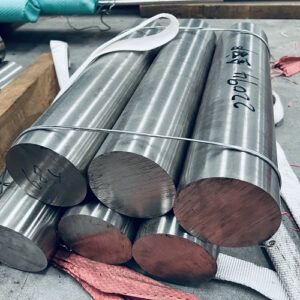
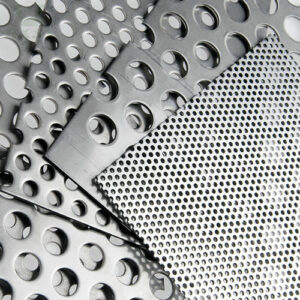
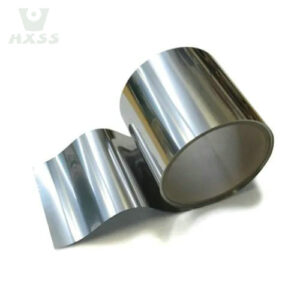
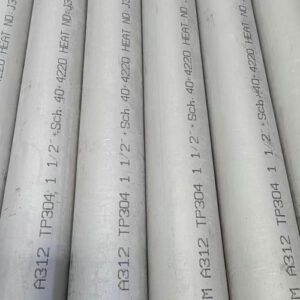
Shapes: Sheet, Strip, coils, tube, foils, etc.
Surface: No.1, 2D, 2B, BA, HL, NO.4, Mirror, SB, Embossed, Etched, etc.
If you want to buy 300 series stainless steel products, please contact the right stainless steel supplier – Huaxiao Metal provides you with the latest series stainless steel prices.
Choosing the right grade is crucial for the success and longevity of your project. Below is a detailed the primary 300 series grades we supply at Huaxiao Metal. Each grade is linked to its specific product page for more details.
300 series stainless steel refers to a family of austenitic stainless steels primarily alloyed with chromium and nickel, known for their excellent corrosion resistance, outstanding formability, and reliable mechanical performance.
As the most widely used stainless steel series worldwide, 300 series stainless steel is the preferred material for applications requiring durability, hygiene, and resistance to harsh environments. It is commonly used in construction, food processing, chemical equipment, marine engineering, medical devices, and industrial manufacturing.
Unlike ferritic or martensitic stainless steels, 300 series grades are non-magnetic in the annealed condition, easy to fabricate, and highly adaptable to welding and forming processes.
300 series stainless steels share several defining advantages that make them the industry standard:
Excellent corrosion resistance in atmospheric, chemical, and marine environments
Superior formability and weldability, suitable for complex fabrication
High toughness and ductility, even at low temperatures
Good surface finish, ideal for decorative and hygienic applications
Compliance with international standards such as ASTM, EN, and JIS
These characteristics make 300 series stainless steel a long-term, cost-effective solution for both industrial and commercial projects.
Choosing the right 300 series stainless steel grade depends on the operating environment, corrosion exposure, temperature requirements, and budget considerations.
Choose 304 / 304L stainless steel for general-purpose applications where good corrosion resistance, formability, and cost efficiency are required. It is ideal for food processing equipment, architectural components, and standard industrial use.
Choose 316 / 316L stainless steel when enhanced resistance to chlorides, saltwater, or chemical exposure is critical. This grade is recommended for marine environments, chemical processing, pharmaceutical equipment, and medical applications.
Choose 321 stainless steel for applications involving elevated temperatures or repeated thermal cycling. The titanium stabilization helps prevent intergranular corrosion, making it suitable for exhaust systems, pressure vessels, and heat-affected zones.
Choose 310S stainless steel for extreme high-temperature environments requiring excellent oxidation resistance and strength retention, such as furnaces, heat treatment equipment, and thermal processing units.
For complex projects or specialized environments, selecting the correct grade at the early design stage can significantly improve service life, safety, and overall cost efficiency. Huaxiao Metal provides professional technical support to help customers identify the most suitable 300 series stainless steel grade based on real-world operating conditions.
The chart below shows the chemical composition of the most common 300 series stainless steels used in the metal hose industry. Single figures signify the maximum percentage allowable under ASTM 240 requirements.
| Grades | Cr | Ni | C | Mn | Si | P | S | Mo |
|---|---|---|---|---|---|---|---|---|
| 301 | 16-18% | 6-8% | ≤0.15% | ≤2.0% | ≤1.0% | ≤0.045% | ≤0.03% | – |
| 304 | 18-20% | 8-12% | ≤0.08% | ≤2.0% | ≤0.75% | ≤0.045% | ≤0.03% | – |
| 304L | 18-20% | 8-12% | ≤0.03% | ≤2.0% | ≤0.75% | ≤0.045% | ≤0.03% | – |
| 316 | 16-18% | 10-14% | ≤0.08% | ≤2.0% | ≤0.75% | ≤0.045% | ≤0.03% | 2-3% |
| 316L | 16-18% | 10-14% | ≤0.03% | ≤2.0% | ≤0.75% | ≤0.045% | ≤0.03% | 2-3% |
| 309 | 22-24% | 12-15% | ≤0.20% | ≤2.0% | ≤1.0% | ≤0.045% | ≤0.03% | – |
| Grades | Density | Melting Point (°C) | Tensile Strength (MPa) | Elongation (%) | Hardness (Rockwell) |
|---|---|---|---|---|---|
| 301 | 7.9 g/cm³ | 1400-1450 | 515 | 40 | 85 |
| 304 | 7.9 g/cm³ | 1400-1450 | 485 | 50 | 85 |
| 304L | 7.9 g/cm³ | 1400-1450 | 485 | 50 | 85 |
| 316 | 7.9 g/cm³ | 1371-1400 | 485 | 55 | 93 |
| 316L | 7.9 g/cm³ | 1371-1400 | 485 | 55 | 93 |
| 309 | 8.0 g/cm³ | 1400-1450 | 520 | 40 | 88 |

Navigating the nuances of the 300 series is our expertise. Partnering with Huaxiao Metal means you get more than just a supplier.
Extensive Inventory: We maintain a large stock of 300 series stainless steel in sheet, plate, coil, pipe, and bar forms to ensure fast delivery times.
Uncompromising Quality: Every product is sourced from reputable mills and is delivered with a Mill Test Certificate (MTC) to guarantee compliance with international standards like ASTM/ASME.
Custom Processing Services: We provide value-added services including precision slitting, cut-to-length, and various surface finishes (No.1, 2B, BA, No.4, 8K Mirror) to meet your project’s exact needs.
Ready for a Quote? Contact our sales team today to get the latest 300 Series Stainless Steel Price Guide or to request a sample for your next project.
Stainless steel is divided into different series; the 300 series and the 400 series are two common series, each with different characteristics and application areas. The following is a simple comparison of these two series of stainless steel:
300 series (austenitic type)
400 series (ferritic or martensitic type)
300 series:
400 Series:
300 series stainless steel is austenitic and offers superior corrosion resistance and formability, while 400 series stainless steel is ferritic or martensitic, typically magnetic and less corrosion-resistant.
The “L” stands for “Low Carbon.” L-grades have a maximum carbon content of 0.03%, which minimizes harmful carbide precipitation during welding. This makes them the preferred choice for welded components that will be used in corrosive environments without post-weld annealing.
316 and 316L stainless steel provide the highest corrosion resistance within the 300 series, especially in chloride-rich and marine environments.
For high-temperature resistance, Grades 309S and 310S are the superior choices. Their higher chromium and nickel content provides excellent strength and resistance to oxidation at elevated temperatures, far surpassing 304 or 316.
300 Series Stainless Steel: The Ultimate Guide for Industrial Applications
The choice depends entirely on the environment. For most applications with exposure to freshwater or general atmospheric conditions, 304 is perfectly adequate and more cost-effective. If your application involves exposure to saltwater, de-icing salts, or aggressive chemical solutions (chlorides), 316 is essential to prevent pitting corrosion.
304 vs 316 Stainless Steel: Differences, Price & How to Choose (2026 Guide)
The 300 series is the most common family of austenitic stainless steels. The core grades include:
304: General purpose, the best value for money.
316: Highly corrosion resistant, contains molybdenum, designed for marine and chemical environments.
321: Stabilized, contains titanium, suitable for high-temperature welding.
309S/310S: Heat resistant, specifically for industrial furnaces and high-temperature equipment.
300 series stainless steel is generally non-magnetic in the annealed state. However, after cold working (such as cold rolling, stamping, or drawing), some austenite will transform into martensite, resulting in weak magnetism. This magnetism is a normal physical phenomenon and does not indicate a problem with the chemical composition or quality of the stainless steel.
It depends on the application requirements. The 300 series has better corrosion resistance, excellent machinability, and is generally non-magnetic; while the 400 series is usually magnetic, has higher hardness, but poorer corrosion resistance in extreme environments. The 300 series is commonly used in food, medical, and chemical industries, while the 400 series is often used in cutting tools, automotive parts, and wear-resistant components.
Yes. Reputable Chinese suppliers like Huaxiao Metal provide internationally certified materials with full traceability and export experience.
If you are looking for reliable 300 series stainless steel suppliers or manufacturers, Huaxiao Metal is ready to support your project.
👉 Contact us today to receive competitive pricing, technical guidance, and fast delivery solutions tailored to your requirements.
Fill out the form below, and we will be in touch shortly.