
Defect Library — Secondary Grade
Stainless Steel Slit Defect: Causes, Classification, Impact & Buying Guide
Defect Type: Slit (Edge Linear Defect) | Origin Process: Hot Rolling | Reading Time: ~5 min
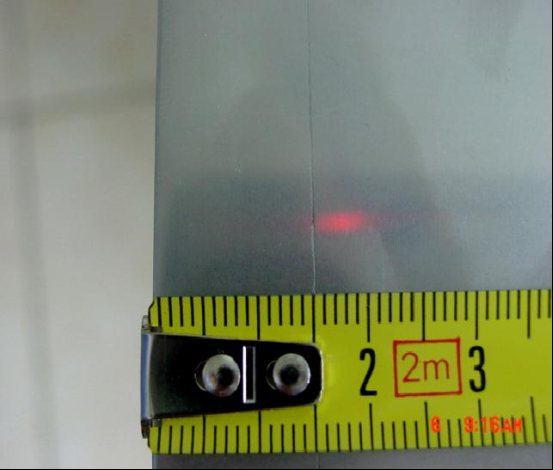
Slit defect on hot-rolled stainless steel coil edge. Linear marks visible within 20mm zone.
Visual Characteristics
Continuous or intermittent linear lines running the full coil length
Located within 20mm from either edge of the hot-rolled coil
Present on both top and bottom surfaces
Top (upper) surface typically shows a wider defect zone than the bottom
Lines are parallel to the rolling direction (longitudinal)
Depth is generally shallow, confined to the surface layer
No cracking or spalling; edges remain intact in most cases
How Slit Defects Form: The Hot Rolling Mechanism
The slit defect is a direct consequence of the lateral compressive forces applied during the hot rolling process. Understanding the formation mechanism helps buyers and engineers assess the risk level for their specific downstream application.
1. Lateral rolling pressure: As the stainless steel slab passes through the hot rolling mills, the rolls apply both vertical compression (to reduce thickness) and lateral edge pressure (to control width). These lateral forces are significantly higher in austenitic grades like 304 and 316 due to their work-hardening behaviour at elevated temperatures.
4. Asymmetric appearance: Because the top surface receives more direct rolling contact pressure, the transferred marks on the top surface tend to be wider and more pronounced than those on the bottom surface — a reliable visual cue for identification.
Key technical note: The slit defect is a process-induced surface defect, not a material defect. The base metal chemistry and mechanical properties outside the defect zone remain fully compliant with the declared grade (e.g., ASTM A240, EN 10088-2). This is why secondary-grade slit-affected coils can still be used successfully in many B2B applications.
Quality Classification & Application Suitability
Coils with slit defects are classified as secondary grade (non-prime). The suitability for downstream processing depends on whether the edge zone can be trimmed or avoided in the part layout.
| Application | Quality Needed | Slit-affected OK? | Reason |
|---|---|---|---|
| Slitting to narrow strips (<width−40mm) | Secondary acceptable | ✔ Yes | Defective edge zone is cut away during slitting |
| Stamping / blanking (parts nested away from edge) | Secondary acceptable | ✔ Yes | Parts nested to avoid the 20mm edge zone |
| Shelving, racks, non-critical enclosures | Secondary acceptable | ✔ Yes | Edge appearance not critical |
| Structural fabrication (non-pressure) | Secondary acceptable | ✔ Conditional | Verify with engineer if edge bears load |
| Pressure vessels / ASME / PED certified | Prime required | ✘ No | Standards require defect-free material |
| Food-grade contact surfaces (FDA/NSF) | Prime required | ✘ Not recommended | Surface integrity requirements apply |
| Decorative / architectural panels | Prime required | ✘ No | Visual quality is primary specification |
Key technical note: The slit defect is a process-induced surface defect, not a material defect. The base metal chemistry and mechanical properties outside the defect zone remain fully compliant with the declared grade (e.g., ASTM A240, EN 10088-2). This is why secondary-grade slit-affected coils can still be used successfully in many B2B applications.
Pricing Guidance & Procurement Considerations
Secondary-grade slit-affected coils are typically priced 15–35% below prime material of the same grade, thickness and width. Exact discount depends on defect severity and market conditions.
📋 What to Request in Your Inquiry
- Confirm defect type is slit only (not combined with edge crack or scale)
- Request photo or video of the coil edge before order
- Specify your acceptable edge zone width (e.g., 20mm, 25mm)
- Request EN 10204 3.1 MTR for chemistry and mechanical data
- Clarify full coil or partial coil quantity availability
✅ How to Verify Slit Severity
- Request a sample cut from the first and last few meters
- Measure the defect zone width with a steel ruler
- Run your fingernail along the defect — if it catches, depth may be too great
- Photograph under angled light to reveal the full extent
- Compare with your tolerance standard (EN 10163 or customer spec)
🚢 Shipping & Packaging Tips
- Inner-eye-horizontal packing to prevent edge damage in transit
- Specify anti-rust paper interleaving for moisture protection
- For South America (Santos, Cartagena) — request oil-coated coils for humid sea voyage
- HS Code 7219.12 / 7219.13 for hot-rolled stainless coil customs
⚙️ Downstream Processing Notes
- Slitting: trim at least 25mm from each edge (5mm safety margin)
- Blanking: set nest-to-edge distance of 25mm minimum
- Roll forming: assess if marks open up under bend strain before large order
- Welding: no special treatment unless defect zone is in the weld path
How Slit Compares to Other Hot-Rolled Defects
| Defect Type | Location | Removable by Trimming? | Severity | Common Cause |
|---|---|---|---|---|
| Slit (this page) | Within 20mm of edge | Yes — trim 25mm | 🟡 Moderate | Lateral rolling pressure |
| Edge Crack | At the edge itself | Partial — depends on depth | 🔴 High | Excessive reduction per pass |
| CRM Scratches | Full surface width | No | 🟡 Moderate | Roll damage or debris |
| Linear Scaly Fold | Full surface, both edges or center | No | 🔴 High | Scale inclusion folded in during rolling |
| Hot Rolling Slip | Periodic across full width | No | 🟡 Moderate | Roll slip or speed mismatch |
→ Browse the full Secondary Stainless Steel Defect Library ›
Frequently Asked Questions
What is a slit defect in stainless steel coils?
A slit defect is a continuous or intermittent linear mark that forms within approximately 20mm of both edges of a hot-rolled stainless steel coil. It runs along the full length of the coil and appears on both surfaces, with the top surface typically showing a wider affected zone. The defect is caused by lateral compressive forces during the hot rolling process.
Does a slit defect affect the mechanical properties of the steel?
No. The slit defect is a surface defect confined to the edge zone. The chemical composition and mechanical properties (tensile strength, yield strength, elongation) of the base metal outside the defect zone remain fully in line with the declared grade standard (e.g., ASTM A240, EN 10088-2). Mill Test Certificates cover the full coil and reflect compliant values.
Can I use slit-affected coils for slitting into narrower strips?
Yes — this is one of the most common and cost-effective uses of slit-affected secondary material. When the coil is re-slit to narrower widths, the edge zone containing the defect is cut away (as trim scrap), and the resulting narrower strips are free of the slit marks. Request to confirm the defect zone width (typically 15–22mm) before placing your order so you can calculate your yield correctly.
Which stainless steel grades most commonly have slit defects?
Slit defects occur across all hot-rolled stainless grades, but are most frequently seen in austenitic grades (304, 304L, 316, 316L) because these grades work-harden significantly during hot rolling, increasing lateral stress at the edges. Ferritic grades (430, 409) show the defect less frequently. Duplex grades (2205) can also show slit defects at higher reduction ratios.
How much cheaper is secondary-grade slit material vs prime?
Secondary-grade coils with slit defects are typically priced 15–35% below prime material of the same grade, thickness and width. The discount range depends on: (1) the severity and width of the defect zone, (2) the total tonnage of the inquiry, (3) current nickel/stainless market prices. Contact us for a current price on specific grade and specification.
What documentation comes with secondary-grade slit coils?
All secondary-grade coils shipped by Huaxiao are accompanied by an EN 10204 3.1 Mill Test Certificate (MTR) showing full chemical analysis and mechanical test results. The MTR clearly states the material is classified as secondary grade due to the slit defect. Commercial invoice, packing list, and Certificate of Origin are also provided. Third-party inspection (SGS/BV/Intertek) can be arranged on request.