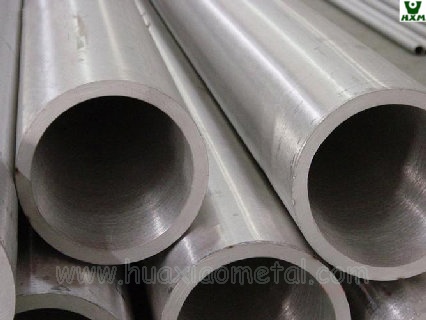
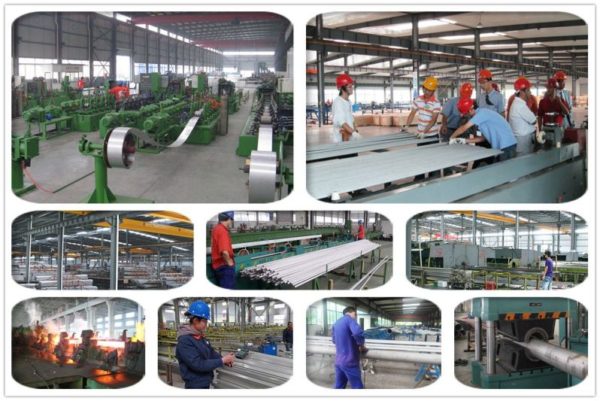
Stainless steel pipes have become an indispensable material in today’s industrial and construction fields. The corrosion resistance, high-temperature resistance, strength, and aesthetics of stainless steel tubing make it the material of choice for many applications. In the application of stainless steel pipes, seamless pipes and welded pipes are two commonly used processing methods.
While they all serve different application needs, they are manufactured differently and perform differently. Therefore, comparing and understanding the advantages, disadvantages, and application scenarios of seamless pipes and welded pipes is of great significance for the correct selection and application of stainless steel pipes. This article will introduce the manufacturing process of stainless steel seamless vs welded tubes, the comparison of advantages and disadvantages, the comparison of application scenarios, as well as the market prospect and development trend.
What Are Stainless Steel Seamless Tubes?
Definition:
Stainless steel seamless tubes are produced from a solid billet through hot extrusion or piercing without any welding seam. The tube body is entirely homogeneous, offering excellent pressure resistance, uniform strength, and high corrosion resistance.
Manufacturing Process Overview:
Billet heating
Piercing and elongation
Hot or cold rolling
Annealing and pickling
Straightening and final inspection
Because no weld is involved, seamless tubes are ideal for high-pressure, high-temperature, and critical service environments such as:
Oil and gas pipelines
Chemical reactors
Heat exchangers and boilers
Power generation plants
However, this process is complex and costly, which makes seamless tubes generally more expensive than welded ones.
What Are Stainless Steel Welded Tubes?
Definition:
Stainless steel welded tubes are manufactured by forming a flat strip or coil into a tubular shape and welding the seam longitudinally using TIG, ERW, or laser welding.
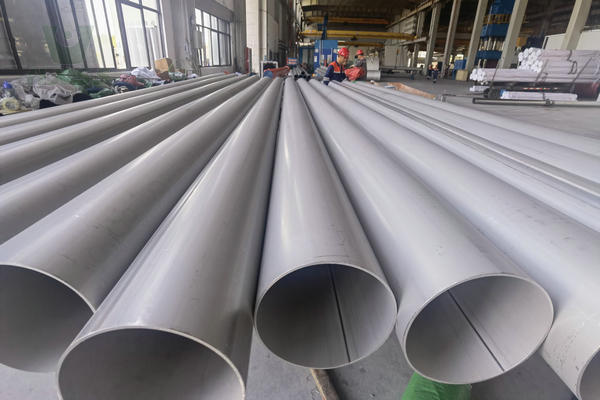
Main Features:
Lower production cost
Flexible size and wall thickness range
Shorter lead time and easier customization
With modern welding technology, the strength and corrosion resistance of welded tubes can now closely match seamless tubes, especially when post-weld heat treatment and inspection are performed.
Common Applications:
Architecture and construction (handrails, railings, decorative tubes)
Food and beverage industries
Low-pressure fluid systems
HVAC and automotive tubing
Check available specifications and sizes on:
Key Differences Between Seamless and Welded Tubes
| Property | Stainless Steel Seamless Tube | Stainless Steel Welded Tube |
|---|---|---|
| Production Process | Solid billet piercing & rolling | Steel strip forming & welding |
| Weld Seam | No weld seam | Longitudinal weld seam |
| Surface Finish | Generally rougher | Can be bright-polished |
| Pressure Resistance | Excellent for high-pressure service | Moderate pressure service |
| Cost | Higher due to complex production | Lower and more economical |
| Dimensional Accuracy | Slightly lower | High precision with uniform wall thickness |
| Lead Time | Longer | Faster and flexible |
| Applications | Chemical, oil, high-temperature | Architecture, low-pressure systems |
If your project involves high stress or aggressive environments, choose seamless.
If you prioritize cost-efficiency and appearance, welded tubes are the right fit.
Seamless and Welded Tubes Performance Comparison
a. Strength and Pressure
Seamless tubes can withstand higher internal pressure because they are free of weld seams, which are potential weak spots.
Welded tubes, though strong, have a slight disadvantage due to the heat-affected zone (HAZ).
b. Corrosion Resistance
Modern welded tubes can achieve similar corrosion resistance when properly welded and annealed. However, for harsh environments (chloride, acid, marine), seamless is still preferred.
c. Cost and Production Speed
Welded tubes win on cost and availability — they can be produced quickly and in larger diameters, making them ideal for large-scale projects.
d. Aesthetic Appearance
Welded tubes often offer better surface finishes, suitable for visible installations like handrails, architectural structures, or automotive components.
Advantages and Disadvantages Comparison of Stainless Steel Seamless vs Welded Tubes
Stainless steel seamless pipes and welded pipes have their unique advantages and disadvantages. Let’s compare them below:
Performance Comparison
The internal structure of the seamless pipe is uniform, and the density is high, so the pressure resistance and corrosion resistance are higher. Corrosion, fatigue, and other problems in joints, but perform well in piping systems under low pressure and normal temperature.
Manufacturing Cost Comparison
The manufacturing process of the seamless pipe is relatively complicated, and the material loss is large, so the manufacturing cost is relatively high; while the manufacturing process of the welded pipe is relatively simple and the cost is low.
Surface Finish and Appearance Comparison
The seamless pipe has a high surface finish, no weld seams and burrs, and a beautiful appearance; while the welded pipe has weld seams and welding traces on the surface, the appearance is not as beautiful as the seamless pipe.
Reliability Comparison
Seamless pipes have no welds, so they are more reliable in high-pressure, high-temperature, and corrosive environments; while welded pipes are prone to fatigue, cracks, and other problems at the welds, continuous improvement of the welding process can improve their reliability.
On the whole, seamless pipes are suitable for piping systems under high pressure, high temperature, and corrosive environments; while welded pipes are suitable for piping systems under low pressure and general temperatures, such as water supply, heating, ventilation, and other systems. When selecting stainless steel pipes, it is necessary to consider the specific application scenarios and requirements comprehensively.
Application Comparison of Stainless Steel Seamless vs Welded Tubes
The application scenarios of stainless steel seamless pipes and welded pipes are different due to their advantages and disadvantages. Let’s analyze them in detail below:
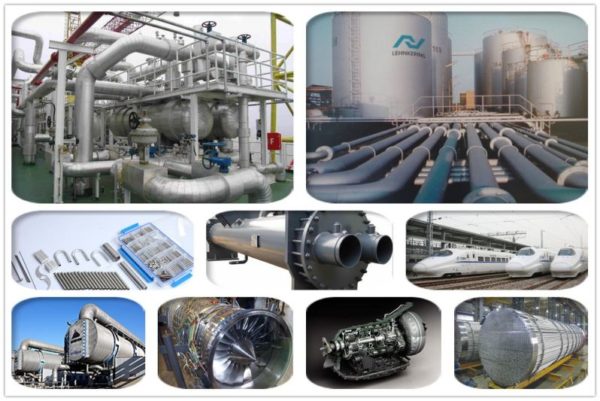
Application Scenarios of Stainless Steel Seamless Pipes
Stainless steel seamless pipe has a uniform internal structure and high density, so it has higher pressure resistance and corrosion resistance and is suitable for piping systems under high pressure, high temperature, and corrosive environments. for example:
Petroleum, natural gas, and other oil and gas pipelines: due to their high strength and corrosion resistance, stainless steel seamless pipes are widely used in oil and gas pipelines;
Chemical, pharmaceutical, and other industries: The production environment of these industries requires that the pipeline system has good corrosion resistance, so stainless steel seamless pipes are also widely used in pipeline systems in chemical, pharmaceutical, and other industries.
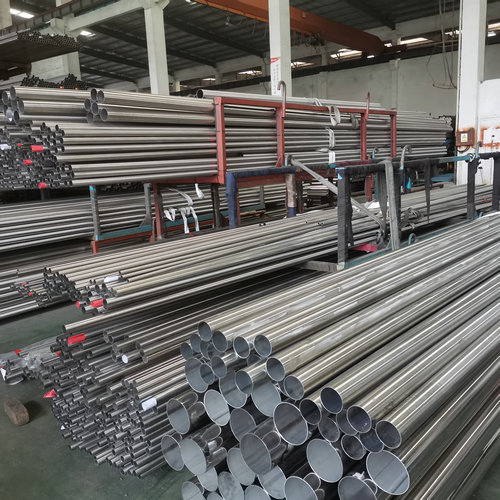
Application Scenarios of Stainless Steel Welded Pipes
The internal structure of the stainless steel welded pipe is not as uniform as that of the seamless pipe, and it is prone to problems such as corrosion and fatigue at the weld. But because of its relatively low cost, it performs well in some low-pressure, moderate-temperature piping systems. for example:
Water supply, heating, ventilation, and other systems: These piping systems are not demanding, so stainless steel welded pipes are the first choice.
Mechanical processing industry: Stainless steel welded pipes are widely used in the manufacture of various mechanical processing equipment, such as automobiles and aircraft.
To sum up, the application scenarios of stainless steel seamless pipes and welded pipes are different due to their characteristics, and the selection needs to be comprehensively considered in combination with specific application scenarios and requirements.
Market Prospect and Development Trend of Stainless Seamless vs Welded Tubes
With the continuous development of modern industry, the demand for piping systems continues to increase. As a high-quality material, stainless steel pipes have gradually occupied the market share of piping systems. So, what are the market prospects and development trends of stainless steel seamless pipes and welded pipes?
Market Expectation
Due to the characteristics of high strength and corrosion resistance, stainless steel seamless pipes are still widely used in pipeline systems in petroleum, natural gas, chemical, and other industries. According to the forecast of research institutions, the global stainless steel seamless pipe market will continue to grow in the next few years.
In addition, due to its relatively low cost, stainless steel welded pipes are widely used in construction, machining, electric power, and other fields. It is expected that the market size of stainless steel welded pipes will continue to grow in the next few years.
Development Trend
With the improvement of environmental protection requirements, the requirements for piping systems are also getting higher and higher. As an environmental protection material, stainless steel pipes will have a broader market prospect.
At the same time, with the continuous advancement of science and technology, the manufacturing technology of stainless steel pipes is also constantly improving, and the production process and quality control of stainless steel pipes are also constantly innovating and improving, which makes the performance and quality of stainless steel pipes continue to improve.
In addition, intelligent manufacturing technology will also promote the development of stainless steel pipes, such as the application of technologies such as digital factories and artificial intelligence, which will greatly improve the production efficiency and quality of stainless steel pipes.
To sum up, the market prospect and development trend of stainless steel seamless pipes and welded pipes are still optimistic. In the next few years, the market share of stainless steel pipes will continue to increase, and the manufacturing technology of stainless steel pipes will also continue to improve.
How to Choose Between Seamless and Welded Tubes
When selecting the right tube, consider these five key factors:
Working Pressure & Temperature
Choose seamless for high-pressure or high-temperature use.
Corrosive Environment
Use seamless for aggressive chemicals or seawater.
Budget Constraints
Welded tubes are more cost-effective for general use.
Dimensional Precision Needs
Welded tubes offer tighter tolerances.
Lead Time
Welded tubes have faster production cycles and more stock availability.
Huaxiao Metal Tip:
Not every application needs the most expensive option. Our engineers can analyze your project requirements and recommend the most cost-effective and technically suitable solution.
Huaxiao Metal – Reliable Stainless Steel Tube Supplier
Huaxiao Metal has been serving global clients with premium stainless steel tubes, sheets, coils, and fittings for decades.
Why Choose Huaxiao Metal:
Full range of Seamless & Welded Tubes in grades 304, 316L, 321, 2205, 904L, and more.
Strict ASTM / ASME / EN standards compliance.
In-house NDT, PMI, hydrostatic, and eddy current tests.
Professional surface treatment: 2B, BA, Polished, Mirror.
Ready stock and fast delivery.
Technical support and global shipping coverage.
Request your free quote today!
FAQ: Stainless Steel Seamless vs Welded Tubes
Which is stronger, seamless or welded stainless steel tube?
Seamless tubes are slightly stronger under high pressure because they have no weld seam. However, high-quality welded tubes from reputable manufacturers like Huaxiao Metal perform equally well for most standard uses.
Are welded tubes prone to corrosion?
Not necessarily. With modern TIG welding and post-annealing, welded tubes show excellent corrosion resistance suitable for 90% of applications.
What’s the price difference between seamless and welded tubes?
Typically, welded tubes are 20–30% cheaper. For bulk orders or decorative use, welded tubes are more economical.
Can I use welded tubes for heat exchangers?
Yes, but seamless tubes are preferred for high-pressure and high-temperature exchanger systems.
Does Huaxiao Metal provide custom sizes or surface finishes?
Absolutely. We offer tailor-made solutions — custom cutting, polishing, and finishing according to your specification.
Conclusion
Choosing between stainless steel seamless and welded tubes depends on your project’s technical needs, budget, and environment.
At Huaxiao Metal, we don’t just sell tubes — we provide solutions. Whether you need:
High-performance seamless tubes for demanding systems, or
Cost-effective welded tubes for structural and decorative applications,
Huaxiao Metal is ready to be your trusted partner.
Contact us now to request your quotation and discover how we can support your next stainless steel project: