Recently, the first new material in China, the super stainless clad plate for marine engineering, was successfully rolled in Wugang Company of Hegang Group and rolled and welded into a tube. This marks that Wugang, as the main R&D unit, has overcome the world’s technical problems in the field of domestic offshore steel research and development, and has taken a new step in the field of new materials.
During the research and development, Wugang gave full play to its technical advantages and formed a joint research team with Shanghai Haishengtuo New Material Technology Co., Ltd. and other enterprises to innovate process design and overcome the related plate shape, surface quality, high shear in the production process of new stainless steel clad plate.
Due to worldwide technical problems such as shear strength fluctuation, the unevenness of double-sided stainless steel clad plate can reach no more than 3 mm per meter, and the shear strength can reach 510MPa, which is much higher than the national standard design standard of 210MPa. The surface quality is excellent, and the interface bonding rate is 100. %, meeting the highest technical requirements of the stainless steel composite panel industry.
What is Marine Grade Stainless Steel Clad Plate?
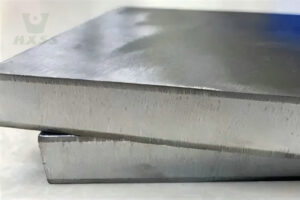
Marine grade stainless steel clad plate is a composite material that combines a corrosion-resistant stainless steel layer with a carbon steel base. This structure delivers excellent corrosion resistance while maintaining high strength and reducing overall cost.
Compared with solid stainless steel plates, clad plates provide a more economical solution for offshore and marine engineering projects without compromising performance.
👉 Looking for cost-effective marine clad plates? Contact Huaxiao Metal for a fast quotation.
Key Advantages of Marine Clad Plate
1. Superior Corrosion Resistance
Marine environments are highly corrosive. Stainless steel cladding effectively protects against:
- Seawater
- Chloride attack
- Humidity and salt spray
2. Significant Cost Savings
Using clad plate instead of solid stainless steel can reduce material costs by 30%–60%, making it ideal for large offshore structures.
3. High Strength & Durability
The carbon steel base provides excellent strength and load-bearing capacity, suitable for heavy-duty marine applications.
4. Reliable Bonding Performance
Advanced processes such as explosion bonding ensure:
- 100% bonding rate
- High shear strength (up to 400–500 MPa)
HBIS Marine Clad Plate Case
According to industry reports, HBIS successfully developed marine-grade stainless steel clad plates with:
- Shear strength exceeding 510 MPa
- Full bonding integrity
- Application in offshore engineering projects
👉 This demonstrates the growing demand for high-performance clad plates in marine industries.
Typical Material Combinations
Common marine-grade clad plate combinations include:
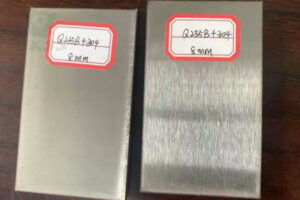
316L + Carbon Steel → General marine use
2205 Duplex + Carbon Steel → High corrosion resistance
2507 Super Duplex + Carbon Steel → Extreme offshore environments
👉 Not sure which material fits your project? Send your requirements and get expert advice from Huaxiao Metal.
Main Applications of Marine Clad Plate
Marine clad plates are widely used in:
- Offshore oil & gas platforms
- Shipbuilding structures
- Desalination equipment
- Pressure vessels
- Chemical storage tanks
How to Choose a Reliable Clad Plate Supplier
When sourcing marine clad plates, consider:
Production Capability
- Explosion bonded or hot-rolled technology
- Large plate size availability
Quality Standards
- ASTM / ASME compliance
- Ultrasonic testing (UT)
- Third-party inspection
Export Experience
- Packaging for overseas shipping
- Stable delivery time
Why Choose Huaxiao Metal?
At Huaxiao Metal, we specialize in supplying high-performance stainless steel clad plates for global customers.
Our Advantages:
- ✔ Wide material options (304, 316L, 2205, 2507)
- ✔ Custom thickness and size
- ✔ Strict quality control and inspection
- ✔ Rich export experience
- ✔ Competitive factory price
👉 We support offshore, marine, and pressure vessel projects worldwide.
Why Choose Huaxiao Metal?
What is the difference between clad plate and solid stainless steel?
Clad plate combines stainless steel and carbon steel, offering similar corrosion resistance at a lower cost compared to solid stainless steel.
Is stainless steel clad plate suitable for marine environments?
Yes. Especially grades like 316L and duplex stainless steel provide excellent resistance to seawater corrosion.
What bonding methods are used for clad plates?
The most common methods are explosion bonding and hot rolling, both ensuring strong metallurgical bonding.
What thickness range is available?
Clad plates can be customized, typically ranging from 5mm to over 100mm total thickness.