Recently, my country’s exports of stainless steel products have encountered bottlenecks. In particular, food grade stainless steel products related to food safety have been restricted by the food safety laws of many countries. So what is food-grade stainless steel? The so-called food-grade stainless steel refers to the part of food machinery in contact with food. In our country, it must meet the requirements of the “National Standards of the People’s Republic of China/Sanitary Standards for Stainless Steel Tableware Containers”.
Because a lot of acid and alkali is used in the food production process, and stainless steel contains chromium, unqualified stainless steel will dissolve chromium at various prices, which is toxic; and it is required to limit the content of various alloy impurities elements such as lead and cadmium. Specific standards: Austenitic stainless steel (1Cr18Ni9Ti, 0Cr19Ni9, 1Cr18Ni9) should be selected for various food storage containers and food processing machinery. Various tableware: Martensitic stainless steel (0Cr13, 1Cr13, 2Cr13, 3Cr13) should be used.
There are many identification methods for food grade stainless steel, but there are fewer methods suitable for ordinary people to identify themselves, and it is more troublesome. Therefore, the identification of food grade stainless steel depends on the strict access system of relevant departments. Strengthening the prescription can ensure the safety of ordinary people.
What exactly is food grade stainless steel?

Simply put, food-grade stainless steel is a metal that is considered safe for contact with food. Its key characteristic is its excellent corrosion resistance. This means that it will not rust, break down, or leach harmful chemicals (such as heavy metals) into food when exposed to various types of food, liquids, and cleaning agents.
This property is mainly due to the chromium in its composition. According to international standards, stainless steel must contain at least 11% chromium. Chromium reacts with oxygen in the air to form an invisible, tough, self-healing chromium oxide passivation film on the surface of the steel, which can effectively prevent the occurrence of corrosion.
Common Food-Grade Stainless Steel Grades: 304 vs 316 vs 430
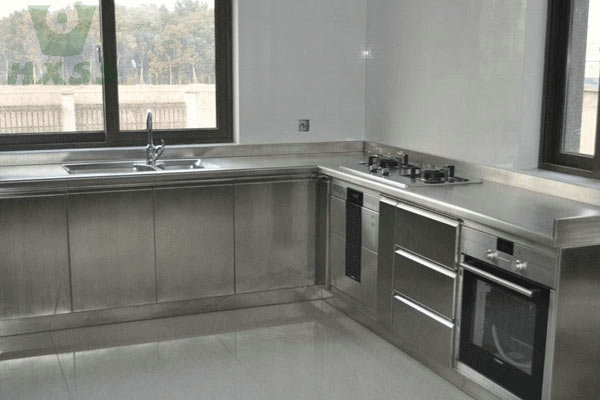
Not all stainless steels are created equal. Different alloy compositions determine their properties and best uses. Here are a few of the most common grades used in the food industry.
| Property | 304 Stainless Steel | 316 Stainless Steel | 430 Stainless Steel |
|---|---|---|---|
| Common Name | 18/8 | 18/10 | 18/0 |
| Key Elements | Chromium, Nickel | Chromium, Nickel, Molybdenum | Chromium |
| Corrosion Resistance | Good | Excellent | Fair |
| Salt/Chloride Resistance | Fair | Excellent | Poor |
| Cost | Moderate | Higher | Lower |
| Magnetism | Non-magnetic | Non-magnetic | Magnetic |
| Typical Applications | General kitchenware | Harsh/salty environments | Low-cost cutlery, appliances |
1. 304 Stainless Steel (18/8)
304 stainless steel is the “workhorse” of the food-grade world and the type you’ll encounter most often. It’s often called 18/8 stainless steel because it contains about 18% chromium and 8% nickel.
Advantages: Excellent overall performance, good corrosion resistance, easy to form and weld, cost-effective.
Common Applications: Kitchen sinks, pots and pans, cutlery, storage jars, most food processing equipment.
Limitations: While resistant to most acidic foods and solutions, it has weak corrosion resistance to chlorides such as salt.
2. 316 Stainless Steel (18/10)
When stronger protection is needed, 316 stainless steel comes in handy. It is based on 304, with additional molybdenum elements added.
Advantages: Excellent corrosion resistance, especially to chlorides, salts and acids. It is also called “medical grade stainless steel”.
Common applications: Processing high-salt foods (such as soy sauce, pickles), ketchup processing, pharmaceutical equipment, equipment in marine environments.
Limitations: The cost is higher than 304 stainless steel.
3. 430 stainless steel (18/0)
430 stainless steel is a ferritic stainless steel with no nickel or very low nickel content. It is often called 18/0 stainless steel.
Advantages: Low cost, good thermal conductivity, magnetic (can be used in induction cookers).
Common applications: Cheap tableware, mixing bowls, kitchen appliance housings.
Limitations: Corrosion resistance and durability are not as good as 300 series, not recommended for harsh environments with high acidity or high salt.
How to choose the right stainless steel grade for your business?
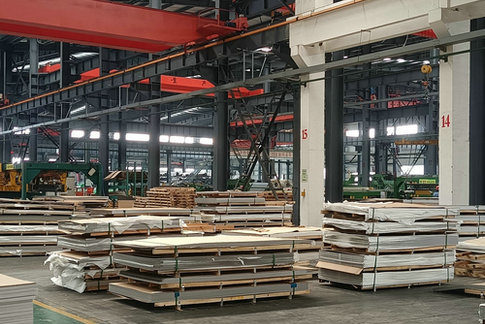
Choosing the wrong grade can lead to premature corrosion of equipment, product contamination, and even safety risks. When choosing, ask yourself the following questions:
What type of food will it come in contact with? If you are handling highly acidic (e.g., citrus juices, tomatoes) or high-salt (e.g., pickles, sauces) substances, investing in 316 stainless steel is a wise choice. For general applications, 304 stainless steel is more than adequate.
What are the cleaning and sanitizing procedures? If you use strong cleaners containing chlorides, 316 will withstand better.
What is the budget? 430 is the lowest cost option, but it sacrifices performance. 304 strikes a good balance between cost and performance. 316 is the highest performance investment.
FAQ
Is stainless steel truly rust-proof?
Not really. “Stainless” is not the same as “Stain-proof.” Even 316 stainless steel can develop pitting corrosion under extreme conditions (such as continued exposure to corrosives after the protective layer has been scratched). Proper cleaning and maintenance are essential.
What is the difference between 18/8 and 18/10?
Both terms refer to 300 series stainless steel. 18/8 usually refers to 304 stainless steel (18% chromium, 8% nickel). 18/10 usually refers to 316 stainless steel (18% chromium, 10% nickel), and sometimes to a version of 304 with a slightly higher nickel content, which provides a better finish and slightly greater corrosion resistance.
How do you clean and care for food-grade stainless steel?
Use mild soapy water and a soft cloth for routine cleaning. Wipe in the direction of the metal’s grain. Avoid steel wool or abrasive cleaners, which can scratch the protective layer.
Huaxiao Metal: Your Trusted Stainless Steel Partner
Choosing the right food grade stainless steel for your project can be complex, but it is essential to ensure the quality, safety, and longevity of your product.
At Huaxiao Metal, we not only offer high-quality stainless steel sheets, coils, and tubes in a variety of grades (including 304, 316, etc.) that meet international standards,but our team of experts is also ready to provide you with professional advice to help you find the most cost-effective solution for your specific application.
Not sure which grade is best for you?
Contact our experts today for a free consultation and customized quote!