Pressure vessels are widely used in industries such as oil & gas, petrochemical, power generation, and chemical processing. These equipment operate under high pressure and sometimes extreme temperature conditions, making material selection extremely critical.
Pressure Vessel Steel is specially designed to withstand high internal pressure while maintaining excellent toughness, strength, and safety.
Choosing the wrong steel grade can lead to:
- Structural failure
- Safety risks
- Costly downtime
In this guide, we will cover:
- Common pressure vessel steel grades
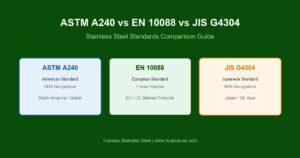
- ASTM, EN, and GB standards
- Mechanical and chemical properties
- How to choose the right steel
- Supplier selection tips
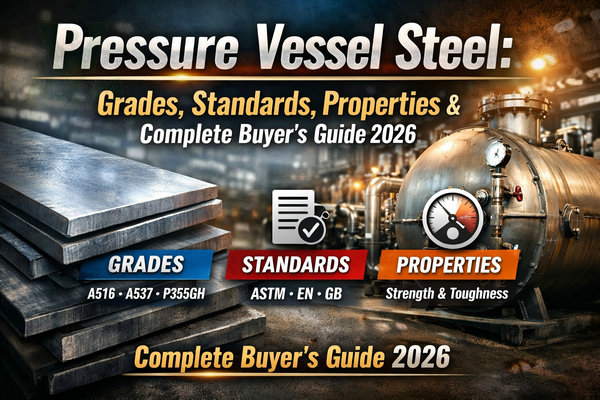
What Is Pressure Vessel Steel?
Pressure vessel steel refers to a group of carbon steel and alloy steel plates used to manufacture boilers, pressure tanks, reactors, and similar equipment.
Key characteristics:
- High tensile strength
- Excellent toughness and ductility
- Good weldability
- Resistance to pressure and temperature
These steels are engineered to meet strict international standards such as ASTM, EN, and GB.
Common Pressure Vessel Steel Grades Comparison
Below are the most commonly used grades in global engineering projects:
Pressure Vessel Steel Comparison Table
| Grade | Standard | Strength Level | Typical Application |
|---|---|---|---|
| A516 Gr 60 | ASTM | Medium | General pressure vessels |
| A516 Gr 70 | ASTM | Higher | Boilers, tanks |
| A537 CL1 / CL2 | ASTM | High | High-pressure applications |
| P355GH | EN 10028 | Medium-High | European pressure equipment |
| Q345R | GB | Medium | Chinese pressure vessels |
Key Insights:
- A516 Gr 70 is one of the most widely used pressure vessel steels worldwide
- A537 is preferred for higher pressure and higher strength requirements
- P355GH is commonly used in European EN-standard projects
- Q345R is widely used in China and export projects
ASTM vs EN vs GB Standards
Different regions follow different standards for pressure vessel steel:
🔸 ASTM (American Standard)
- Example: A516, A537
- Widely used in oil & gas projects
- Strict mechanical property requirements
🔸 EN (European Standard)
- Example: P355GH
- Common in EU pressure equipment
- Focus on weldability and toughness
🔸 GB (Chinese Standard)
- Example: Q345R
- Widely used in domestic and export projects
- Cost-effective solution
Mechanical and Chemical Properties
Pressure vessel steel must meet strict mechanical and chemical requirements.
Key properties:
- Yield Strength: Ensures structural integrity
- Tensile Strength: Resistance to breaking
- Impact Toughness: Especially at low temperatures
- Weldability: Important for fabrication
Chemical composition typically includes:
- Carbon (C)
- Manganese (Mn)
- Silicon (Si)
- Low levels of sulfur and phosphorus
How to Choose the Right Pressure Vessel Steel
Choosing the correct steel depends on several engineering factors:
1. Operating Pressure
- Low pressure → A516 Gr 60
- Medium pressure → A516 Gr 70
- High pressure → A537
2. Temperature Conditions
- Low temperature → Choose steels with high impact toughness
- High temperature → Use heat-resistant grades
3. Medium Type
- Corrosive environment → Consider alloy steel or coatings
4. Applicable Standards
- ASTM / EN / GB depending on project requirements
Applications of Pressure Vessel Steel
Pressure vessel steel is widely used in:
- Oil & Gas industry
- Boilers and steam systems
- Chemical processing plants
- Storage tanks
- Nuclear and energy equipment
Why Choose Huaxiao Metal as Your Supplier
At Huaxiao Metal, we provide high-quality pressure vessel steel plates with reliable performance and competitive pricing.
Our advantages:
- Wide range of grades (ASTM, EN, GB)
- Strict quality control and inspection
- Customized sizes and specifications
- Fast delivery and export experience
- Mill test certificates (MTC) provided
FAQ about Pressure Vessel Steel
What are the most common pressure vessel steel grades used worldwide?
Pressure vessel steel grades vary by region and standard. In North America, ASTM A516 Grade 70 is widely used for moderate temperature service, while ASTM A387 suits high-temperature applications. In Europe, EN 10028-2 grades like P355GH and 16Mo3 are common. In China, GB713 steel such as Q345R is frequently specified.
How do pressure vessel steel standards differ between ASTM, EN, and GB?
ASTM standards (widely used in Americas & Asia) focus on specific steel properties and allowable stresses. EN standards (Europe & Africa) categorize steels by design temperature and strength classes. GB standards (China) define domestic steel grades commonly used by local fabricators and exporters.
Which pressure vessel steel is best for high temperature applications?
For elevated temperatures (>400°C), alloy steels such as ASTM A387 or chrome-moly grades provide superior creep resistance and mechanical stability compared to basic carbon steels. These are often chosen for boilers and heat exchangers where temperature stability is critical.
How does corrosion resistance affect steel selection for pressure vessels?
Corrosion resistance is crucial when vessels handle aggressive media (acidic, chloride-rich, or sour environments). Stainless steels or corrosion-resistant alloys may be preferred over carbon steel in such cases, though they come at a higher cost.
What are the key mechanical properties to compare when choosing pressure vessel steel?
Key properties include tensile strength, yield strength, impact toughness, and weldability. For low-temperature service, high toughness (low DBTT) is essential to prevent brittle fracture.
How does fabrication and weldability influence the choice of pressure vessel steel?
Good weldability reduces fabrication defects and post-weld treatments. Carbon steels and low-alloy steels typically offer easier welding, while high-alloy steels may require more controlled welding procedures.
Can stainless steel be a better choice than carbon steel for pressure vessels?
Stainless steel offers superior corrosion resistance and is often selected for chemical, pharmaceutical, and food applications. However, it is more expensive, and its benefits must justify the added cost based on service conditions.
Conclusion
Pressure vessel steel is a critical material in high-pressure applications. Understanding the differences between ASTM, EN, and GB standards, as well as selecting the right grade, is essential for safety and performance.
By choosing the right material and a reliable supplier like Huaxiao Metal, you can ensure both quality and cost-efficiency for your project.