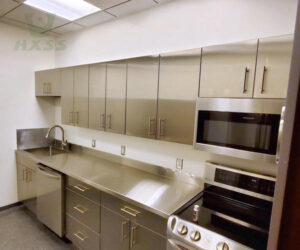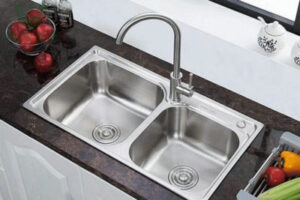
Polishing is a crucial process in the production and processing of stainless steel products. Polishing can not only improve the appearance of stainless steel, making it brighter and more beautiful, but also improve its corrosion resistance, making it more suitable for food, medical, construction and other fields. Different polishing methods are suitable for different products, and each method has its own advantages and disadvantages.
As one of the stainless steel production suppliers in China, we have more than 10 years of experience in the stainless steel industry. We will explain in detail in this article, what are the polishing methods of stainless steel? What are the differences between them? Which method is more suitable for your needs?
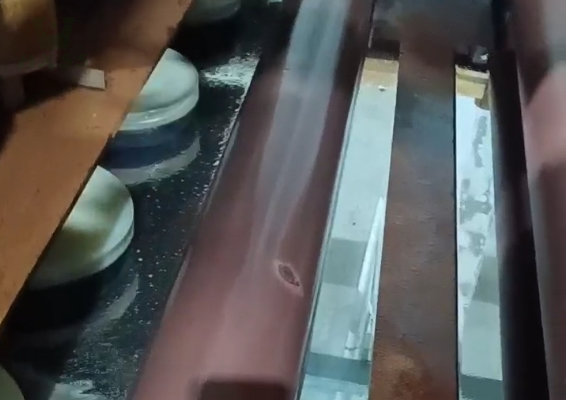
What Is Stainless Steel Polishing?
Polishing is the process of refining the surface of stainless steel to improve its smoothness, gloss, and functional performance. Unlike brushing or sandblasting, polishing aims for a reflective or mirror-like finish while also reducing micro-defects that may harbor contaminants.
Polishing vs Brushing vs Mirror Finish
Brushed Finish: Produces a matte, linear surface with visible grain. Common in appliances and architectural panels.
Polished Finish: Smooth and shiny, often used where aesthetics and hygiene are important.
Mirror Finish: High-reflectivity surface, Ra < 0.1 µm, ideal for medical, food-grade, and decorative applications.
The Main Methods and Characteristics of Stainless Polishing
At present, the main methods of stainless steel polishing include mechanical polishing, chemical polishing, electrolytic polishing, mirror polishing, brushed polishing and sandblasting polishing. Different polishing methods can achieve different surface effects and suit different industries and application scenarios.
Next, Huaxiao Metal will introduce these polishing methods to you in detail.
Mechanical Polishing, MP
Applicable Products: stainless steel pipes, plates, decorative parts, auto parts
Features:
Smooth effect achieved through physical grinding, controllable brightness
Can be used for flat or regular shaped workpieces
The equipment cost is relatively low, suitable for mass production
Advantages and Disadvantages:
✅ Low cost, suitable for workpieces of various shapes
✅ Can obtain different levels of brightness
❌ Easy to leave tiny scratches, requiring further processing
❌ Time-consuming operation, manual work accounts for a large proportion
Chemical Polishing, CP
Applicable Products: medical equipment, complex-shaped parts, food industry equipment
Features:
Remove the surface oxide layer through chemical reaction to achieve a smooth effect
Can handle complex structural parts without manual grinding
Improve corrosion resistance and is widely used in food and medical fields
Advantages and Disadvantages:
✅ Suitable for mass production and high efficiency
✅ Can handle parts with complex shapes
❌ Chemical solutions are required and environmental protection requirements are high
❌ Thorough cleaning is required after treatment to avoid chemical residues
Electrolytic Polishing, EP
Applicable Products: stainless steel containers, pharmaceutical equipment, food-grade equipment
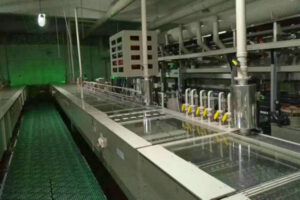
Features:
Use electrolysis to dissolve metal ions and form an ultra-smooth surface
Can improve corrosion resistance and remove microscopic roughness
Suitable for high-end stainless steel products, such as high-cleanliness equipment
Advantages and Disadvantages:
✅ Extremely smooth surface, mirror effect
✅ Improve the corrosion resistance of stainless steel
❌ The equipment cost is high and requires a specific electrolyte
❌ The scope of application is limited and only applies to conductive materials
Mirror Polishing
Applicable Products: high-end decorations, stainless steel building materials, high-end home appliances
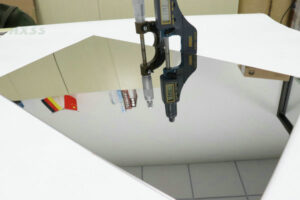
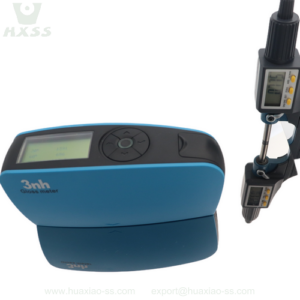
Features:
Through multi-level grinding and polishing, the stainless steel surface is highly reflective
Improve the decorativeness and market value of the product
Widely used in high-end buildings and home decoration
Advantages and Disadvantages:
✅ Excellent visual effect, improve product grade
✅ Easy to clean, strong stain resistance
❌ Complex production process, high cost
❌ Easy to get fingerprints, need regular maintenance
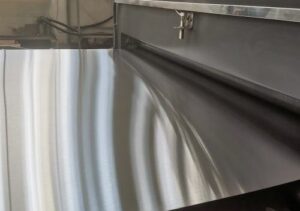
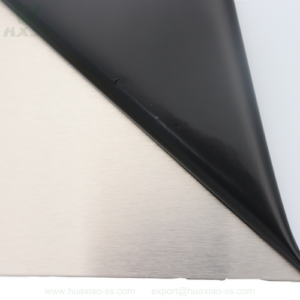
Brushed Polishing
Applicable Products: kitchenware, elevator panels, home appliance housings
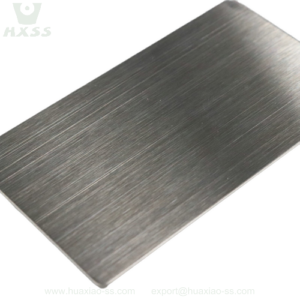

Features:
Use abrasive belt to form a fine brushed texture on the stainless steel surface
Gives the metal a unique texture while reducing reflectivity
Applicable to products with high requirements for aesthetics and wear resistance
Advantages and Disadvantages:
✅ Clear texture, soft visual effect, good anti-fingerprint effect
✅ Strong scratch resistance, suitable for daily use
❌ Cannot achieve a mirror effect
❌ Requires regular maintenance to prevent dirt accumulation
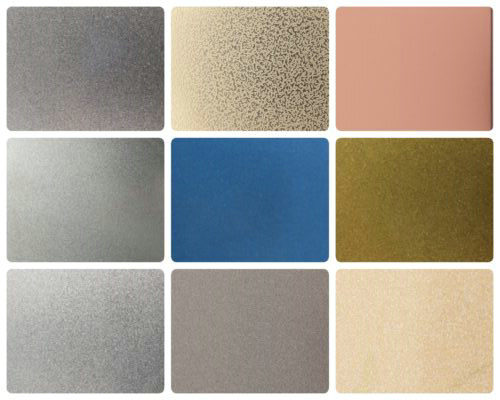
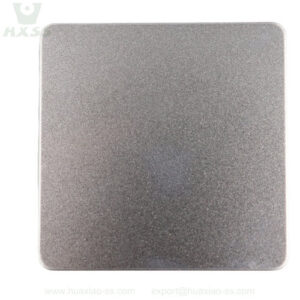
Sandblasting Polishing
Applicable Products: mechanical parts, industrial equipment, stainless steel decorative panels
Features:
Remove surface defects by high-speed jetting abrasives to form a uniform matte effect
Applicable to large workpieces or products that need to remove the oxide layer
Can enhance surface wear resistance and improve the adhesion of subsequent coatings
Advantages and Disadvantages:
✅ Uniform treatment effect, suitable for large-area processing
✅ Can improve surface performance and enhance wear resistance
❌ The surface is relatively rough, not suitable for food and medical equipment
❌ Requires professional equipment, high dust treatment requirements
Surface Roughness & Finish Standards
Surface finish is often quantified using Ra (average roughness) or Rz (average peak-to-valley height) values.
| Polishing Method | Typical Ra Value (µm) | Finish Level | Applications |
|---|---|---|---|
| Mechanical Polishing | 0.2 – 0.4 | Semi-smooth | Decorative, general use |
| Chemical Polishing | 0.1 – 0.3 | Smooth | Pipes, tanks, complex parts |
| Electropolishing | 0.05 – 0.1 | Ultra-smooth, mirror-like | Medical, food, pharma |
| Laser Polishing | 0.02 – 0.05 | Precision finish | Aerospace, high-tech |
A lower Ra means smoother surfaces, which improves cleanability, hygiene, and corrosion resistance.
Cost Comparison of Polishing Methods
When choosing a polishing method, cost is a key factor.
Equipment & Labor Costs
Mechanical Polishing: Lower equipment investment, but high labor cost due to manual operation.
Electropolishing: High initial setup (power supply, electrolytes), but efficient for bulk processing.
Chemical Polishing: Lower equipment cost, but recurring chemical expenses and safety measures required.
Laser Polishing: Expensive equipment, best for high-value precision parts.
Time Efficiency vs Surface Quality
Mechanical polishing is slower for large-scale production.
Electropolishing can polish multiple parts simultaneously, saving time.
Chemical polishing is efficient but requires chemical management.
Laser polishing is precise but slower per unit area.
Conclusion: For mass production, electropolishing and chemical polishing are more cost-effective. For customized decorative finishes, mechanical polishing remains viable.
Application-Based Method Selection
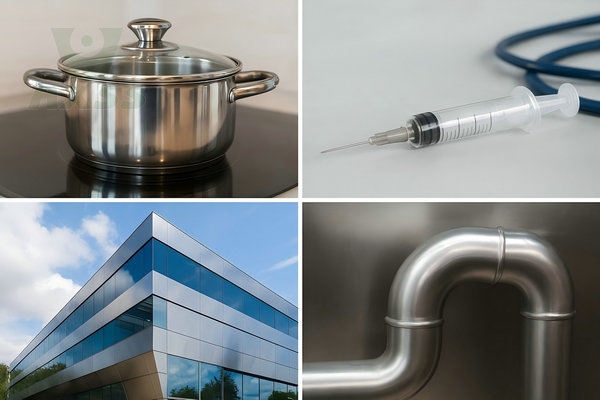
Food-Grade Stainless Steel Finishes
Requirement: Smooth, non-porous, easy to clean.
Best Choice: Electropolishing for Ra < 0.1 µm.
Medical & Pharmaceutical Equipment
Requirement: Sterile, corrosion-resistant, free of micro-contaminants.
Best Choice: Electropolishing, with passivation for maximum biocompatibility.
Architectural & Decorative Stainless Steel
Requirement: Aesthetic appearance, reflective finish.
Best Choice: Mechanical polishing for cost control; mirror finish optional.
Internal Tube & Complex Geometry Polishing
Requirement: Uniform finish in hard-to-reach areas.
Best Choice: Chemical polishing or magnetic abrasive finishing.
Safety, Environmental, and Maintenance Factors
Chemical Handling & Wastewater Treatment
Chemical polishing involves strong acids such as nitric or phosphoric acid. Proper waste treatment systems must be installed to meet environmental standards.
Dust, Heat, and Operator Protection
Mechanical polishing generates dust and heat; operators need respiratory protection, cooling systems, and safety shields.
Equipment Maintenance
Electropolishing requires monitoring of electrolyte composition, while laser polishing needs careful calibration and cooling systems.
Practical Tips & Checklist Before Polishing
Surface Preparation: Remove oil, dirt, and scale before polishing.
Tool Selection: Choose the correct abrasive grit size for mechanical polishing.
Defect Control: Avoid over-polishing, which may reduce dimensional accuracy.
Finish Verification: Usea profilometer or surface roughness tester to confirm Ra values.
How to Choose the Right Stainless Steel Polishing Method?
Selecting the most suitable polishing process is a critical step in ensuring your stainless steel products meet functional, aesthetic, and cost-efficiency requirements. We provide a systematic decision-making process based on three dimensions: Target Surface Requirements, Part Characteristics, and Budget & Efficiency.
Step 1: Define Target Surface Requirements and Application
Different applications demand unique stainless steel surface characteristics. This is the primary factor in determining the polishing method.
| Target Surface / Characteristic | Core Requirement | Recommended Polishing Method | Industry Standard Reference |
| Ultra-High Cleanliness & Corrosion Resistance | No residue, surface passivation, high microscopic smoothness for critical environments. | Electropolishing (EP) | Ra < 0.1 µm (or less); Food-grade, Medical-grade standards. |
| Ultimate Mirror Finish | High reflectivity, clear image clarity, high aesthetic/decorative demand. | Mirror Polishing (Mechanical + Buffing) | 8K / 10K / 12K Brightness (GU > 600); Ra < 0.05 µm. |
| Brushed / Satin Texture | Uniform, linear texture, hides minor scratches, soft visual effect. | Brushed Polishing (Hairline/HL) | NO.4 / Hairline (HL) Finish; visible directional grain. |
| Internal Surface of Complex Parts | Cleaning pipes, bends, and internal areas unreachable by mechanical tools. | Chemical Polishing (CP) or Electropolishing (EP) | N/A |
| Rapid Oxide Layer / Burr Removal | Focus on removing mill scale, flash, or microscopic defects after hot working. | Mechanical Polishing (Grinding) or Chemical Polishing | N/A |
Step 2: Evaluate Part Characteristics and Process Limitations
The geometry, size, and stainless steel grade of the workpiece directly influence the appropriate process.
| Part Characteristic | Mechanical Polishing | Chemical Polishing (CP) | Electropolishing (EP) |
| Complex Shapes / Internal Features | Not Suitable (Difficulty accessing internal surfaces) | Suitable (Solution immersion offers complete coverage) | Suitable (Solution immersion, but current distribution requires careful setup) |
| Large Flat Sheets / Coils | Most Suitable (Mature grinding/brushing machinery process) | Suitable (But high demand on tank size) | Not Practical (High equipment investment, lower relative efficiency) |
| Batch Processing Efficiency | Low efficiency (Requires individual or sequential handling) | Highest (Multiple parts can be immersed simultaneously) | High (Multiple parts can be processed simultaneously) |
| Stainless Steel Grade | Suitable for all grades | Best for 300 Series; 400 Series results are often mediocre | Best for 300 Series (e.g., 304, 316); 400 Series requires special formulas |
| Surface Pre-treatment | Low requirement (Can start from a rough state) | Moderate requirement (Requires pre-cleaning) | High requirement (Surface should be smooth, often requires preliminary mechanical rough grinding) |
Step 3: Weigh Economic Feasibility, Safety, and Environmental Factors
Compliance, cost, and efficiency must be considered once technical requirements are met.
1. Economic and Efficiency Comparison
| Metric | Mechanical Polishing | Chemical Polishing | Electropolishing |
| Per-Part Cost (Simple Parts) | Lower (Primarily labor/consumables) | Lower (Chemicals are reusable) | Higher (Significant equipment setup, electricity consumption) |
| Time Efficiency (Batch) | Low | Highest | High |
| Main Consumables | Abrasive belts, wheels, compounds, buffs | Strong acidic chemical solutions (e.g., nitric acid, phosphoric acid) | Electrolyte solution, electrical power |
2. Safety and Environmental Considerations
Mechanical Polishing: Primarily generates metal dust and noise. Requires comprehensive ventilation systems and operator protection (dust masks, goggles).
Chemical Polishing: Involves strong acids and generates toxic fumes. Requires strict chemical management, controlled wastewater treatment (acid neutralization, heavy metal removal), and high-capacity ventilation.
Electropolishing: Also involves corrosive electrolyte, but waste management is generally more controllable than CP. Key challenges are current control and safe electrical operation.
Decision Tree Summary: Polishing Selection Flow
To quickly make a decision, follow this path:
Primary Question: Is Ultra-High Cleanliness / Internal Surface Treatment Required?
YES → Choose Electropolishing (EP) (or Chemical Polishing, if the shape is complex and light requirements are secondary).
NO → Proceed to Step 2.
Secondary Question: Is a Brushed Texture or a Mirror Finish Required?
Brushed/Hairline (NO.4/HL) → Choose Mechanical Polishing (Brushing).
Mirror (8K/10K) → Choose Mechanical Mirror Polishing (possibly combined with EP or CP pre-treatment).
Only a basic bright finish is needed → Proceed to Step 3.
Final Question: Is the Part a Large Sheet/Coil or a Small-Batch Complex Component?
Large Flat Sheet/Coil → Mechanical Polishing (High efficiency, manageable cost).
Small-Batch/Complex Parts → Consider Chemical Polishing (High efficiency, reaches internal areas).
By utilizing this flow, you can make a professional and well-informed selection of the appropriate polishing method based on your product requirements, technical capabilities, and budgetary constraints.
Which Polishing Method is Best for Your Needs?
| Polishing Method | Best For | Key Advantages | Main Disadvantages |
|---|---|---|---|
| Mechanical Polishing | Pipes, sheets, decorative parts | Cost-effective, versatile | May leave fine scratches |
| Chemical Polishing | Complex-shaped parts, medical devices | High efficiency, uniform finish | Requires chemical solutions, environmental concerns |
| Electrolytic Polishing | High-end stainless steel products | Superior brightness, corrosion resistance | High equipment cost |
| Mirror Polishing | Luxury décor, stainless steel furniture | High reflectivity, premium look | Fingerprints are easily visible, high-maintenance |
| Brushed Polishing | Appliances, kitchenware, architectural décor | Elegant texture, scratch-resistant | Cannot achieve a mirror finish |
| Sandblasting | Industrial parts, machinery components | A uniform surface removes oxidation | Rough texture, not suitable for food or medical use |
If you are looking for high-quality stainless steel polishing products, or need custom stainless steel processing services, welcome to contact us for a quote and more information! We provide a variety of stainless steel polishing solutions to meet the needs of different industries!
FAQ
What is stainless steel polishing?
Stainless steel polishing is the process of improving the surface finish of stainless steel by removing scratches, oxidation, or imperfections, resulting in a smoother, shinier, and more corrosion-resistant surface.
Why is polishing stainless steel important?
Polishing enhances the appearance, improves corrosion resistance, reduces contamination risk in industries like food and medical, and extends the service life of stainless steel products.
What are the common stainless steel polishing methods?
The most common methods include mechanical polishing, chemical polishing, and electro-polishing. Each method has unique benefits and is chosen based on surface requirements and application fields.
Which polishing method is best for food-grade stainless steel?
For food-grade stainless steel applications, electro-polishing is often preferred because it provides a smooth, sanitary surface that is resistant to bacterial growth.
Can stainless steel polishing prevent rust?
Yes. Polishing removes surface imperfections and forms a passive protective layer, significantly reducing the chances of rust and corrosion in stainless steel.
What industries require stainless steel polishing?
Industries such as food processing, pharmaceuticals, architecture, medical equipment, and chemical processing all require stainless steel polishing to meet hygiene, safety, and aesthetic standards.
How to choose the right polishing method?
The choice depends on the final application. For decorative purposes, mechanical polishing works well; for hygienic or high-precision equipment, electro-polishing or chemical polishing is more suitable.
How is surface roughness measured?
By using a surface roughness tester to measure Ra or Rz values, indicating the level of smoothness.
What is the most cost-effective polishing method?
For general decorative purposes, mechanical polishing or brushed finish provides good performance at reasonable cost.
Can I combine multiple polishing processes?
Yes. In many cases, mechanical pre-polishing + chemical or electrolytic finishing yields the best results.
Does polishing improve corrosion resistance?
Yes. Methods like electropolishing remove micro-defects and passivate the surface, significantly improving corrosion resistance.
In Conclusion:
Stainless steel polishing is not only about appearance — it’s a key step that determines durability, hygiene, and overall performance. By understanding each polishing technique’s characteristics, you can choose the most cost-effective and suitable finish for your project.
Huaxiao Metal provides customized stainless steel polishing services — from mechanical and electropolishing to mirror and brushed finishes. Contact us today to get the latest polishing service price and technical consultation.