Monel Alloy 400 is a nickel-copper alloy known for its excellent corrosion resistance, high strength, and versatility across various industries. Whether you are an engineer, manufacturer, or just interested in advanced materials, this article will help you understand Monel Alloy 400, including its properties, applications, and why so many industries choose it.
At Huaxiao Metal, we supply certified Monel Alloy 400 products with reliable quality, competitive prices, and fast delivery options to meet the needs of industries worldwide. Whether you are searching for Monel Alloy 400 suppliers, manufacturers, or competitive quotations, our team is here to assist you.
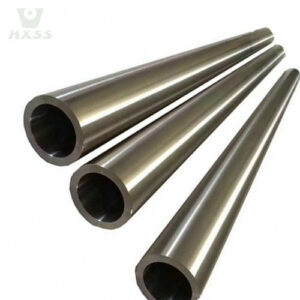
What is Monel Alloy 400?
Monel 400 alloy is a solid solution binary alloy consisting primarily of nickel (63-70%) and copper (28-34%), with smaller amounts of iron, manganese, carbon and silicon. The alloy was developed by the International Nickel Company (INCO) in the early 20th century and is named after Ambrose Monell, the company’s president at the time. Its unique composition gives it a combination of strength, ductility and corrosion resistance, making it the material of choice for challenging applications.
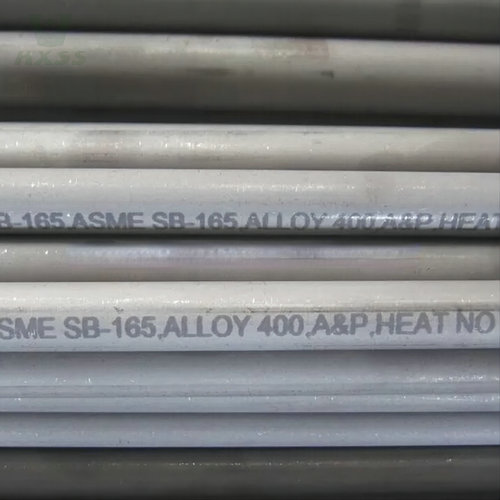
Our company can provide monel400 in multiple specifications. If you need monel400 bars, plates, tubes, wires, etc., please contact us directly and we will send you our prices for reference.
Monel Alloy 400 Data Sheet
Equivalent Standards
| Country/Standard | Equivalent Grade |
|---|---|
| USA (ASTM) | UNS N04400 |
| Germany (DIN) | 2.4360 |
| Japan (JIS) | NW 4400 |
| UK (BS) | NA 13 |
| France (AFNOR) | NU 30 |
| China (GB) | NS 111 |
Chemical Composition (%)
| Element | Composition (%) |
|---|---|
| Ni | 63-70 |
| Cu | 28-34 |
| Fe | ≤ 2.5 |
| Mn | ≤ 2.0 |
| C | ≤ 0.3 |
| Si | ≤ 0.5 |
Mechanical Properties
| Property | Value |
|---|---|
| Tensile Strength | 550-750 MPa (80-110 ksi) |
| Yield Strength (0.2% offset) | 240-450 MPa (35-65 ksi) |
| Elongation (% in 50 mm) | 20-40% |
| Hardness (Rockwell B) | 65-95 |
Physical Properties
| Property | Value |
|---|---|
| Density | 8.80 g/cm³ (0.318 lb/in³) |
| Melting Range | 1300-1350°C (2370-2460°F) |
| Thermal Conductivity | 21.8 W/m·K (12.6 BTU·in/hr·ft²·°F) |
| Electrical Resistivity | 0.486 µΩ·m |
| Magnetic Permeability | ≤ 1.001 |
Other Properties
| Property | Value |
|---|---|
| Corrosion Resistance | Excellent in seawater, acids, and alkalis |
| Non-Magnetic | Yes |
| Fabrication | Easily welded, machined, and formed |
Key Properties of Monel Alloy 400
Corrosion Resistance
Monel Alloy 400 has excellent corrosion resistance in both freshwater and saltwater environments. It is particularly resistant to sulfuric acid, hydrofluoric acid, and alkaline solutions, making it commonly used in marine and chemical processing applications.
High Strength
The alloy maintains its strength over a wide temperature range, from cryogenic conditions to 1000°F (538°C). This makes it suitable for high-stress environments.
Thermal Conductivity
Monel Alloy 400 has excellent thermal conductivity, which benefits heat exchangers and other thermal management systems.
Ductility and Toughness
Despite its high strength, the alloy is highly ductile, so it can be easily formed into a variety of shapes.
Magnetism
Monel Alloy 400 is non-magnetic, making it an option for applications in the electronics and aerospace industries.
Excellent Ductility
Monel 400 alloy exhibits excellent ductility, enabling it to be processed into a wide variety of forms. At NeoNickel, we offer Monel 400 in a wide variety of specifications, including bar, tube, pipe, fittings, flanges, sheet, and plate. This diverse range of forms allows Monel 400 to be used in nearly every application.
Cost-Effectiveness
Monel 400 is a cost-effective alternative, offering similar performance and properties to some of the more expensive nickel alloys. As an affordable option, Monel 400 is suitable for projects requiring high performance on a limited budget.
Fabrication
Monel 400 alloy’s excellent machinability allows for easy processing in a variety of ways. It can be fabricated into complex components using a variety of machining methods, including cutting, forming, welding, and bending. Its excellent mechanical properties make Monel 400 suitable for applications requiring high corrosion resistance.
Machinability
Monel 400 alloy exhibits excellent machinability, making it particularly well-suited for machining on CNC lathes and milling machines. Although harder than some common steels, it can be efficiently machined using the appropriate tools and machining parameters, making it widely used in the production of precision parts.
Welding
Monel 400 alloy exhibits excellent weldability and can be used with a variety of welding techniques, including TIG (gas tungsten arc welding), MIG (metallurgical arc welding), and laser welding. To ensure the strength and corrosion resistance of welded joints, the use of specialized Monel 400 welding rods is generally recommended. Proper post-weld heat treatment can further enhance the properties of the welded joint.
Forging
Monel 400 alloy is well-suited for forging processes and can be forged at high temperatures. Its excellent ductility during forging allows for the production of complex-shaped components, such as flanges and fittings. The forging process further enhances the alloy’s strength and toughness, extending its service life in harsh environments.
Hot Working
Monel 400 alloy can be hot worked at high temperatures. Common hot working methods include hot rolling, hot extrusion, and hot forging. During this process, the alloy’s plasticity and ductility are effectively utilized, enabling the production of large and complex-shaped products. After hot working, Monel 400 maintains its excellent mechanical properties and corrosion resistance.
Cold Working
Monel 400 alloy can also be cold worked, such as cold rolling and cold bending. Cold working improves the alloy’s surface finish and enhances its properties. During cold working, Monel 400 undergoes a certain hardening effect, so controlling the working pressure is necessary to prevent cracking or deformation.
Annealing
Annealing is a key step in improving the properties of Monel 400 alloy. By heating and slowly cooling, internal stresses and hardening are eliminated, restoring toughness and ductility. Annealed Monel 400 exhibits improved workability and corrosion resistance, making it widely used in subsequent processing.
Applications of Monel Alloy 400
Monel Alloy 400 is used in a wide variety of industries due to its unique properties. Some of its most common applications include:
Marine Engineering
Due to its resistance to seawater corrosion, the alloy is used in marine components such as pumps, valves, and propeller shafts.
Chemical Processing
Monel Alloy 400 is used in chemical processing equipment, including tanks, reactors, and piping systems, which must be corrosion-resistant.
Oil and Gas Industry
Due to its durability in harsh environments, the alloy is used in offshore drilling equipment, wellhead components, and subsea applications.
Aerospace and Defense
Its non-magnetic properties and high strength make it suitable for aerospace components, including fuel tanks and engine components.
Heat Exchangers and Condensers
Monel Alloy 400 is used in heat exchangers and condensers due to its thermal conductivity and corrosion resistance.

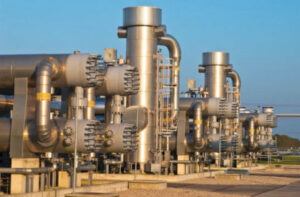
For companies seeking to sell Monel 400, Huaxiao Metal offers a broad product line including plates, bars, sheets, and tubes to meet specific project needs.
Advantages and Limitations
Advantages
Exceptional corrosion resistance in seawater and chemical environments.
Maintains toughness at sub-zero temperatures.
Good strength-to-weight ratio.
Long service life with minimal maintenance.
Limitations
Higher cost compared to standard stainless steels.
Prone to work hardening during machining.
Not suitable for strongly oxidizing environments like nitric acid.
For clients evaluating Monel Alloy 400 prices, these factors should be carefully considered to ensure cost-effectiveness.
How Is Monel 400 Made?
The production of Monel Alloy 400 involves a carefully controlled metallurgical process to ensure its superior corrosion resistance and mechanical strength. The typical steps include:
Raw Material Selection – High-purity nickel and copper are selected, along with trace elements such as iron and manganese, to meet strict chemical composition standards.
Melting and Alloying – The elements are melted in an electric furnace and homogenized to form a stable Ni-Cu alloy.
Casting – The molten alloy is cast into ingots or billets, ensuring uniform grain structure.
Hot Working – The billets are hot-rolled or forged at temperatures between 1200–900°C to achieve the desired shape.
Cold Working – Additional rolling or drawing processes are applied to improve mechanical strength and refine surface finish.
Heat Treatment – Annealing is performed to relieve stress and restore ductility after heavy forming.
Final Processing – Cutting, machining, and surface finishing prepare the alloy for specific industrial applications.
By controlling each production stage, Huaxiao Metal ensures that Monel 400 materials meet international standards such as ASTM B127, B163, B164, and B165. If you are searching for Monel Alloy 400 manufacturers or suppliers, we provide mill-certified products ready for immediate delivery.
What Are the Common Forms of Monel 400 Material?
To meet diverse industrial requirements, Monel Alloy 400 is manufactured and supplied in a wide variety of product forms:
Plates & Sheets – Ideal for marine, chemical, and power plant structures.
Bars & Rods – Widely used in valves, pumps, fasteners, and shafts.
Pipes & Tubes – Available in seamless and welded forms for chemical processing and heat exchangers.
Strips & Coils – Used for precision components, cladding, and flexible fabrication.
Forgings & Fittings – Custom shapes designed for critical oil & gas and aerospace applications.
Wires – Suitable for welding filler material and precision components.
At Huaxiao Metal, we keep a large inventory of these forms in stock, allowing our clients to choose the most suitable products based on technical specifications and project requirements. For inquiries regarding Monel Alloy 400 price, availability, or customization, please contact us directly.
Why Choose Monel Alloy 400?
Monel Alloy 400 is chosen by many industries for the following reasons:
Versatility: It can be used in a wide range of industries and applications.
Durability: Its corrosion resistance and high strength ensure long-lasting performance.
Cost-effectiveness: While initially more expensive than some materials, its long service life and low maintenance requirements make it a cost-effective solution in the long run.
Ease of fabrication: The alloy can be easily machined, welded, and formed into complex shapes.
Contact us now to request a free quote on Monel Alloy 400, check available stock, or discuss customized solutions.
Monel Alloy 400 vs. Other Alloys
Monel 400 is a versatile nickel-copper alloy known for its excellent corrosion resistance, high strength, and ease of fabrication. Here’s how it compares to other popular alloys:
Monel 400 vs. Hastelloy Alloy C-276
- Monel 400: A nickel-copper alloy with excellent resistance to seawater, acids, and alkalis. Ideal for marine, chemical, and oil & gas applications.
Hastelloy Alloy C-276: A nickel-molybdenum-chromium alloy with superior resistance to pitting, crevice corrosion, and oxidizing environments. Best for highly corrosive chemical processing and industrial applications.
Key Difference: Hastelloy C-276 is better suited for extreme chemical environments, while Monel 400 excels in marine and less aggressive acidic conditions.
Monel Alloy 400 vs. Inconel Alloy 600
Monel Alloy 400: Nickel-copper alloy resistant to seawater and non-oxidizing acids.
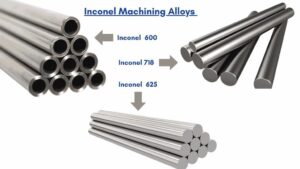
Inconel Alloy 600: A nickel-chromium alloy with excellent resistance to high temperatures, oxidation, and chloride stress corrosion cracking.
Key Difference: Inconel 600 is better for high-temperature applications (e.g., furnace components), while Monel 400 is preferred for marine and chemical environments.
Monel Alloy 400 vs. Monel Alloy K-500
Monel Alloy 400: A solid-solution alloy with good strength and corrosion resistance.
Monel Alloy K-500: A precipitation-hardened version of Monel 400, offering higher strength and hardness due to the addition of aluminum and titanium.
Key Difference: Monel K-500 is stronger and harder, making it suitable for high-stress applications like marine shafts and valves, while Monel 400 is more cost-effective for general use.
Monel Alloy 400 vs. Monel Alloy 405
Monel Alloy 400: A nickel-copper alloy with excellent corrosion resistance and strength.
Monel Alloy 405: Similar to Monel 400 but with added sulfur for improved machinability.
Key Difference: Monel 405 is easier to machine but has slightly lower corrosion resistance compared to Monel 400.
FAQ
How does Monel 400 differ from other nickel alloys?
Compared to other nickel alloys, Monel 400 offers improved seawater corrosion resistance and a lower cost. It also exhibits stronger resistance to chloride corrosion than many nickel-based alloys, making it a highly cost-effective material.
What machining operations can Monel 400 be performed on?
Monel 400 has excellent machinability and can be welded, forged, cold worked, and hot worked. It is suitable for various machining methods, such as lathe machining, milling, and drilling.
How is Monel 400 welded?
Monel 400 has excellent weldability and can be welded using techniques such as TIG (gas tungsten inert gas welding) and MIG (metallic arc welding). Welding requires the use of specialized Monel 400 electrodes, and post-weld annealing is recommended to improve the properties of the weld area.
How does Monel 400 address corrosion issues?
Monel 400 alloy is inherently highly corrosion-resistant, but some corrosion may occur under prolonged exposure to extreme environments (such as highly concentrated acidic solutions or seawater). To ensure maximum corrosion resistance, regular surface treatment or protective coating is recommended.
What precautions should be taken when heat treating Monel 400?
During annealing, Monel 400 alloy is heated to 800°C to 1100°C and slowly cooled to relieve internal stresses. This improves the material’s ductility and toughness, preventing excessive hardening that could affect subsequent processing.
What is the maximum operating temperature that Monel 400 can withstand?
Monel 400 can operate normally at temperatures up to 1000°C. It exhibits excellent strength and stability in high-temperature environments, making it particularly suitable for extremely high-temperature applications.
How should Monel 400 be stored and transported?
Monel 400 should be stored in a dry, moderately conditioned environment, avoiding prolonged exposure to moisture and extreme temperatures. During transportation, proper moisture protection and packaging should be used to prevent damage.
How does the price of Monel 400 compare to other alloys?
Monel 400 is generally a cost-effective alloy. While its cost may be slightly higher than that of ordinary steel, it is more economical than many other nickel-based alloys, making it suitable for projects requiring high performance on a limited budget.
How does Monel 400 compare to stainless steel?
Monel 400 offers superior corrosion resistance in seawater and acids but comes at a higher price.
Summary
Monel Alloy 400 is an alloy with excellent corrosion resistance and high strength, widely used in industries such as chemical processing, offshore engineering, and energy. By understanding the detailed data of Monel Alloy 400, you can better select the material that best suits your needs. We hope this blog provides you with a clearer understanding of Monel 400 alloy and helps you make more accurate decisions when purchasing it.
If you are searching for Monel Alloy 400 suppliers, manufacturers, or pricing, Huaxiao Metal is your trusted partner. We guarantee quality materials, competitive prices, and responsive service to support your projects worldwide.
Get in touch today to consult pricing, learn about suppliers, or place your order for Monel Alloy 400.