Call Us Today! +86-13761906384

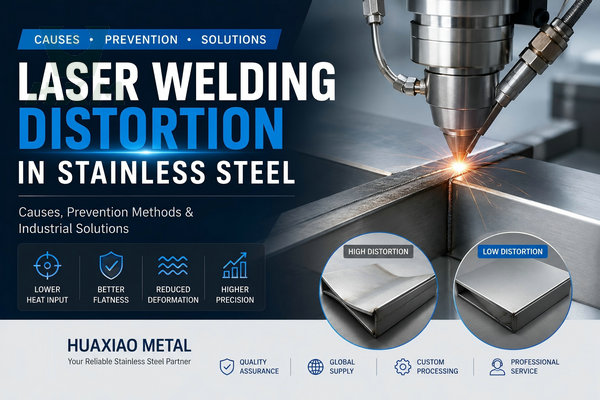
Laser Welding Distortion in Stainless Steel: Causes, Prevention Methods & Industrial Solutions

Laser Welding Stainless Plates

Stainless steel is a new type of environmentally friendly material. With its characteristics of corrosion resistance and formability, it has been widely used in the field of auto parts.

In the automotive industry, due to the stainless steel raw material (steel plate), the car bodies must all be connected by welding. Therefore, laser welding plays a very important role in the application of stainless steel in the automotive industry.

Due to the influence of many factors, stainless plates have deformation problems and are difficult to control, which will greatly affect the application of stainless plates in the automotive industry. So, what is the countermeasure?

What Is Laser Welding Distortion?

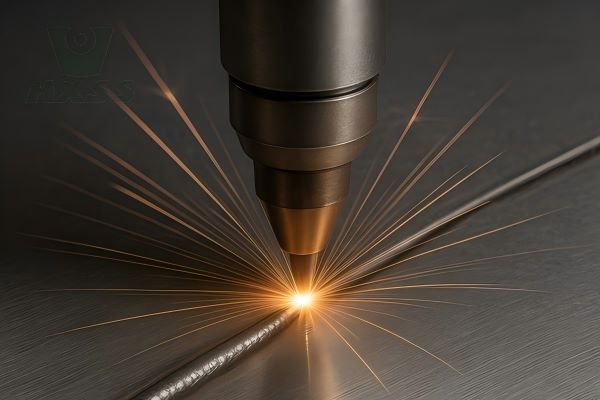
Laser welding distortion in stainless steel sheet and plate, showing common causes, prevention methods, and industrial solutions for reducing welding deformation in stainless steel fabrication.

Laser welding is widely used in stainless steel fabrication because it offers:

  • High welding speed
  • Narrow heat-affected zone
  • Deep penetration
  • Excellent weld appearance
  • High automation potential

However, despite these advantages, distortion can still occur when localized heat causes uneven expansion and contraction of the stainless steel.

Common deformation types include:

Angular Distortion

One side of the weld shrinks more than the other, causing the component to bend.

Longitudinal Distortion

Shrinkage occurs along the weld direction.

Transverse Distortion

Material contracts across the weld seam.

Buckling Deformation

Thin stainless steel sheets may warp or buckle due to thermal stress.

Overview of Laser Welding Stainless Plates

Laser welding mainly refers to a welding method that uses laser energy as a heat source to melt and connect workpieces. In the process of laser welding, the laser irradiates the surface of the material to be welded and affects it. A part of it is reflected, and the rest is absorbed into the material to complete the welding target.

In short, the process of laser welding is to use a high-power laser beam focused by the optical system to irradiate the surface of the material to be welded, and then make full use of the material to absorb light energy for heating and other treatments. Finally, the welding joint is formed by cooling. A kind of melting welding process. Under normal circumstances, laser welding is mainly divided into thermal conductivity welding and deep penetration welding.
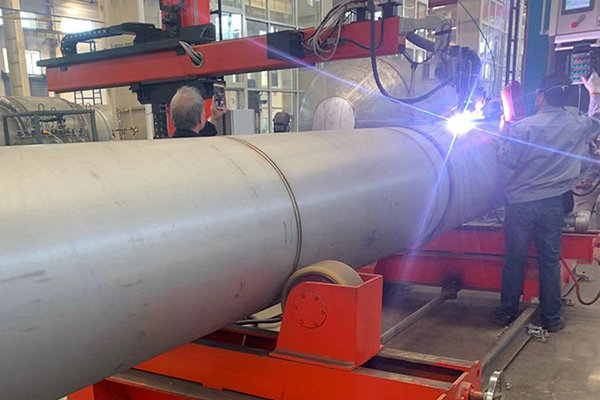
Welding Stainless Steel, Stainless Pipe Suppliers

The hazards of welding deformation and the main factors affecting welding deformation

The main factors affecting welding deformation are welding current, pulse width, and frequency. As the welding current increases, the width of the weld seam also increases, and phenomena such as splashes gradually appear, resulting in oxidation and deformation of the weld seam surface, accompanied by roughness; the increase in pulse width increases the strength of the welded joint. When the pulse width reaches a certain level the heat conduction energy consumption on the surface of the material also increases.

The evaporation causes the liquid to splash out of the molten pool, resulting in a smaller cross-sectional area of the solder joint, which affects the strength of the joint; the influence of the welding frequency on the welding deformation of the stainless steel plate is closely related to the thickness of the steel plate.

For example, for a 0.5mm stainless steel plate, when the frequency reaches 2Hz, the overlap rate of the weld is higher; when the frequency reaches 5Hz, the weld is burned seriously, the heat-affected zone is wider, and deformation occurs. It can be seen that it is imperative to strengthen the effective control of welding deformation.
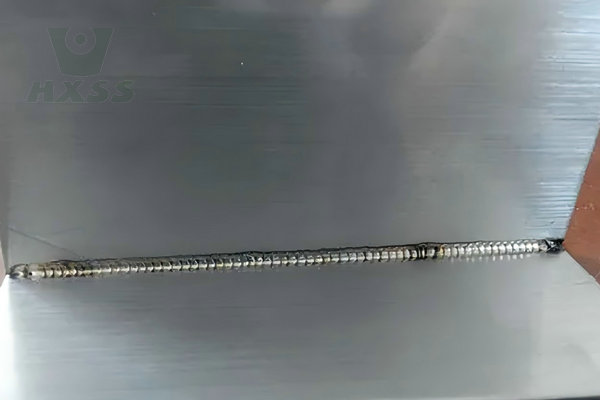
Laser Welding Stainless Steel

Effective Countermeasures to Avoid Laser Welding Distortion

Controlling deformation is a systematic project. The best strategy is to optimize every link of welding.

Countermeasure 1: Use Rigid Fixation and Reasonable Fixtures

This is the most direct and effective method. Use strong external constraints to counteract the internal stress generated by welding.

  • Use special welding fixtures: Design special fixtures with uniform clamping force and firm clamping according to the shape of the workpiece. The fixture should have sufficient rigidity and will not deform under the clamping force.

  • Increase clamping points: For large-sized thin plates, multiple clamping points should be evenly distributed along both sides of the weld to prevent the plate from warping between two points.

  • Copper pressing plate/pad: Copper has excellent thermal conductivity. Using copper pressing blocks or pads on the fixture can help quickly take away excess heat near the weld, reduce the heat-affected zone, and thus reduce deformation.

Countermeasure 2: Optimize Welding Process Parameters

Reasonable process parameters aim to use ” as little heat input as possible to complete high-quality penetration”.

  • Increase welding speed: Increase welding speed as much as possible while ensuring full penetration. The faster the speed, the less heat input per unit length, and the smaller the deformation.

  • Accurately control laser power: Avoid using power far exceeding the required power. Excessive power will unnecessarily increase the heat-affected zone.

  • Use pulse waveforms: For heat-sensitive thin plates, use pulsed lasers with high peak power and short pulse width to melt the metal instantly while reducing the conduction of heat to the parent material.

  • Adjust defocus: Appropriate positive defocus can obtain a larger spot and lower power density, which helps to form a wider and smoother weld, and sometimes helps to improve stress distribution.

Countermeasure 3: Optimize Weld Design and Welding Sequence

Through clever arrangements, the stresses generated can offset each other.

  • Reduce weld cross-sectional area: Under the premise of meeting strength requirements, try to reduce the size of the weld (such as groove angle). The smaller the weld, the less metal is filled and the smaller the shrinkage.

  • Use symmetrical welding: For symmetrical structures, use double-sided symmetrical welding so that the deformation stresses generated on both sides can offset each other.

  • Segmented step-back welding method: Divide a long weld into several sections, and use a jump-type or welding method from the middle to both ends to make the heat and stress distribution more uniform and avoid stress accumulation in a single direction.

Countermeasure 4: Ensure Excellent Assembly Gap

Excessive gap is a common cause of increased deformation.

  • Precise assembly: Ensure that the assembly gap before welding is uniform and as small as possible. An excessive gap will force you to use more filler wire or a slower speed to fill, which means greater heat input.

  • Spot welding fixation: Before formal welding, firm spot welding positioning along the weld can effectively prevent gap changes caused by heat during welding.

Countermeasure 5: Choose High-Quality Raw Materials

An often overlooked but crucial factor is the material itself.

  • Plate with good flatness: If the stainless steel plate used has internal stress or poor flatness, the heat of welding will become the “last straw that breaks the camel’s back”, releasing and aggravating these original deformations.

  • Uniform thickness: Plates with uniform thickness can ensure the consistency of heat absorption and conduction during welding, and it is easier to obtain stable welding results.

Best Stainless Steel Grades for Laser Welding

304 Stainless Steel

Suitable for:

  • Food processing equipment
  • Architectural fabrication
  • General industrial applications

Advantages:

  • Excellent weldability
  • Good corrosion resistance
  • Cost-effective

304L Stainless Steel

Advantages:

  • Lower carbon content
  • Reduced risk of carbide precipitation
  • Improved weld performance

Ideal for fabricated structures requiring extensive welding.

316L Stainless Steel

Suitable for:

  • Chemical processing equipment
  • Marine applications
  • Pharmaceutical industry

Advantages:

  • Superior corrosion resistance
  • Excellent laser weldability

409L Stainless Steel

Commonly used for:

  • Automotive exhaust systems
  • Industrial fabrication

Advantages:

  • Good weldability
  • Competitive cost

Laser Welding vs TIG Welding for Stainless Steel

FactorLaser WeldingTIG Welding
Welding SpeedFasterSlower
Heat InputLowerHigher
Distortion RiskLowerHigher
AutomationExcellentLimited
PrecisionHighModerate
Production EfficiencyHigherLower

For thin stainless steel sheets and precision fabrication, laser welding is often the preferred solution.

Industries Where Distortion Control Is Critical

Laser welding distortion can significantly impact product quality in:

Food Processing Equipment

Dimensional accuracy is critical for hygiene and assembly.

Pressure Vessels

Distortion may affect sealing performance and structural integrity.

Chemical Processing Equipment

Precise tolerances are required for safe operation.

Automotive Components

Production consistency is essential for large-scale manufacturing.

Architectural Stainless Steel Panels

Surface flatness directly affects appearance and installation quality.

Why Material Quality Matters

Many manufacturers focus only on welding equipment while overlooking material quality.

High-quality stainless steel sheets and plates provide:

  • Better flatness
  • More consistent thickness
  • Lower residual stress
  • Improved dimensional stability

As a result, welding distortion can often be reduced before fabrication even begins.

Why Manufacturers Choose Huaxiao Metal

Huaxiao Metal supplies stainless steel materials designed for fabrication and laser welding applications worldwide.

Advantages include:

✓ 15+ Years Export Experience

✓ 304, 304L, 316, 316L, 409L Available

✓ Consistent Thickness Tolerance

✓ Excellent Flatness

✓ Mill Test Certificate EN10204 3.1

✓ SGS, BV, and Third-Party Inspection Available

✓ Custom Cutting and Processing Services

✓ Fast Quotation Within 24 Hours

FAQ About Laser Welding Distortion in Stainless Steel

The most common causes include excessive heat input, poor fixture design, large assembly gaps, residual stress, and uneven material thickness.

304L and 316L stainless steel are among the most commonly recommended grades due to their excellent weldability and corrosion resistance.

For many precision stainless steel applications, laser welding provides faster production speed, lower heat input, and reduced distortion.

Yes. Laser welding is particularly suitable for thin-gauge stainless steel because it produces a narrow heat-affected zone and excellent dimensional accuracy.

Using proper welding parameters, rigid fixtures, optimized joint design, and high-quality stainless steel materials can significantly reduce distortion.

Yes. Huaxiao Metal supplies stainless steel sheets, plates, coils, and custom processing solutions for laser welding, fabrication, pressure vessels, food equipment, and industrial manufacturing projects worldwide.

In Conclusion

Laser welding offers significant advantages for stainless steel fabrication, including high speed, precision, and reduced heat input. However, welding distortion can still occur if welding parameters, fixture design, or material quality are not properly controlled.

By selecting the appropriate stainless steel grade, optimizing welding procedures, and using high-quality stainless steel sheets and plates, manufacturers can significantly improve welding quality while reducing production costs.

If you are looking for stainless steel materials suitable for laser welding applications, Huaxiao Metal can provide professional material recommendations, custom processing services, and competitive global supply solutions.

Facebook
Twitter
LinkedIn
Pinterest
Reddit

Table of Contents

We will answer your email in 24 hours!

Related Posts

Request a Quote

Fill out the form below, and we will be in touch shortly.