430 stainless steel is one of the most widely used ferritic stainless steel grades in the world. Many buyers, manufacturers, and engineers ask the same question:
“Is 430 stainless steel magnetic?”
The short answer is yes.
430 stainless steel is strongly magnetic because of its ferritic crystal structure. Unlike austenitic stainless steels such as 304 stainless steel, magnets can easily stick to 430 stainless steel surfaces.
Due to its lower cost, magnetic properties, attractive appearance, and good corrosion resistance, 430 stainless steel is widely used in kitchen appliances, cookware, automotive trim, and decorative applications.
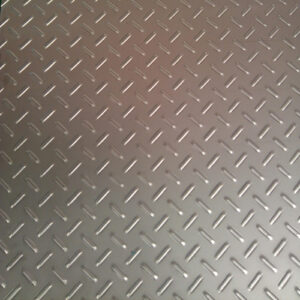
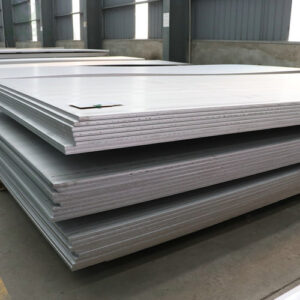
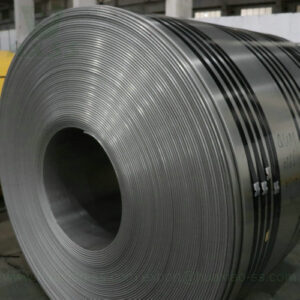
As a professional stainless steel supplier, Huaxiao Metal supplies high-quality 430 stainless steel coils, sheets, strips, and customized processing solutions worldwide.
Is 430 Stainless Steel Magnetic?
Yes. 430 stainless steel is magnetic because it belongs to the ferritic stainless steel family.
Ferritic stainless steels contain high chromium and very low nickel content, creating a crystal structure that allows strong magnetic attraction.
A magnet will strongly stick to 430 stainless steel, which makes it suitable for applications such as:
- Induction cookware
- Home appliances
- Elevator panels
- Automotive trim
- Industrial equipment
Compared with 304 stainless steel, 430 stainless steel is significantly more magnetic.
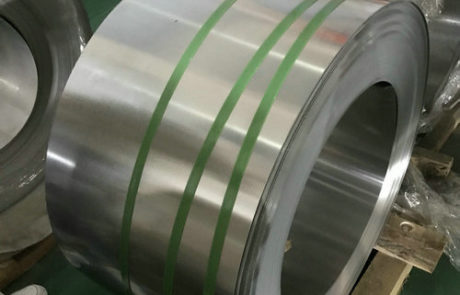
Why is 430 stainless steel magnetic?
When we answer this question, have we already confirmed that 430 stainless steel is magnetic? Yes, 430 stainless steel is significantly magnetic. Its magnetism comes from the crystal structure of the material – the ferrite crystal structure is naturally magnetic, which allows 430 stainless steel to be attracted by magnets.
Common designations include:
- AISI 430
- SUS 430
- UNS S43000
- DIN 1.4016
So why is 430 stainless steel magnetic?
To understand this question, we first need to understand the types of stainless steel and their internal structure.
Stainless steel is divided into five main categories, the most common of which are austenitic and ferritic stainless steel.
Austenitic stainless steel (such as the 304 and 316 series): Its internal crystal structure is austenite, a non-magnetic or weakly magnetic phase. This is why 304 stainless steel is generally not attracted to magnets.
Ferritic stainless steel (such as 430 stainless steel): Its internal crystal structure is ferrite. Ferrite itself is an iron-based solid solution and is magnetic. Therefore, 430 stainless steel, which contains a large amount of ferrite, is naturally magnetic and can be strongly attracted by magnets.
Thus, using a magnet to test whether stainless steel is magnetic can help you quickly determine its type, but remember: magnetic stainless steel does not necessarily mean low-quality stainless steel.
As a professional metal supplier, we offer a wide range of high-quality 430 grade stainless steel coils, sheets, and tubes, customizable to your specific needs.
Contact our stainless steel experts today for a free quote!
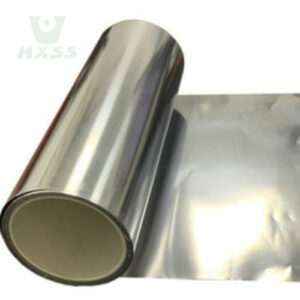
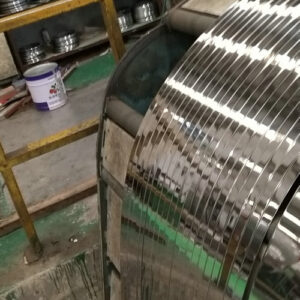
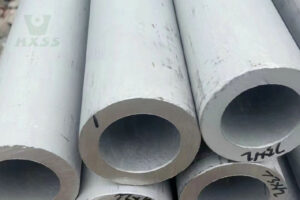

How Magnetic Is 430 Stainless Steel?
430 stainless steel is considered strongly magnetic.
A standard magnet will easily attach to 430 stainless steel surfaces, even after processing or forming.
The magnetic strength may vary slightly depending on:
- Cold working
- Heat treatment
- Thickness
- Manufacturing process
However, compared with austenitic grades, 430 stainless steel always maintains clear magnetic properties.
430 Stainless Steel Magnetic Properties
Below is a summary of stainless steel 430 magnetic properties:
Magnetism: Strong ferromagnetic
Relative Magnetic Permeability: High (typically μr > 1000)
Curie Temperature: Above 600°C (retains magnetism in daily use)
Magnetization: Stable, does not significantly weaken under normal conditions
Cold Working: Does not remove magnetism
Heat Treatment: Ferritic structure remains magnetic
These stable magnetic properties make 430 magnetic stainless steel suitable for:
Magnetic panels
Magnetic display boards
Magnetic refrigerator doors
Kitchen equipment
Induction heating components
Any application where magnetism is required
For industrial buyers searching “is SS 430 magnetic”, the answer is clear:
Yes, SS 430 is magnetic and designed to be magnetic.
Mechanical & Physical Properties of 430 Stainless Steel
| Property | Typical Value |
|---|---|
| Density | 7.70 g/cm³ |
| Tensile Strength | 450–600 MPa |
| Yield Strength | ~280 MPa |
| Elongation | 20–30% |
| Hardness | HRB 80–90 |
| Thermal Conductivity | 26 W/m•K |
These properties complement its low cost, good formability, and strong magnetic behavior, making it a popular material for large-volume applications.
Common Misconceptions About 430 Stainless Steel
❌ Misconception 1: All Stainless Steels Are Non-Magnetic
Many people believe stainless steel cannot be magnetic. In reality:
Austenitic grades (304, 316): Mostly non-magnetic
Ferritic and Martensitic grades (430, 410): Naturally magnetic
Duplex grades: Partially magnetic due to mixed microstructure
❌ Misconception 2: Magnetic Stainless Steel = Low Quality
The presence of magnetism does not mean poor quality. 430 stainless steel is widely used in household appliances, decorative panels, and automotive parts because it balances cost-effectiveness and adequate corrosion resistance.
❌ Misconception 3: Magnetism Indicates Counterfeit Stainless Steel
Some consumers think that if stainless steel attracts a magnet, it’s fake. This is a myth — magnetism simply reflects the steel’s microstructure, not authenticity.
Common Applications of Magnetic 430 Stainless Steel
The magnetism of 430 stainless steel gives it unique advantages and limitations in many applications:
1. Household Appliances and Kitchenware
Adsorption: Due to its magnetism, 430 stainless steel can be used for products that require magnet adsorption, such as refrigerator panels, adsorption knife holders, etc.
Durability: Suitable for making tableware and kitchen decorative panels, combining beauty and practicality.
2. Industrial Field
Electromagnetic compatibility: In some industrial equipment, the magnetism of 430 stainless steel can be used for electromagnetic applications, such as magnetic sensors and separators.
Price advantage: Compared with austenitic stainless steel, 430 stainless steel has a lower cost and is suitable for projects with limited budgets but requiring magnetism.
3. Decorative Materials
Easy processing: The magnetism of 430 stainless steel does not affect its forming ability and is widely used in architectural decoration, elevator decoration and automotive accessories.
4. Scientific Experiments and Medical Equipment
Due to its magnetism, 430 stainless steel is not suitable for MRI environments or medical equipment that requires non-magnetism.

How to Detect the Magnetism of 430 Stainless Steel?
You can use the following method to quickly detect the magnetism of 430 stainless steel:

Magnet Test:
Put a magnet close to 430 grade stainless steel. If it can be firmly adsorbed, it means that its magnetism is strong.
Professional Testing Instrument:
If you need to accurately measure the magnetism, you can use a magnetic field strength tester for testing.
Comparison Test:
Compared with non-magnetic stainless steel (such as 304, 316), the magnetism of 430 stainless steel will be more obvious.
How to distinguish 430 stainless steel from 304 stainless steel by magnetism?
Because 430 grade stainless steel and 304 stainless steel look very similar in appearance, but differ greatly in performance and price, magnetism becomes the simplest and fastest way to distinguish them.
| Property | 430 Stainless Steel | 304 Stainless Steel |
|---|---|---|
Magnetism | Strongly magnetic, firmly attracted by a magnet | Non-magnetic or weakly magnetic, not attracted by a magnet |
| Composition | Mainly contains chromium, no nickel | Contains both chromium and nickel |
| Corrosion Resistance | Relatively weak | Excellent |
| Price | Relatively cheaper | Relatively more expensive |
How to test?
Take a strong magnet and place it close to the stainless steel surface. If the magnet is firmly attracted, it is most likely 430 grade stainless steel. If the magnet does not stick, it is most likely 304 stainless steel.
This simple test can help you make a quick judgment. However, it should be noted that some cold-worked 304 stainless steel may develop slight magnetism, but this is completely different from the strong magnetism of 430 stainless steel.
Is Magnetic Stainless Steel Real Stainless Steel?
Yes.
Many people mistakenly believe that magnetic stainless steel is “fake stainless steel,” but this is incorrect.
Magnetism depends on the internal crystal structure, not whether the material is genuine stainless steel.
Many authentic stainless steel grades are magnetic, including:
- 430 stainless steel
- 410 stainless steel
- 409 stainless steel
430 stainless steel still offers:
- Corrosion resistance
- Oxidation resistance
- Attractive surface finish
- Long service life
How to Choose the Right 430 Grade Stainless Steel?
When choosing 430 stainless steel, the following factors should be considered comprehensively according to actual needs:
Whether magnetism is required: If magnetic materials are required, 430 stainless steel is an ideal choice.
Use environment: 430 stainless steel performs well in medium and low corrosion environments.
Budget range: Compared with nickel-containing stainless steel, 430 stainless steel has lower cost and higher cost performance.
If you are not sure whether 430 grade stainless steel is suitable for your application needs, please contact us to answer your questions directly.
FAQ
Is 430 stainless steel magnetic?
Yes. 430 stainless steel is strongly magnetic because it has a ferritic structure.
Can magnets stick to 430 stainless steel?
Yes. Magnets strongly stick to 430 stainless steel surfaces.
Can a magnet be used to determine the authenticity of stainless steel?
A magnetic test can help you quickly distinguish between different types of stainless steel, such as 304 and 430. However, it cannot fully determine authenticity. For example, some cold-worked 304 stainless steel may be slightly magnetic, while some counterfeit “stainless steel” may be specially treated to simulate non-magnetic properties. The most accurate method is to conduct a professional chemical composition analysis.
Why do some stainless steels not attract magnets while others do?
The magnetism of stainless steel is primarily determined by its internal crystal structure. Austenitic stainless steel (such as 304) is non-magnetic, while ferritic stainless steel (such as 430) and martensitic stainless steel are magnetic. This is a normal physical phenomenon and has no direct bearing on the quality of the stainless steel.
Why is 430 stainless steel used for induction cookware?
Because induction cooktops require magnetic materials for heating.
Is 430 more magnetic than 304 stainless steel?
Yes. 430 stainless steel is much more magnetic than 304 stainless steel.
Summary: Understanding the Magnetism of 430 Stainless Steel
430 stainless steel is a magnetic ferritic stainless steel grade widely used in appliances, cookware, decorative panels, and industrial applications.
Its strong magnetic properties, lower cost, attractive appearance, and good corrosion resistance make it an excellent choice for many indoor applications.
Compared with 304 stainless steel, 430 stainless steel provides better magnetic performance and lower material cost, especially for induction and appliance-related industries.
At Huaxiao Metal, we provide high-quality 430 stainless steel coils, sheets, and plates, helping industries meet their specific application needs with reliable performance and competitive pricing.