Call Us Today! +86-13761906384

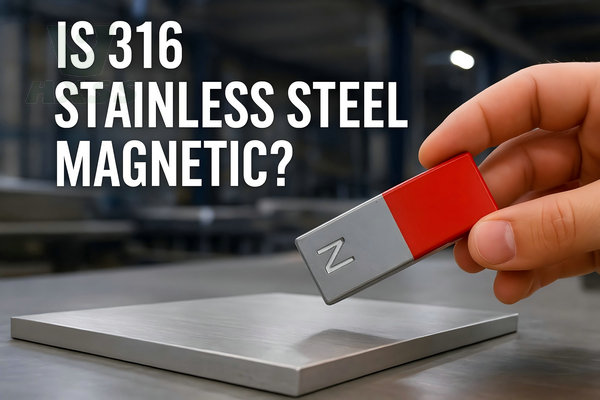
Is 316 Stainless Steel Magnetic?

Stainless steel is an essential material in various industries, renowned for its corrosion resistance, durability, and aesthetic appeal. Among its diverse grades, 316 stainless steel holds a significant place due to its superior properties in withstanding harsh environments. However, a pertinent question often arises: is 316 stainless steel magnetic? This query delves into the fundamental characteristics of this alloy, exploring its magnetic behavior and shedding light on its suitability for specific applications.
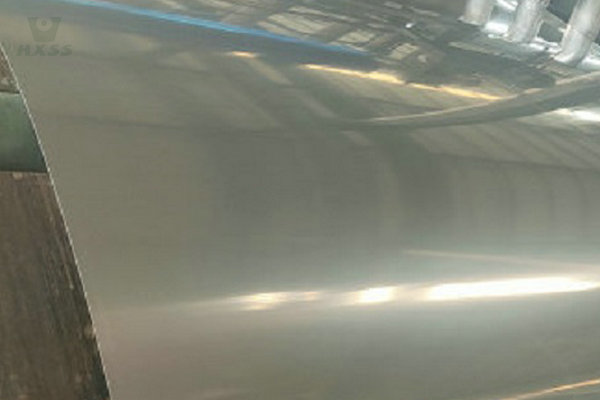
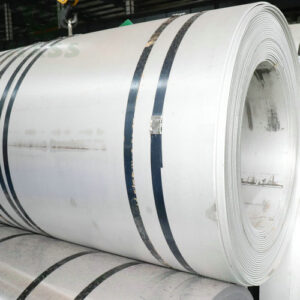
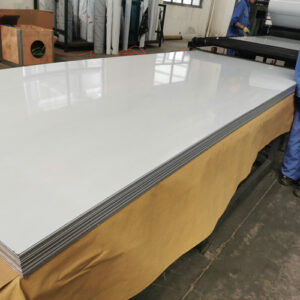
316L Stainless Coil 2
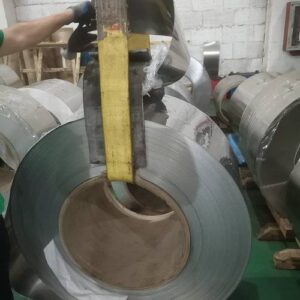
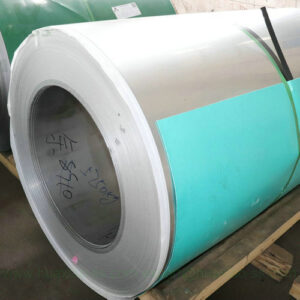
316 Stainless Steel Coil

Is 316 Stainless Steel Magnetic?

The magnetic properties of stainless steel depend on its microstructure, which is primarily influenced by its chemical composition and manufacturing process. Unlike common perception, the presence of chromium, the key component of stainless steel, contributes to its non-magnetic nature. In the case of 316 stainless steel, the addition of molybdenum further enhances its corrosion resistance and mechanical strength while maintaining its non-magnetic attributes. Consequently, 316 stainless steel is generally considered non-magnetic in annealed conditions. However, certain factors, such as cold working or welding, can induce changes in its microstructure, leading to some degree of magnetism.

Why are some 316 stainless steel magnetic?

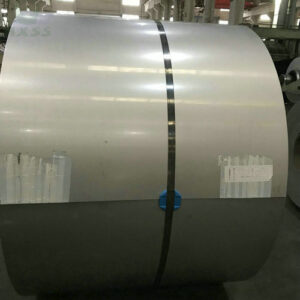
Is 316 Stainless Steel Magnetic

Four common situations that cause 316 stainless steel to become magnetic.

Many users are surprised to find that their 316 stainless steel parts can attract magnets. This doesn’t mean the material is fake, but rather that the material undergoes an austenite-to-martensite/ferrite phase transformation during processing, thus acquiring magnetism.

Extreme Cold Working (Severe Deformation)

  • Principle: When 316 stainless steel undergoes cold rolling, wire drawing, deep drawing, or bending, the enormous external stress causes a mechanically induced phase transformation in the austenite structure, with some austenite transforming into strain-induced martensite with a body-centered cubic structure.

  • Magnetic Effect: Martensite is a ferromagnetic phase; therefore, the magnetic permeability of the cold-worked region increases significantly. For example, magnetism is stronger at the head of fasteners (bolts/nuts) or at the end of drawn wire.

Welding/Heat Affected Zone (HAZ)

  • Principle: During welding, the metal undergoes rapid localized heating and cooling. If the ratio of ferrite-stabilizing elements (such as Cr, Mo) to austenite-stabilizing elements (such as Ni) in the weld is unbalanced, or if the cooling rate is insufficient, a small amount of delta-ferrite may form in the weld area.

  • Magnetic Influence: Ferrite is a ferromagnetic structure, and its presence (typically controlled at 1% to 5% in the weld) causes the weld area to exhibit a certain degree of weak magnetism. This trace amount of ferrite is common in austenitic welds and helps prevent hot cracking.

Composition Imbalance

  • Principle: Standard 316/316L stainless steel must have strictly controlled proportions of elements such as nickel, chromium, and molybdenum to ensure austenite stability. If the nickel content is below the standard lower limit, or the chromium and molybdenum content is too high, the austenite will be less stable and more easily transformed into a magnetic phase during processing.

  • Huaxiao Metal’s Commitment: As a professional supplier, Huaxiao Metal strictly adheres to ASTM/EN standards to ensure the precise composition ratio of our 316L/316 stainless steel materials, guaranteeing the non-magnetic properties of the material from the source.

Incomplete Annealing

  • Principle: If the material does not undergo sufficient **solution annealing** after cold working, or if the annealing temperature is insufficient, the previously formed martensite cannot be completely reversed back into non-magnetic austenite.

  • Impact: This results in high residual stress in the material and retains processing-induced magnetism.

316 stainless steel magnetic: Why is it Crucial in Industrial Applications?

316 stainless steel is widely used in critical applications due to its excellent corrosion resistance (especially in chloride-containing environments) and high-temperature creep resistance. In these applications, non-magnetic properties are often a strict requirement:

  • Medical Equipment and Instrumentation: Surgical instruments, implants, or structural components used near MRI (Magnetic Resonance Imaging) equipment must be non-magnetic to avoid interfering with high-precision magnetic fields.

  • Electronics and Communications: In the housings of sensitive electronic or communication equipment, and in the protective sheaths of submarine cables, magnetic materials can cause signal interference or electromagnetic compatibility (EMC) problems.

  • Naval Ships and Marine Engineering: Components in submarines, mine detection equipment, or precision navigation systems need to maintain extremely low magnetic signatures to enhance stealth or ensure equipment accuracy.

  • Precision Machinery and Bearings: In high-speed, high-precision bearings and mechanical parts, magnetic residues can attract iron filings, leading to wear and malfunction.

💡 Solution: Choosing the Right 316/316L Material

Due to the stringent material performance requirements of the aforementioned key applications, we recommend that customers choose 316L stainless steel produced and quality-controlled under strict standards. 316L (low carbon version) offers stronger resistance to sensitization and better austenitic stability than standard 316, making it a superior choice for ensuring non-magnetic properties.

➡️ View Huaxiao Metal’s full range of 316L/316 stainless steel products now!

Magnetic Comparison of 316/316L Stainless Steel with Other Grades

Understanding the differences in magnetism among stainless steel families is a key attribute for making the right material selection for your project.

Magnetism is a critical property that helps distinguish various families of stainless steel:

Stainless Steel FamilyRepresentative GradeCrystal StructureMagnetic StateTypical Applications
Austenitic304, 316/316LFCC (Face-Centered Cubic)Non-magnetic or Weakly MagneticChemical processing, Medical equipment, Food processing
Ferritic430, 409BCC (Body-Centered Cubic)Ferromagnetic (Strongly Magnetic)Automotive exhaust systems, Decorative panels
Martensitic410, 420BCT (Body-Centered Tetragonal)Ferromagnetic (Strongly Magnetic)Cutlery, Bearings, Turbine blades
Duplex2205, 2507Ferrite + AusteniteModerately to Strongly MagneticMarine environments, Oil and gas industries

Understanding these differences ensures that you select the correct material for projects where magnetism is a specific requirement. If you have any doubts about the magnetic properties of 316/316L or require customized non-magnetic materials, the metallurgical experts at Huaxiao Metal are ready to provide professional consultation.

How to Test Whether 316 Stainless Steel Is Magnetic

There are simple ways to test for magnetism:

  1. Using a small magnet: Hold a magnet close to the surface. A weak pull means minimal magnetism.

  2. Gauss meter: Measures the magnetic field strength more accurately.

  3. Non-destructive testing equipment: Used in industrial quality control to ensure compliance.

If the magnet sticks strongly, the steel might not be 316 but a ferritic or martensitic grade like 430 or 410.

Stainless Steel Magnetic, Is Stainless Steel Magnetic, Is 304 Stainless Steel Magnetic,

FAQ — 316 Stainless Steel Magnetic

Similar to standard 316, 316L stainless steel is non-magnetic in the solution-annealed state. Due to its lower carbon content (L stands for Low Carbon), 316L exhibits greater stability of the austenitic phase after welding and cold working, making it less prone to processing-induced magnetism.

Judging solely by magnetism is not entirely reliable. Genuine 316 stainless steel may also exhibit magnetism if it has undergone heavy cold working. The most reliable method is to perform professional spectral analysis to test whether the precise content of nickel, molybdenum, and chromium meets standards such as ASTM A240.

Most 316 screws and fasteners undergo extreme cold heading and thread rolling during manufacturing. These heavy cold working processes cause austenite to transform into deformed martensite, so even with pure 316 material, the screw head or threaded area will exhibit noticeable magnetism.

Under the same processing conditions, 316 stainless steel generally has slightly better austenitic stability than 304 stainless steel because it contains more molybdenum and slightly more nickel. Therefore, 316 stainless steel is theoretically less prone to processing-induced magnetism than 304 stainless steel.

It may show slight magnetism in welded areas due to structural changes, but this doesn’t affect performance.

In Conclusion

In essence, 316 stainless steel is typically non-magnetic, owing to the presence of chromium and molybdenum that stabilize its austenitic structure. Despite the possibility of exhibiting slight magnetic properties under specific circumstances, this grade remains a preferred choice for applications that demand corrosion resistance, such as in marine environments, chemical processing, and medical equipment, where magnetic interference is undesirable. Understanding the magnetic behavior of 316 stainless steel is crucial for its appropriate selection in various industrial and commercial settings, ensuring optimal performance and longevity.

If you’re looking for reliable 316/316L stainless steel suppliers, Huaxiao Metal provides high-quality products, professional technical support, and competitive pricing to meet your project needs.

Get in touch now to consult prices and request samples:

Facebook
Twitter
LinkedIn
Pinterest
Reddit

Table of Contents

We will answer your email in 24 hours!

Related Posts

Request a Quote

Fill out the form below, and we will be in touch shortly.