When it comes to making products out of stainless steel, choosing the right material is crucial. Among them, 304 vs 316 stainless steel is the two most commonly used stainless steel materials. Although they all belong to the stainless steel category, they differ in chemical composition, corrosion resistance, physical properties, and application areas.
The main difference between 304 and 316 stainless steel is the presence of molybdenum in 316, which provides superior corrosion resistance in saline or chloride-exposed environments. While 304 is more cost-effective for general use, 316 is essential for marine or chemical applications.
In this article, we will compare the pros and cons of these two stainless steel materials to give you a better choice. Whether you manufacture appliances, building materials, medical devices, or any other application, this article will provide you with enough information to help you choose the stainless steel material that suits your specific needs.
304 vs 316 Stainless Steel Comparison Table
| Property | 304 Stainless Steel | 316 Stainless Steel |
|---|---|---|
| Corrosion Resistance | Good | Excellent (especially chlorides) |
| Price | Lower | 20–40% higher |
| Molybdenum (Mo) | ❌ | ✅ (2–3%) |
| Marine Use | ❌ Not recommended | ✅ Ideal |
| Chemical Industry | Limited | Widely used |
| Food Grade | ✅ Yes | ✅ Yes (higher standard) |
What is 304 Stainless Steel?
304 stainless steel is a popular grade of stainless steel that belongs to the austenitic family. It is one of the most commonly used stainless steel alloys due to its excellent corrosion resistance, durability, and versatility. The “304” in its name refers to the composition of the steel, which contains approximately 18% chromium and 8% nickel. This composition provides 304 stainless steel with its corrosion-resistant properties and makes it resistant to oxidation and staining. It also has good mechanical properties, including high tensile strength and excellent formability, which makes it suitable for a wide range of applications in various industries, such as construction, automotive, food processing, and household appliances.
Key Features of 304 Stainless Steel
Good general corrosion resistance
Excellent formability and weldability
Good high-temperature strength
Cost-effective compared with 316
Widely available globally
What is 316 Stainless Steel?
316 stainless steel is another grade of stainless steel that also belongs to the austenitic family. It is similar to 304 stainless steel in many ways but offers enhanced corrosion resistance, particularly against chloride environments. The main difference between 304 and 316 stainless steel lies in their composition. While 304 stainless steel contains 18% chromium and 8% nickel, 316 stainless steel contains 16% chromium, 10% nickel, and 2% molybdenum.
The addition of molybdenum improves the corrosion resistance of 316 stainless steel, making it highly resistant to pitting and crevice corrosion in chloride-rich environments, such as marine environments and industrial settings with exposure to corrosive chemicals. Due to its superior corrosion resistance, 316 stainless steel is commonly used in applications such as marine equipment, chemical processing plants, and medical devices.
Key Features of 316 Stainless Steel
Superior corrosion resistance
Excellent resistance to chlorides (salt, seawater, sweat)
Better performance in harsh chemicals
Good mechanical properties at high temperatures
Hygienic and widely used in pharmaceutical and medical industries
304 vs 316 Stainless Steel: Chemical Composition
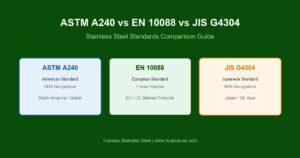
As a professional stainless steel manufacturer with 15+ years of export experience, Huaxiao Metal provides materials strictly adhering to ASTM A240, EN 10088-2, and JIS G4304 standards.
| Grade | C | Mn | Si | P | S | Ni | Cr | Mo | N |
|---|---|---|---|---|---|---|---|---|---|
| 304 Stainless Steel | 0.08% Max | 2% Max | 1% Max | 0.045% Max | 0.03% Max | 8% – 10.5% | 18% – 20% | – | 0.1% Max |
| 316 Stainless Steel | 0.08% Max | 2% Max | 1% Max | 0.045% Max | 0.03% Max | 10% – 14% | 16% – 18% | 2% – 3% | 0.1% Max |
The above is a comparison of the main chemical components of 304 vs 316 stainless steel. Among them, 304 stainless steel contains less nickel and molybdenum, while 316 stainless steel has a higher content of these two components. Because of these differences in chemical composition, 304 vs 316 stainless steel also performs differently, which will be explored further in the next few sections.
Chemical composition is an important factor in determining the performance of 304 and 316 stainless steel. In this section, we will explore the effect of these chemical compositions on the properties of stainless steel in more detail.
Carbon content: The carbon content of 304 and 316 stainless steel should be less than 0.08%. Excessive carbon content will reduce the corrosion resistance of the material and may cause the material to be prone to intergranular corrosion.
Manganese content: Manganese is a strong oxidant that can improve the corrosion resistance of stainless steel. However, too high a manganese content may lead to an excessive iron-manganese phase in ferritic stainless steel, which will reduce the strength of the material.
Silicon content: Silicon plays a role in increasing strength and corrosion resistance in stainless steel. Too high silicon content may lead to increased brittleness of the material.
Phosphorus and Sulfur Content: The content of these two elements should be as low as possible as they can cause problems such as intergranular corrosion and hydrogen embrittlement.
Nickel content: Nickel is a key element in stainless steel, which can improve the corrosion resistance and strength of stainless steel. The nickel content in 304 stainless steel is 8% to 10.5%, while the nickel content in 316 stainless steel is 10% to 14%. Therefore, the corrosion resistance of 316 is higher than that of 304 stainless steel.
304 vs 316 Stainless Steel: Mechanical Properties Comparison
| Property | 304 | 316 |
|---|---|---|
| Tensile Strength (MPa) | 515 | 520 |
| Yield Strength (MPa) | 205 | 215 |
| Hardness (HB) | 201 | 217 |
| Elongation (%) | 40 | 40 |
| Density (g/cm³) | 8.0 | 8.03 |
Performance is similar, but 316 is slightly stronger and harder.
304 vs 316 Stainless Steel: Temperature Resistance Comparison
| Temperature Range | 304 | 316 |
|---|---|---|
| Continuous Service | up to 870°C | up to 870°C |
| Intermittent | up to 925°C | up to 925°C |
| Low Temperature | excellent | excellent |
Both grades offer excellent high-temperature resistance, suitable for industrial heating applications.
304 vs 316 Stainless Steel: Corrosion Resistance
A. Corrosion Resistance of 304 Stainless Steel
304 stainless steel has certain corrosion resistance and is suitable for some general application scenarios. Among them, it performs better at room temperature and can resist some common corrosive media, such as water, acid, alkali, etc. However, under the action of strong corrosive media, 304 stainless steel does not perform well. For example, when 304 stainless steel is exposed to high temperatures, high oxide, chloride ions, and other environments for a long time, it is prone to oxidation, corrosion, cracking, and other problems.
B. Corrosion Resistance of 316 Stainless Steel
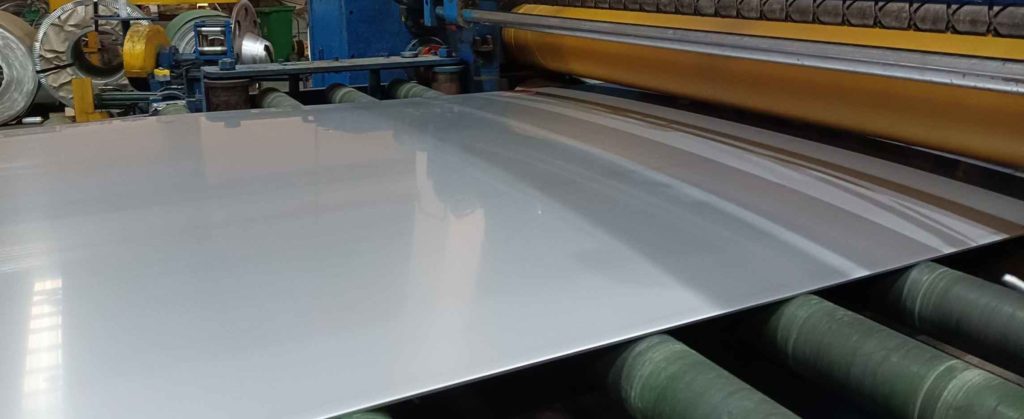
Compared with 304 stainless steel, 316 stainless steel has obvious advantages in corrosion resistance. It can resist corrosion and cracking under the action of high temperatures, strong oxidizing agents, corrosive medium, chloride, etc. Among them, the addition of molybdenum makes 316 stainless steel have better corrosion resistance in corrosive media, such as seawater, chloride ions, etc. In addition, 316 stainless steel also has good high-temperature resistance, which is suitable for application scenarios in high-temperature environments.

To sum up, compared with 304 stainless steel, 316 stainless steel has better corrosion resistance and can meet the needs of more application scenarios. However, the cost of 316 stainless steel is relatively high, and the selection of suitable materials should be based on the needs of specific application scenarios and economic considerations.
Stainless Steel 304 vs 316: Physical Properties
A. Physical Properties of 304 Stainless Steel
The density of 304 stainless steel is 7.93 g/cm³, and the coefficient of linear expansion is 17.2×10^-6/℃. Its thermal conductivity is 16.2 W/(m K), specific heat capacity is 500 J/(kg K), thermal expansion coefficient is 17.2×10^-6/℃, resistivity is 7.4×10^-7 Ω m.
B. Physical Properties of 316 Stainless Steel
The density of 316 stainless steel is 8.03 g/cm³, and the coefficient of linear expansion is 16.5×10^-6/℃. Its thermal conductivity is 16.3 W/(m K), specific heat capacity is 500 J/(kg K), thermal expansion coefficient is 16.5×10^-6/℃, resistivity is 7.9×10^-7 Ω m.
It can be seen from the above data that although the density difference between 304 and 316 stainless steel is not large, the linear expansion coefficient and resistivity of 316 stainless steel are slightly higher, and the thermal conductivity is slightly higher. These characteristics may have an impact in some special application scenarios. In addition, 316 stainless steel has a slightly lower coefficient of thermal expansion, making it suitable for some high-temperature applications.
Generally speaking, the physical properties of 304 vs 316 stainless steel are not much different, but in some special application scenarios, these slight differences may have an impact on performance. Therefore, when selecting a suitable stainless steel material, it is necessary to comprehensively consider various factors such as chemical composition, corrosion resistance, and physical properties.
Stainless Steel 304 vs 316: Application Field
A. Application Fields of 304 Stainless Steel
304 stainless steel is a stainless steel widely used in household and commercial fields. Its main application areas include:
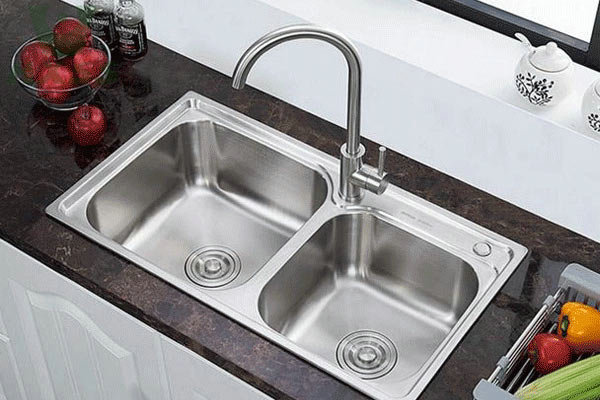
- Kitchen utensils: such as pots, bowls, knives, etc.
- Food processing equipment: such as food processing machines, storage equipment, etc.
- Architectural decoration: such as indoor and outdoor decoration, handrails, stairs, doors, windows, etc.
- Medical equipment: such as surgical equipment, surgical equipment, dental equipment, etc.
- Other applications: such as chemical equipment, water treatment equipment, auto parts, etc.
B. Application Fields of 316 Stainless Steel
316 stainless steel has excellent corrosion resistance in highly corrosive environments, so it is suitable for some special applications. Its main application areas include:
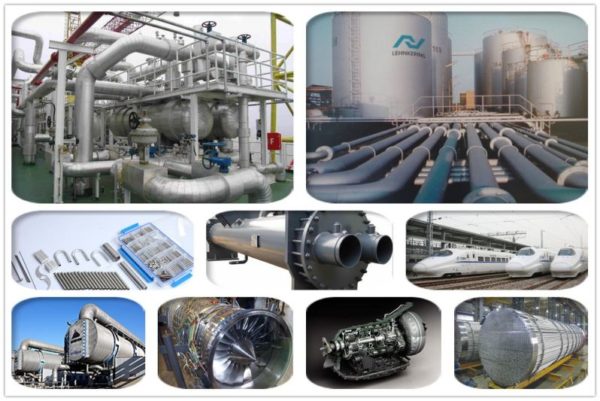
- Marine environment: such as ships, submarine pipelines, offshore platforms, etc.
- Medical devices: such as artificial heart valves, blood contractors, etc.
- Chemical processing equipment: such as storage tanks, reactors, pipelines, etc.
- Oil and natural gas extraction: such as pipelines, valves, storage tanks, etc.
- Other applications: such as food processing equipment, pulp and paper industry equipment, power equipment, etc.
Although there are certain differences in the application fields of stainless steel 304 and 316, they both have a wide range of applications and are widely used in various industrial and civil fields. When selecting a suitable stainless steel material, it is necessary to comprehensively consider multiple factors such as the chemical composition of the material, corrosion resistance, physical properties, and application fields.
Stainless Steel 304 vs 316: Cost
316 stainless steel typically costs 20% to 40% more than 304 stainless steel. This price difference is mainly due to the higher nickel content and added molybdenum in 316 stainless steel, which enhances its corrosion resistance, especially in marine environments.
304 stainless steel is more affordable and widely used in general applications such as kitchen equipment, building panels and food processing machinery.
316 stainless steel is often used in environments exposed to chlorides or salt water, such as chemical plants, marine equipment and coastal building components, where its long service life can offset its initial cost.
While 316 stainless steel has a higher upfront cost, it provides greater long-term value in harsh or corrosive environments due to its superior durability and lower maintenance costs. In contrast, 304 stainless steel may need to be replaced more frequently in environments where it is not suitable, increasing lifecycle costs.
For projects with limited budgets and moderate environmental exposure, 304 stainless steel is a more economical choice. However, when corrosion resistance is critical, 316 stainless steel provides greater long-term value.
Equivalent Grade Comparison Table
| Country/Standard | 304 | 316 |
|---|---|---|
| AISI | 304 | 316 |
| EN | 1.4301 | 1.4401 |
| JIS | SUS304 | SUS316 |
| DIN | X5CrNi18-10 | X5CrNiMo17-12-2 |
| GB (China) | 06Cr19Ni10 | 06Cr17Ni12Mo2 |
How to Choose Between 304 and 316: Professional Guide by Huaxiao Metal
Choose 304 If:
Your environment is non-corrosive
Cost is an important factor
The product is for indoor use
It’s for general-purpose engineering
You do not require chemical resistance
Choose 316 If:
You are near the sea
Chlorides or salt are present
You need long-term durability
It’s for chemical processing
Hygienic or sterile environments are required
Buyer Tip from Huaxiao Metal
If your product lifetime is 5–10 years, 316 often becomes cheaper in the long run due to fewer failures and replacements.
Why Choose Huaxiao Metal for 304 and 316 Stainless Steel?
Huaxiao Metal is one of China’s reliable stainless steel suppliers with strong technical expertise and export capability.
Our Advantages
15+ years of experience
Export to 60+ countries
Large stock of 304 & 316 sheets, coils, pipes, bars, and fittings
Competitive global pricing
Customized sizes and surface finishes (2B, BA, HL, No.4, Mirror)
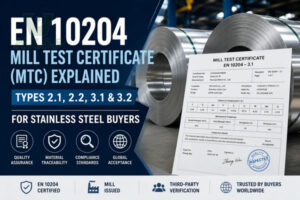
MTC 3.1 is available for every order
Export packing for all countries
Fast delivery
Professional technical support
We serve customers in industries such as automotive, construction, machinery, food processing, medical devices, marine engineering, and more.
FAQ About 304 vs 316 Stainless Steel
Does 304 stainless steel rust?
Yes. 304 can rust or pit in environments rich in salt, chlorine, or industrial chemicals.
Is 316 stainless steel always better than 304?
Technically yes for corrosion resistance, but 304 is sufficient and more economical for non-corrosive environments.
Why is 316 more expensive?
Because of its molybdenum (2–3%) and higher nickel content.
Can 304 be used for food-grade applications?
Yes, 304 is the world’s most common food-grade stainless steel.
Do I need 316 for drinking water systems?
Not always — but recommended when chloride levels exceed safe limits.
Is 316 required for marine applications?
Yes. 304 will rust near seawater; 316 is highly recommended.
Are 304 and 316 magnetic?
Both are generally non-magnetic, though slight magnetism can appear after cold working.
Should I use 304 or 316 for a swimming pool area?
Due to the high concentration of chlorine, 316 is highly recommended for pool ladders, railings, and hardware to prevent rust.
What are the main differences between 304 and 316 stainless steel?
The most fundamental difference between 304 and 316 stainless steel lies in their chemical composition. 316 stainless steel contains 2-3% molybdenum (Mo), which gives it excellent corrosion resistance in chloride environments (such as seawater and de-icing salt). While 304 is the most widely used and cost-effective food-grade choice globally, 316 is the essential choice for preventing pitting and crevice corrosion in marine or chemical processing environments.
How can I distinguish between 304 and 316 stainless steel with the naked eye?
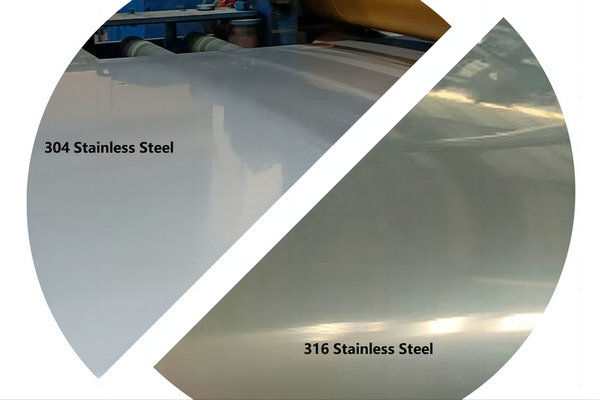
It’s impossible to distinguish them with the naked eye. Huaxiao Metal recommends using a spectrometer (PMI) or a professional stainless steel identification solution. All materials we ship come with an original manufacturer’s MTC certificate of quality.
In Conclusion
This article compares the chemical composition, corrosion resistance, physical properties, and application fields of 304 vs 316 stainless steel. Although both stainless steels have excellent properties and a wide range of applications, they also have some differences. stainless steel 304 is a general-purpose stainless steel with excellent corrosion resistance, suitable for many applications.
316 stainless steel is a special stainless steel with high corrosion resistance, which is suitable for special environments such as marine, chemical, and petroleum. When selecting a suitable stainless steel material, multiple factors such as the chemical composition, corrosion resistance, physical properties, and application fields of the material need to be considered to meet the needs of different applications.
In short, 304 vs 316 stainless steel are two very important stainless steel materials, which have a wide range of applications in industrial and civil fields. By comparing their chemical composition, corrosion resistance, physical properties, and application fields, we can better understand their advantages, disadvantages, and scope of application, and help people choose suitable stainless steel materials.
If you are unsure which stainless steel grade is suitable, Huaxiao Metal is ready to support you with professional guidance, competitive pricing, and reliable global delivery.
Contact Huaxiao Metal Today for a Free Quote
Stainless steel sheets, coils, tubes, pipes, bars
Customized sizes
Professional export packaging
Fast delivery
MTC available
Let Huaxiao Metal be your trusted stainless steel supplier.