Since its launch in 2013, the Belt and Road Initiative (BRI) has become one of the world’s largest infrastructure development programs. Covering more than 150 participating countries, the initiative continues to support investments in transportation, energy, manufacturing, logistics, and urban development. Recent reports show that BRI-related investment and construction activity reached record levels in 2025, highlighting the long-term importance of infrastructure-led growth across emerging markets.
For the steel industry, these projects create substantial demand for structural steel, stainless steel coils, plates, pipes, and specialized alloy products. Southeast Asia, in particular, has emerged as one of the fastest-growing steel-consuming regions due to rapid industrialization, manufacturing expansion, and large-scale infrastructure development. As a leading global stainless steel supplier, Huaxiao Metal has observed a significant surge in precision steel and anti-corrosion material orders directly tied to these regional supply chains.
This article explores how the Belt and Road Initiative is influencing steel demand across Southeast Asia and what opportunities it creates for global steel buyers and suppliers.
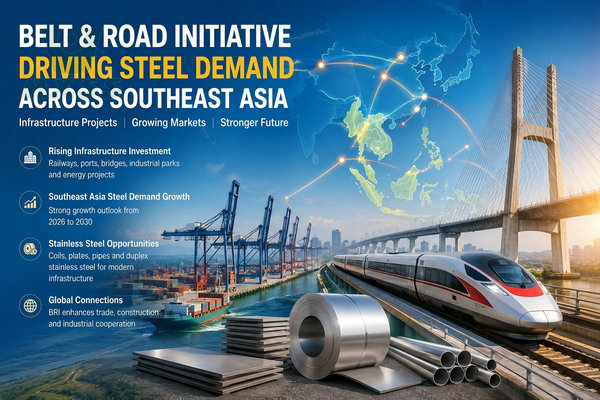
What Is the Belt and Road Initiative (BRI)?
The Belt and Road Initiative is a global development strategy proposed by China to improve trade connectivity, transportation networks, industrial cooperation, and economic integration across Asia, Europe, Africa, and Latin America.
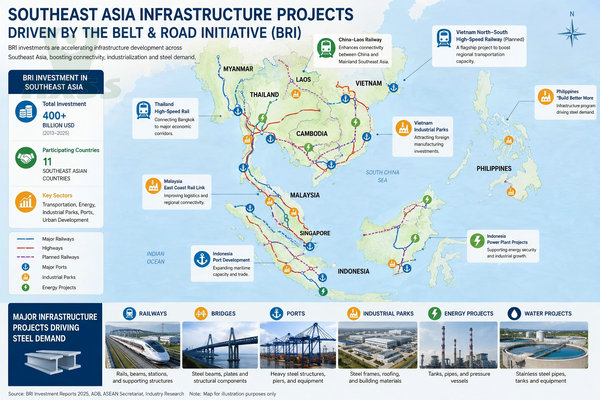
Today, more than 150 countries participate in various BRI programs, with Southeast Asia receiving some of the largest infrastructure investments. Transportation, energy, ports, railways, and industrial parks remain major areas of focus.
As infrastructure projects expand, demand for construction materials—including steel and stainless steel products—continues to rise.
Why Infrastructure Projects Drive Steel Demand
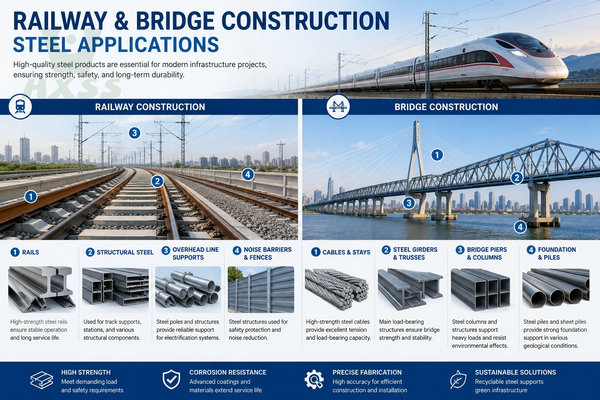
Almost every major infrastructure project relies heavily on steel products.
| Infrastructure Project | Typical Steel Products Used |
|---|---|
| Railways | Steel rails, stainless steel tubes |
| Bridges | Structural steel plates |
| Ports | Heavy steel sections |
| Industrial Parks | Stainless steel coils and sheets |
| Energy Facilities | Stainless steel pipes |
| Water Treatment Plants | Corrosion-resistant stainless steel |
Because BRI investment remains concentrated in transportation and energy sectors, steel consumption benefits directly from project development and construction activities.
Southeast Asia: A High-Growth Market for Steel Consumption
Southeast Asia has become one of the most attractive steel markets globally.
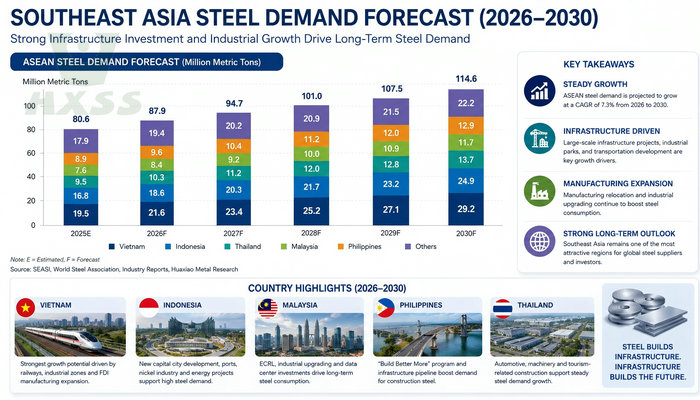
According to industry forecasts, steel demand across ASEAN countries continues to improve and is expected to reach approximately 87.9 million metric tons in 2026, surpassing pre-pandemic levels. Vietnam remains the strongest growth market, while Indonesia, the Philippines, and Malaysia continue to expand infrastructure spending.
Several factors are supporting this growth:
- Railway expansion projects
- Port modernization programs
- Industrial park construction
- Manufacturing relocation from China
- Renewable energy investments
- Data center and logistics infrastructure
Key Southeast Asian Countries Driving Future Steel Demand
Vietnam
Vietnam continues to attract manufacturing investment while expanding transportation infrastructure and industrial zones. Strong growth in steel consumption reflects increasing construction and industrial activity.
Indonesia
Indonesia’s new capital city development, transportation projects, and energy investments are creating significant opportunities for steel suppliers.
Malaysia
Major rail projects, industrial modernization, and green manufacturing initiatives continue to support steel demand growth.
Philippines
Infrastructure development remains a national priority, supporting demand for structural steel, rebar, stainless steel pipes, and construction materials.
Steel Demand Forecast in ASEAN (2026–2030)
As we move through 2026 and head toward 2030, the Southeast Asian steel market is transitioning from quantity to quality. According to recent 2026 ASEAN Iron and Steel Institute (AISI) trends, the regional steel consumption growth rate is projected to maintain a strong 5-6% CAGR.
| Country | Growth Potential | Major Demand Drivers |
| Vietnam | Very High | Manufacturing, Railways |
| Indonesia | Very High | New Capital Development |
| Malaysia | High | Transportation Infrastructure |
| Philippines | High | Urban Development |
| Thailand | High | Manufacturing and Automotive |
Long-term growth is expected to remain positive due to urbanization, industrialization, and ongoing infrastructure investment throughout the region.
Opportunities for Stainless Steel Products
While carbon steel dominates large-scale construction, stainless steel is increasingly important for modern infrastructure projects because of its corrosion resistance, durability, and low maintenance requirements.
Common applications include:
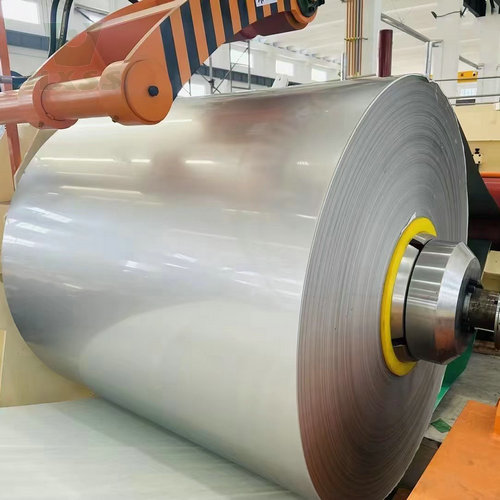
Stainless Steel Coil
Used for industrial buildings, equipment fabrication, and manufacturing facilities.
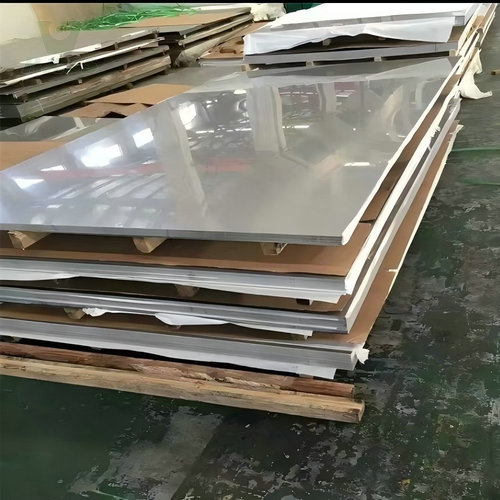
Stainless Steel Plate
Used in bridges, tanks, pressure vessels, and structural applications.
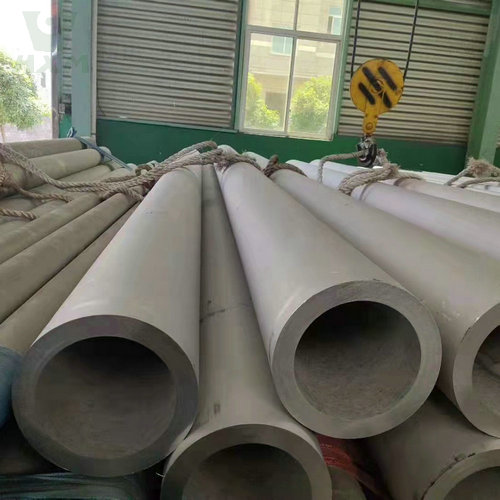
Stainless Steel Pipe
Widely used in water treatment, energy projects, petrochemical plants, and industrial processing systems.
Duplex Stainless Steel
Preferred for marine environments, coastal infrastructure, and high-corrosion applications.
How Huaxiao Metal Supports Global Infrastructure Projects
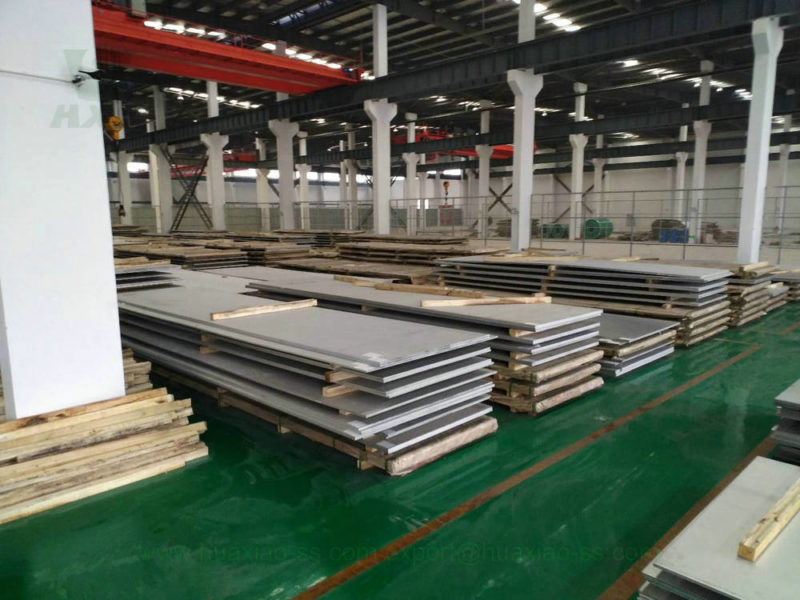
As an experienced stainless steel supplier, Huaxiao Metal provides a wide range of stainless steel products for infrastructure, construction, manufacturing, and industrial projects worldwide.
Why Global Buyers Choose Huaxiao Metal
15+ Years of Industry Experience
Large Stainless Steel Inventory
Export Service to 60+ Countries
Custom Cutting and Processing
Competitive Factory Pricing
Fast International Delivery
Technical Material Support
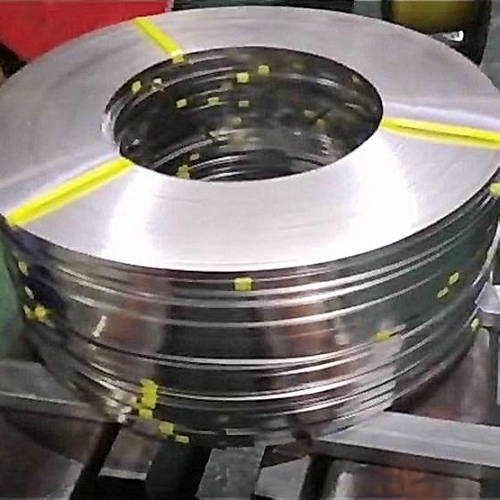
Whether you require stainless steel coils, sheets, plates, strips, or pipes, our team can help you source the right materials for your project requirements.
FAQ — Belt and Road Initiative Is Driving Steel Demand in Southeast Asia
Will the Belt and Road Initiative increase steel demand?
Yes. Infrastructure projects associated with the Belt and Road Initiative require large volumes of steel products, including structural steel, stainless steel plates, coils, and pipes. Recent BRI investment activity remains at historically high levels.
Which Southeast Asian countries have the strongest steel demand growth?
Vietnam, Indonesia, Malaysia, the Philippines, and Thailand are among the fastest-growing steel-consuming markets in Southeast Asia.
What stainless steel products are commonly used in infrastructure projects?
Common products include stainless steel coils, sheets, plates, pipes, and duplex stainless steel materials.
Is Southeast Asia a good market for stainless steel exports?
Yes. Continued industrialization, manufacturing growth, and infrastructure investment make Southeast Asia one of the most attractive export markets for stainless steel suppliers.
Which stainless steel grades are most in demand for Southeast Asian infrastructure in 2026?
Grade 304 and 316L stainless steel are highly sought after due to their premium corrosion resistance in tropical marine environments.
Conclusion
The Belt and Road Initiative continues to reshape infrastructure development across Southeast Asia and other emerging markets. Growing investment in transportation, energy, manufacturing, and industrial facilities is creating long-term demand for steel and stainless steel products.
For steel buyers, contractors, distributors, and project developers, understanding these market trends can help identify new sourcing opportunities and support future business growth.
As Southeast Asia continues to expand, demand for high-quality stainless steel products is expected to remain strong for years to come.
Looking for a Trusted Stainless Steel Partner for Your Next Project?
Huaxiao Metal provides comprehensive sourcing solutions, factory-direct pricing, and world-class logistics for global buyers. Contact our export experts today for a 24-hour rapid quotation!