In today’s industrial landscape, material performance requirements are increasingly stringent. Engineers and procurement professionals often face trade-offs among numerous metal alloys, especially in extreme operating conditions. In this battle for high-performance materials, Inconel and stainless steel are two of the most frequently mentioned contenders. Both are renowned for their excellent corrosion resistance and high-temperature resistance, but they differ significantly in key performance indicators, cost, and application areas. So, how do you choose between the two?
As a professional metal materials supplier, Huaxiao Metal understands the importance of providing accurate and professional guidance to our customers. This article will provide a detailed analysis of all key aspects of Inconel vs Stainless Steel, from chemical composition to mechanical properties, from cost differences to practical application examples, to help you fully understand both materials and ultimately find the most suitable solution for your project.
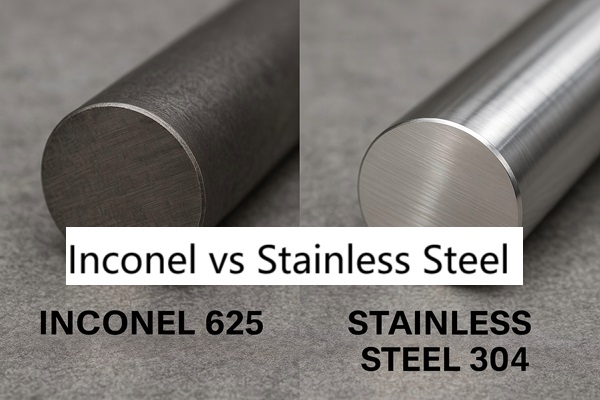
What Is Inconel Alloy?
Inconel is a nickel-based high-temperature alloy known for its outstanding performance in extreme conditions. It is particularly valued for its resistance to oxidation and corrosion, even at high temperatures. Commonly used in the aerospace, marine and chemical processing industries, Inconel alloys are designed to withstand harsh environments where other materials may fail.
What Is Stainless Steel?
Stainless steel is an iron-based alloy containing chromium, which has remarkable corrosion resistance. Available in various grades and types, stainless steel is versatile and durable, with a wide range of applications in construction, kitchenware, medical devices, etc. It is highly regarded for its affordability, ease of fabrication, and overall performance.
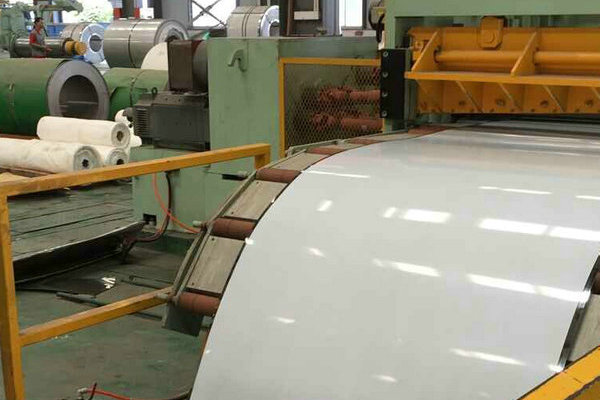
Difference Between Inconel and Stainless Steel
Inconel vs Stainless Steel Composition
Stainless Steel Composition
| Grade | C | Mn | Si | P | S | Cr | Mo | Ni | N |
| SS 304 | 0.08 max | 2 max | 0.75 max | 0.040 max | 0.030 max | 18 – 20 | – | 8 – 11 | – |
| SS 304L | 0.03 max | 2 max | 0.75 max | 0.045 max | 0.030 max | 18 – 20 | – | 8 – 12 | 0.10 max |
| SS 310 | 0.25 max | 2 max | 1.50 max | 0.045 max | 0.030 max | 24 – 26 | – | 19 – 22 | – |
| SS 310S | 0.08 max | 2 max | 1.50 max | 0.045 max | 0.030 max | 24 – 26 | – | 19 – 22 | – |
| SS 316 | 0.08 max | 2 max | 0.75 max | 0.045 max | 0.030 max | 16 – 18 | 2 – 3 | 10 – 14 | 0.1 max |
| SS 316L | 0.3 max | 2 max | 0.75 max | 0.045 max | 0.030 max | 16 – 18 | 2 – 3 | 10 – 14 | 0.10 max |
| SS 317 | 008 max | 2 max | 1 max | 0.040 max | 0.03 max | 18 – 20 | 3 – 4 | 11 – 14 | 0.10 max |
| SS 317L | 0.035 max | 2 max | 1 max | 0.040 max | 0.03 max | 18 – 20 | 3 – 4 | 11 – 15 | – |
| SS 321 | 0.08 max | 2 max | 0.75 max | 0.045 max | 0.03 max | 17 – 19 | 5xC min 0.60% max | 9 – 12 | 0.10 max |
| SS 321H | 0.04 – 0.10 max | 2 max | 0.75 max | 0.045 max | 0.03 max | 17 – 19 | 4xC min 0.60% max | 9 – 12 | 0.10 max |
| SS 347 | 0.08 max | 2 max | 0.75 max | 0.045 max | 0.03 max | 17 – 20 | 10xC min 1.00 max | 9 – 13 | 62.74 |
| SS 347H | 0.04 – 0.10 | 2 max | 0.75 max | 0.045 max | 0.03 max | 17 – 20 | 8xC min 1.00 max | 9 – 13 | 62.74 |
| SS 446 | 0.2 max | 1.5 max | 0.75 max | 0.040 max | 0.03 max | 23 – 30 | 0.10 – 0.25 | 0.50 max | Balance |
Inconel Composition
| Element (% by mass) | 600 | 617 | 625 | 690 | 718 | X-750 |
|---|---|---|---|---|---|---|
| Ni | 72.0 | 44.2–56.0 | 58.0 | 59.5 | 50.0–55.0 | 70.0 |
| Cr | 14.0–17.0 | 20.0–24.0 | 20.0–23.0 | 30 | 17.0–21.0 | 14.0–17.0 |
| Fe | 6.0–10.0 | 3.0 | 5.0 | 9.2 | balance | 5.0–9.0 |
| Mo | – | 8.0–10.0 | 8.0–10.0 | – | 2.8–3.3 | – |
| Nb | – | – | 3.15–4.15 | – | 4.75–5.5 | 0.7–1.2 |
| Co | – | 10.0–15.0 | 1.0 | – | 1.0 | 1.0 |
| Mn | 1.0 | 0.5 | 0.5 | 0.35 | 0.35 | 1.0 |
| Cu | 0.5 | 0.5 | – | 0.01 | 0.2–0.8 | 0.5 |
| Al | – | 0.8–1.5 | 0.4 | 0.02 | 0.65–1.15 | 0.4–1.0 |
| Ti | – | 0.6 | 0.4 | – | 0.3 | 2.25–2.75 |
| Si | 0.5 | 0.5 | 0.5 | 0.35 | 0.35 | 0.5 |
| C | 0.15 | 0.15 | 0.1 | 0.019 | 0.08 | 0.08 |
| S | 0.015 | 0.015 | 0.015 | 0.003 | 0.015 | 0.01 |
| P | – | 0.015 | 0.015 | – | 0.015 | – |
| B | – | 0.006 | – | – | 0.006 | – |
Inconel vs Stainless Steel Equivalent Grades
Inconel Equivalent Grades
| Inconel Grade | UNS Number | European Standard (EN) | Chinese Standard (GB) | Japanese Standard (JIS) |
|---|---|---|---|---|
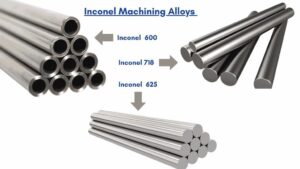
| Inconel 600 | N06600 | 2.4816 | GH600 | NCF 600 |
| Inconel 625 | N06625 | 2.4856 | GH625 | NCF 625 |
| Inconel 718 | N07718 | 2.4668 | GH4169 | NC19FeNb |
| Inconel 825 | N08825 | 2.4858 | NS142 | NCF 825 |
Stainless Steel Equivalent Grades
| Stainless Steel Grade | UNS Number | European Standard (EN) | Chinese Standard (GB) | Japanese Standard (JIS) |
|---|---|---|---|---|
| 304 | S30400 | 1.4301 | 06Cr19Ni10 | SUS 304 |
| 316 | S31600 | 1.4401 | 06Cr17Ni12Mo2 | SUS 316 |
| 410 | S41000 | 1.4006 | 12Cr13 | SUS 410 |
| 430 | S43000 | 1.4016 | 12Cr17 | SUS 430 |
Inconel vs Stainless Steel: Mechanical Properties
Inconel Mechanical Properties
| Property | Inconel 600 | Inconel 625 | Inconel 718 | Inconel 825 |
|---|---|---|---|---|
| Tensile Strength (MPa) | 550-700 | 930-1030 | 965-1100 | 550-690 |
| Yield Strength (MPa) | 240-310 | 415-480 | 690-758 | 220-275 |
| Elongation (%) | ≥30 | ≥30 | ≥20 | ≥30 |
| Hardness (Rockwell) | B80-95 | B95-C30 | C30-C40 | B80-95 |
Stainless Steel Mechanical Properties
| Property | 304 Stainless Steel | 316 Stainless Steel | 410 Stainless Steel | 430 Stainless Steel |
|---|---|---|---|---|
| Tensile Strength (MPa) | 515-750 | 515-690 | 450-600 | 450-600 |
| Yield Strength (MPa) | 205-310 | 205-310 | 270-340 | 280-350 |
| Elongation (%) | ≥40 | ≥40 | ≥20 | ≥20 |
| Hardness (Rockwell) | B70-90 | B70-90 | C35-40 | B80-90 |
Inconel vs Stainless Steel Cost
Inconel is significantly more expensive than stainless steel due to its complex production process and higher nickel content. Stainless steel, especially grades like 304 stainless steel, is more cost-effective for general use.
Inconel vs Stainless Steel Application
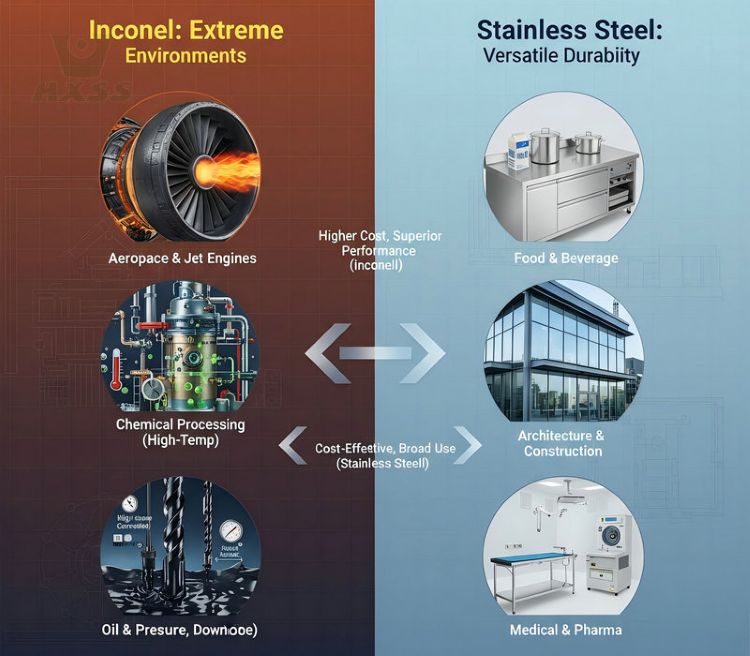
The main differences between Inconel and stainless steel in application are as follows:
High Temperature Environment: Inconel has excellent high temperature strength and oxidation resistance, and is often used in high temperature environments such as aerospace, gas turbines, and nuclear industry, while stainless steel has low strength at high temperatures and is suitable for medium temperature environments.
Corrosion Resistance: Inconel performs better in extreme corrosive environments (such as acid, seawater, and high temperature oxidation), and is often used in chemical and marine engineering, while stainless steel is suitable for general industry and food processing.
Mechanical Properties: Inconel has higher strength and creep resistance, while stainless steel is easier to process and form, and is widely used in construction, medical, and household products.
Cost: Inconel is more expensive and is usually used in high-end applications that require extreme durability, while stainless steel is more suitable for daily industrial and commercial use due to its lower cost.
Inconel vs Stainless Steel Weight
Inconel has a slightly higher density (8.4 g/cm³) compared to stainless steel (7.8 g/cm³). This difference may be critical in weight-sensitive applications.
Inconel vs Stainless Steel Hardness
Inconel alloys generally have a high hardness, especially after heat treatment, making them an excellent choice for high stress applications.
Inconel vs Stainless Steel Exhaust
Due to its excellent heat resistance, Inconel is the material of choice for exhaust systems exposed to high temperatures, such as jet engine exhaust systems. Stainless steel, while suitable for automotive exhaust, cannot match Inconel’s performance under extreme heat conditions.
Looking for a reliable supplier of Inconel or stainless steel products?
Huaxiao Metal offers a full range of alloys at competitive prices and global delivery.
Request a quote or consult us now to find the right material for your project.
Common Inconel Grades vs. Common Stainless Steel Grades
Inconel 600 vs. 316 Stainless Steel: Corrosion Resistance and High-Temperature Applications
Inconel 600: A nickel-chromium-iron alloy with excellent resistance to high-temperature oxidation and stress corrosion cracking. Commonly used in heat treatment furnaces, chemical, and food processing equipment.
316 Stainless Steel: An austenitic stainless steel with enhanced resistance to pitting and crevice corrosion, particularly in chloride-containing environments, through the addition of molybdenum.
Key Comparison: Inconel 600 significantly surpasses 316 stainless steel in mechanical strength and corrosion resistance at high temperatures, particularly with respect to stress corrosion cracking caused by high-temperature chlorides.
Inconel 625 vs. Stainless Steel: A Battle of Strength and Weldability
Inconel 625: A renowned “super alloy,” its additions of niobium and molybdenum provide exceptional strength and corrosion resistance over a wide temperature range.
Key Comparisons: Is Inconel 625 a stainless steel? The answer is no. While it offers corrosion resistance similar to stainless steel, it is a nickel-based alloy. Its strength and fatigue resistance far exceed any stainless steel. Furthermore, can you weld Inconel to stainless steel? It is possible, but requires specialized welding processes and filler metals to avoid brittle joints.
Inconel 718 vs. 316 Stainless Steel: Aerospace and Heavy Industry Applications
Inconel 718: A precipitation-hardening nickel-chromium alloy that maintains exceptional strength at temperatures up to 700°C. It is commonly used in jet engines, gas turbines, and rocket engines.
Key Comparisons: Inconel 718 offers strength that 316 stainless steel cannot match. It is designed for extreme stresses, high temperatures, and high pressures—the limits of stainless steel’s application.
Why Comparing Inconel Vs Stainless Steel Can Be Complicated
Comparing Inconel and stainless steel is not an easy task because each material excels in different situations. Factors such as operating environment, budget, and mechanical requirements must be carefully weighed.
Advantages and Disadvantages of Inconel vs Stainless Steel
Advantages of Stainless Steel:
Affordable and widely available
Good general corrosion resistance
Easy fabrication and welding
Disadvantages of Stainless Steel:
Limited performance in high temperatures
Susceptible to stress corrosion cracking in chlorides
Advantages of Inconel:
Superior resistance to extreme environments
Maintains strength at high temperatures
Long service life in aggressive conditions
Disadvantages of Inconel:
High cost
Difficult to machine and weld
How to Tell the Difference Between Stainless Steel and Inconel?
Visual Inspection: Difficult to distinguish with the naked eye. Both have a silvery-gray metallic luster.
Magnetic Testing: Inconel is a non-magnetic material. Many stainless steel grades (such as 304/316) are also non-magnetic in the annealed state, but may become weakly magnetic after cold working. This is not a completely reliable method of differentiation.
Spark Testing: When polished with an abrasive wheel, stainless steel produces bright sparks, while Inconel produces very weak or almost no sparks.
Professional Testing: The most reliable method is chemical composition analysis, such as with a handheld XRF spectrometer or wet chemical analysis.
Inconel vs Stainless Steel: Which is Stronger?
Inconel is stronger at high temperatures, maintaining its integrity where stainless steel may weaken. However, stainless steel often provides sufficient strength for general applications.
Inconel vs Stainless Steel: Which is Better?
Which one is better? The choice depends on the application. For high temperature and corrosive environments, Inconel is the right choice for you. For cost-effective daily use, stainless steel is usually a better choice. If you still have any questions, or are not sure which material you should choose is better for your industry, you can contact us directly and we will arrange professional colleagues to answer your questions.
Still unsure? Contact Huaxiao Metal to consult the best alloy for your specific application and budget.
FAQ
Is Inconel a stainless steel?
No, Inconel is not a stainless steel. Stainless steel is a family of iron-based alloys, while Inconel is a group of nickel-based superalloys. The fundamental difference in their base metal (iron vs. nickel) gives them distinct properties, especially at high temperatures.
What's the main difference between Inconel and stainless steel?
The main difference between inconel and stainless steel lies in their base metal and high-temperature performance. Inconel is a nickel-based alloy designed for extreme temperatures and pressures, while stainless steel is an iron-based alloy primarily known for its corrosion resistance.
Can you weld inconel to stainless steel?
Yes, it is possible to weld inconel to stainless steel, but it is a challenging process. It requires specific filler metals and a controlled welding environment to prevent the formation of brittle intermetallic compounds that could weaken the joint.
Is Inconel 625 a stainless steel?
No, Inconel 625 is not a stainless steel. It is a nickel-based superalloy. While it shares excellent corrosion resistance properties with some stainless steels, its superior strength and stability at high temperatures are characteristic of a nickel-based alloy, not a stainless steel.
Which is better for my project: Inconel 718 or 316 stainless steel?
The choice depends on your application’s specific requirements. For general corrosion resistance in moderate temperature environments, 316 stainless steel is a cost-effective and excellent choice. However, if your project involves extreme temperatures, high stress, or requires exceptional creep and fatigue resistance (like in aerospace or turbomachinery), Inconel 718 vs stainless steel 316 is a clear win for Inconel.
In Conclusion
Choosing between Inconel vs Stainless Steel depends on your project’s environment, temperature requirements, and budget. If cost efficiency and general corrosion resistance are the priorities, stainless steel is the ideal choice. However, for extreme environments such as aerospace, chemical plants, or offshore oil & gas, Inconel provides unmatched performance.
At Huaxiao Metal, we are committed to supplying high-quality stainless steels and nickel-based alloys to customers worldwide. Whether you are looking for Inconel 600 vs 316 Stainless Steel, Inconel 625 vs Stainless Steel, or Inconel 718 vs Stainless Steel 316, our team can provide technical guidance and competitive pricing.
Contact Huaxiao Metal today to get a quote or consultation for your stainless steel and Inconel material needs!