Nickel is one of the most important industrial metals, widely used in stainless steel, special alloys, electroplating, batteries, and many other applications. As global industries develop, the demand for nickel continues to grow, making it a key raw material for modern manufacturing. Understanding nickel’s characteristics, applications, and market trends is essential for engineers, purchasing managers, and manufacturers who rely on high-performance materials.
In this article, we will provide a comprehensive overview of nickel, including its definition, properties, production, global applications, recent market trends, and frequently asked questions. We will also explain how nickel is connected to stainless steel products, and why many suppliers, manufacturers, and buyers are closely watching nickel prices and stock availability.
What is Nickel?
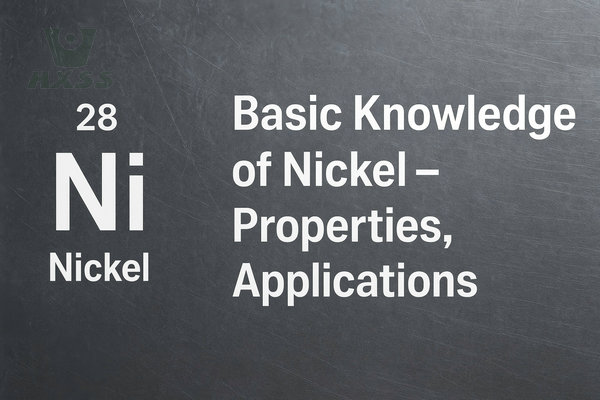
Nickel is a silvery-white transition metal, classified as a ferromagnetic element with atomic number 28. It is known for its corrosion resistance, toughness, and ability to form alloys with other metals. Because of its unique properties, nickel plays a central role in industries ranging from stainless steel manufacturing to battery technology.
Key Physical and Chemical Properties of Nickel
| Property | Value/Characteristic |
|---|---|
| Atomic Number | 28 |
| Symbol | Ni |
| Density | 8.90 g/cm³ |
| Melting Point | 1455 °C |
| Corrosion Resistance | Excellent against air, alkalis, and acids |
| Magnetism | Ferromagnetic |
| Alloying Ability | Easily forms alloys with Fe, Cr, Cu, Mo, Co |
These fundamental properties explain why nickel is such a versatile material, widely adopted in structural, chemical, and electronic applications.
Major Uses of Nickel
Nickel has diverse applications across industries. Below are the most significant:
1. Stainless Steel Production
Around 70% of the world’s nickel production is used in stainless steel manufacturing.
Nickel improves strength, corrosion resistance, and toughness.
Grades such as 304, 316, and 310 stainless steel depend heavily on nickel content.
If you are looking for reliable stainless steel suppliers and manufacturers, Huaxiao Metal provides a wide range of nickel-containing stainless steel products available in stock at competitive prices.
2. Special Nickel Alloys
Used in aerospace, power plants, and chemical processing.
Examples include Inconel, Monel, and Hastelloy, which withstand extreme temperatures and corrosion.
3. Electroplating
Nickel plating provides a shiny surface and protects base metals from corrosion.
Widely used in automotive parts, electronics, and decorative items.
4. Batteries and Energy Storage
Nickel is a key component in NiMH batteries and nickel-cobalt-aluminum (NCA) lithium batteries.
With the growth of electric vehicles (EVs), nickel demand is rapidly increasing.
5. Catalysts and Chemicals
Nickel-based catalysts are widely used in the hydrogenation of oils, petrochemicals, and fertilizers.
Nickel is a chemical element with the symbol Ni and atomic number 28. Here is some Basic Knowledge of Nickel:
Properties:
Nickel is a silver-white metal with a slight golden tinge. It is malleable, ductile, and has a high melting point. It is ferromagnetic at room temperature and exhibits good corrosion resistance.
Occurrence:
Nickel is found in the Earth’s crust and is predominantly obtained from two types of ore deposits: sulfide deposits and laterite deposits. The major nickel-producing countries include Indonesia, the Philippines, Russia, Canada, and Australia.
Health and Environment:
Nickel is an essential trace element for several living organisms, including humans. However, exposure to high levels of nickel can be harmful. Some individuals may develop allergic reactions or contact dermatitis when exposed to nickel-containing materials. Nickel compounds are also known to be toxic to aquatic organisms.
History:
Nickel has been used by humans for thousands of years. Ancient civilizations, such as the Chinese and Egyptians, made use of a naturally occurring nickel alloy known as “nickel silver” or “German silver.” The element itself was isolated and classified as a distinct metal in the 18th century.
Isotopes:
Nickel has five stable isotopes: nickel-58, nickel-60, nickel-61, nickel-62, and nickel-64. Additionally, several radioactive isotopes of nickel exist, with nickel-59 being the most stable among them.
Nickel in Stainless Steel – The Connection
Since stainless steel is the largest application sector for nickel, understanding its relationship is crucial.
Benefits of Nickel in Stainless Steel:
Enhances corrosion resistance, especially in marine and chemical environments.
Improves ductility and toughness at both high and low temperatures.
Provides a smoother and more attractive surface finish.
Common Nickel-Containing Stainless Steel Grades:
304 Stainless Steel – Contains 8–10.5% Ni, widely used in kitchenware and construction.
316 Stainless Steel – Contains 10–14% Ni and 2–3% Mo, excellent for chemical and marine applications.
310 Stainless Steel – Contains 19–22% Ni, ideal for high-temperature resistance.
Huaxiao Metal specializes in supplying a full range of nickel-containing stainless steels. Contact us today to consult prices, request stock details, or connect with our professional sales team.
Nickel in Other Metals – Copper, Carbon Steel, and Aluminum Alloys
1. Nickel in Copper Alloys
Cu-Ni alloys are the most common nickel-copper alloys. Typical grades include:
- CuNi 90/10 (90% Cu, 10% Ni) – Used in shipbuilding, condenser piping, and seawater systems.
- CuNi 70/30 (70% Cu, 30% Ni) – Higher strength, commonly used in petrochemical equipment and marine engineering.
The addition of nickel significantly improves copper’s corrosion resistance and mechanical strength, particularly in seawater and acidic environments.
2. Nickel in Carbon Steel
Most ordinary carbon steels contain no nickel, but some low-alloy, high-strength steels do.
Examples of typical grades:
- AISI 4340 steel – Contains approximately 1.65–2.0% Ni and is used in aircraft landing gear and automotive crankshafts.
- ASTM A203 steel – Contains 2.25–3.5% Ni and is commonly used in cryogenic pressure vessels.
Nickel improves steel’s low-temperature toughness and impact resistance, enabling it to maintain reliable performance even at low temperatures.
3. Nickel in Aluminum Alloys
Some aluminum casting alloys contain a small amount of nickel to improve heat resistance and creep resistance.
Typical examples:
- Al-Cu-Ni alloys (such as 2219 and 2618 aluminum alloys) – used in aerospace engine components and automotive pistons.
- Al-Si-Ni alloys – used in automotive engine cylinder heads and cylinder blocks, offering improved high-temperature resistance.
The addition of nickel allows aluminum alloys to maintain stable shape and strength even under high-temperature conditions.
Nickel Alloys:
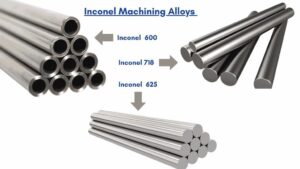
Nickel alloys offer excellent resistance to corrosion, heat, and wear, making them suitable for a wide range of applications. For example, Inconel, a nickel-chromium-based superalloy, is used in high-temperature environments such as jet engines and gas turbines. Hastelloy, another nickel-based alloy, exhibits exceptional corrosion resistance and is used in chemical processing equipment.
Titanium-nickel alloy has the ability of “memory”, and the memory is very strong. After a long period of time, it can be repeated tens of millions of times without error. Its “memory” ability is to remember its original shape, so people call it “shape memory alloy”. It turns out that this alloy has a characteristic transition temperature. Above the transition temperature, it has a structure, and below the transition temperature, it has another structure.
The structure is different, and the performance is also different. For example, a titanium-nickel memory alloy, when it is above the transformation temperature, is very hard and strong, but below this temperature, it is very soft and easy to cold work. In this way, when we need to remember any shape, we make it into that shape. This is its “permanent memory” shape. Below the transition temperature, because it is soft, we can make it to a considerable extent. It can be arbitrarily deformed. And when it needs to return to its original shape, just heat it above the transition temperature.
Nickel is magnetic and can be attracted to magnets. Alloys made of aluminum, cobalt, and nickel are more magnetic. When this alloy is attracted by an electromagnet, not only will it be attracted to itself, but something sixty times heavier than it will be hung under it, and it will not fall. In this way, it can be used to make electromagnetic cranes. Most of the nickel salts are green. Nickel hydroxide is brown-black, and nickel oxide is gray-black. Nickel oxide is often used to make iron-nickel alkaline batteries.

FAQs About Nickel
Why is nickel important in stainless steel?
Nickel improves corrosion resistance, ductility, and toughness, making stainless steel suitable for harsh environments.
What is the difference between pure nickel and nickel alloys?
Pure nickel is mainly used in batteries and electroplating, while nickel alloys are designed for extreme conditions like aerospace and chemical plants.
How do nickel prices affect stainless steel costs?
Since nickel is a major raw material in stainless steel, price fluctuations directly influence stainless steel market prices.
The higher the nickel price, the higher the stainless steel price.
Who are the top nickel producers globally?
Indonesia, Philippines, Russia, Canada, and Australia are the largest nickel producers.
How can I secure a stable nickel or stainless steel supply?
Partnering with reliable manufacturers and suppliers with available stock ensures competitive prices and consistent quality.
Conclusion: Why Understanding Nickel Matters for Stainless Steel Buyers
Nickel is not only a critical industrial metal but also the backbone of the stainless steel industry. Whether you are sourcing stainless steel sheets, strips, or bars, understanding nickel’s role helps you make informed decisions about quality, pricing, and stock availability.
At Huaxiao Metal, we provide a wide selection of stainless steel products containing nickel, tailored to meet the needs of global customers. Contact us today to inquire about prices, request stock information, or speak directly with our sales experts.