
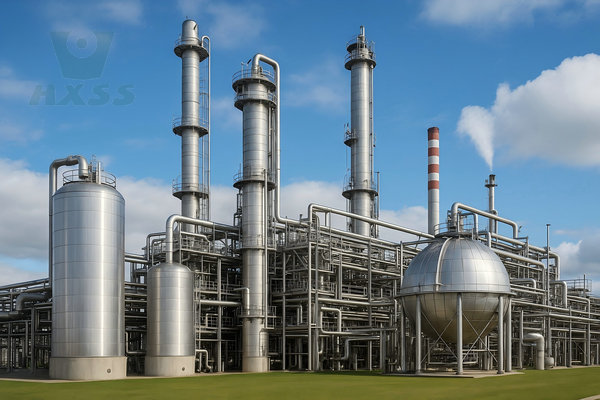
The ammonia and fertilizer industries play a vital role in global agriculture, providing essential nutrients for crop growth. As the world’s population grows, demand for fertilizers continues to rise, placing immense pressure on chemical plants to operate safely, efficiently, and sustainably. These plants face extreme operating conditions—high temperatures, high pressures, and corrosive chemicals such as ammonia, urea, and nitric acid.
In such environments, material selection is crucial. Stainless steel, with its corrosion resistance, durability, mechanical strength, and hygienic properties, is the most reliable material for constructing ammonia and fertilizer production facilities. Without stainless steel, equipment maintenance, downtime, and replacement costs would soar.
This article explores the applications of stainless steel in ammonia and fertilizer plants, compares the specific uses of different stainless steel grades, and explains why Huaxiao Metal is your trusted stainless steel supplier for this demanding industry.
Why Stainless Steel is Essential in Ammonia and Fertilizer Industry?
1. Corrosion Resistance
Fertilizer production involves aggressive chemicals such as urea, ammonium nitrate, nitric acid, and ammonia. These substances can easily corrode carbon steel or low-alloy steel, leading to leaks and safety hazards. Stainless steel, especially grades like 316L and duplex steels, provides superior resistance to pitting, crevice corrosion, and stress corrosion cracking.
2. Strength at High Temperatures
Ammonia synthesis requires conditions of around 400–500°C and pressures exceeding 100 bar. Materials must withstand not only heat but also stress over prolonged cycles. Stainless steels such as 310S and 321 maintain structural integrity at high temperatures, making them indispensable in reactors and reformers.
3. Cost Efficiency and Durability
Although stainless steel has a higher initial cost than mild steel, it provides a much longer service life. Reduced downtime, lower maintenance costs, and improved plant reliability result in overall cost savings for fertilizer producers.
4. Safety and Cleanliness
Contamination control is critical in fertilizer plants. Stainless steel’s smooth, clean surface minimizes product contamination, ensuring consistent fertilizer quality and reducing operational risks.
Key Applications of Stainless Steel in Ammonia & Fertilizer Plants
1. Storage and Transportation Equipment
Ammonia storage tanks: Ammonia is stored as a liquid under pressure. Stainless steel grades 304L and 316L are widely used because they resist ammonia-induced stress corrosion.
Urea tanks and pipelines: Urea is corrosive at high concentrations and elevated temperatures. Stainless steels such as 316L and duplex grades provide excellent resistance.
Transport pipelines: From liquid ammonia transfer lines to slurry transport in fertilizer plants, stainless steel ensures leak-free, long-lasting performance.
2. Heat Exchangers and Condensers
Heat exchangers are the backbone of ammonia production loops, transferring heat between process streams. They operate under extreme pressures and corrosive conditions.
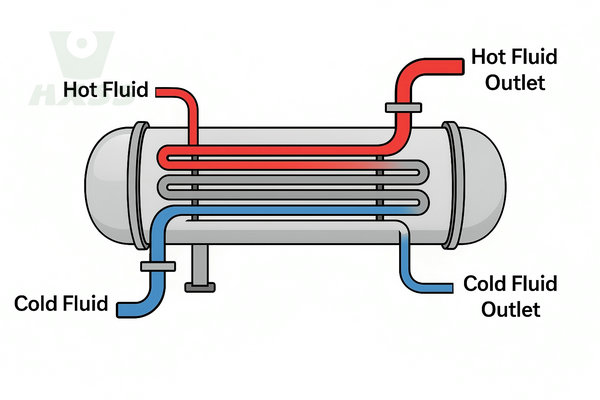
316L stainless steel is commonly used due to its excellent resistance to chloride attack.
For higher temperature resistance, 310S stainless steel provides superior oxidation resistance.
Duplex stainless steels are also being adopted for better strength-to-weight ratios.
3. Reactors and High-Pressure Vessels
Ammonia synthesis reactors, primary reformers, and high-pressure urea reactors demand materials that withstand both mechanical and chemical stress.
321 and 347 stainless steels (stabilized with titanium or niobium) prevent carbide precipitation at high temperatures, extending service life.
Duplex stainless steels offer enhanced stress corrosion cracking resistance in nitric acid environments.
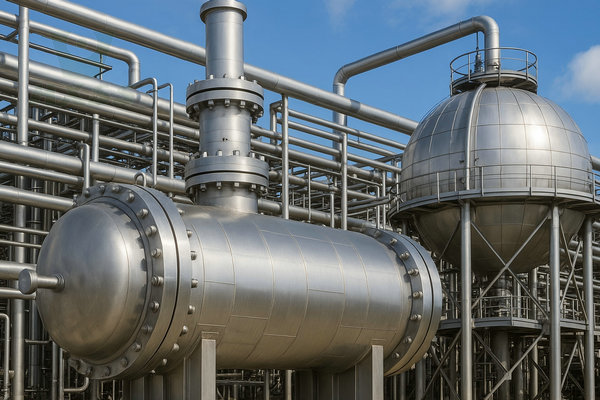
4. Fertilizer Production Equipment
Urea strippers: These critical components operate in highly corrosive carbamate solutions. 316L Urea Grade stainless steel (low ferrite, high nitrogen content) is specially developed for this purpose.
Granulators: Used in producing ammonium nitrate and urea granules, stainless steels provide resistance against abrasive and corrosive wear.
Nitric acid plants: Require stainless steels with high chromium and molybdenum contents (e.g., 317L, 904L) to resist strong oxidizing environments.
Comparison of Stainless Steel Grades for Fertilizer Industry
| Stainless Steel Grade | Application Area | Key Advantages |
|---|---|---|
| 304 / 304L | General storage tanks, pipelines | Cost-effective, widely available, and decent corrosion resistance |
| 316 / 316L | Urea & ammonia tanks, heat exchangers | Superior resistance to pitting, better suited for chlorides |
| 310S | High-temperature reactors, reformers | Excellent oxidation resistance at 1000°C |
| 321 / 347 | High-temperature vessels, piping | Stabilized to resist carbide precipitation |
| Duplex SS (2205, 2507) | Nitric acid and carbamate solutions | Higher strength, excellent stress corrosion resistance |
| 904L | Nitric acid and harsh environments | Exceptional resistance to strong oxidizers |
This comparison highlights how different stainless steel grades are tailored to specific plant sections, ensuring both safety and efficiency.
Case Studies & Industry Standards
Case Study 1: Urea Production Units
In urea plants, 316L Urea Grade stainless steel has become the industry standard for strippers and condensers. Its optimized microstructure resists carbamate-induced corrosion, which is one of the most aggressive environments in chemical processing.
Case Study 2: Ammonia Storage Tanks
Large-scale ammonia storage facilities in the Middle East and Southeast Asia have adopted 316L stainless steel, ensuring decades of leak-free service with minimal maintenance costs.
Industry Standards and References
ASTM Standards (ASTM A240, ASTM A312): For stainless steel plates and pipes.
ASME Boiler and Pressure Vessel Code: For pressure vessels in ammonia and fertilizer plants.
NACE Standards: Guidance for materials in corrosive environments.
By adhering to these standards, Huaxiao Metal ensures that supplied stainless steels meet the stringent requirements of ammonia and fertilizer industries.
Why Choose Huaxiao Metal for Stainless Steel Supply
At Huaxiao Metal, we understand the challenges of the ammonia and fertilizer industry. Our stainless steels are trusted by chemical producers worldwide for their consistency, quality, and reliability.
Our advantages include:
Wide product range: Stainless steel plates, coils, pipes, and fittings in grades 304, 316L, 310S, duplex, and more.
Industry expertise: Years of experience supplying materials to the chemical, petrochemical, and fertilizer sectors.
Customization: We provide tailored solutions according to plant requirements, whether for urea strippers, storage tanks, or heat exchangers.
Global supply network: Exporting stainless steel to more than 60 countries, ensuring reliable logistics and competitive pricing.
Huaxiao Metal is not just a supplier—we are your partner in building safe and efficient fertilizer plants.
Conclusion
The ammonia and fertilizer industries require materials that can withstand extreme operating conditions and corrosive chemicals. Stainless steel remains the material of choice due to its unmatched durability, corrosion resistance, and cost-effectiveness.
From storage tanks and heat exchangers to urea reactors and nitric acid units, stainless steel ensures safe and efficient operations. By choosing the right grade—304, 316L, 310S, duplex, or specialty steels—plant operators can balance performance with long-term reliability.
As global fertilizer demand continues to grow, stainless steel will play an increasingly important role in supporting sustainable agriculture and food security.
Are you looking for reliable stainless steel solutions for your ammonia and fertilizer plants?
Contact Huaxiao Metal today for expert material recommendations, competitive pricing, and fast global delivery. Let us help you create safer and more efficient chemical facilities.