Stainless steel is a versatile and widely used material in various industries, known for its corrosion resistance and durability. Two common grades, Stainless Steel 316 vs 409, serve different purposes due to their distinct properties.
When choosing stainless steel, the two most common grades are 316 stainless steel and 409 stainless steel. Each of these two materials has its own advantages and application scenarios, so which one to choose depends on specific needs. This article will compare these two stainless steels in terms of material composition, corrosion resistance, strength, cost, and application to help you make a choice.
What Is Stainless Steel 316?
Stainless Steel 316 is an austenitic chromium-nickel stainless steel containing 2–3% molybdenum. The addition of molybdenum significantly improves resistance to pitting, crevice corrosion, and chloride attack, making 316 a widely used marine-grade stainless steel.
Key Features of 316 Stainless Steel
Excellent corrosion resistance (especially chlorides)
High toughness and ductility
Low-carbon variants (316L) offer improved weldability
Outstanding performance in the chemical, marine, and medical industries
Available in coils, sheets, plates, bars, tubes, pipes, and fittings
What Is Stainless Steel 409?
Stainless Steel 409 is a ferritic stainless steel containing 10.5–11.75% chromium and stabilized with titanium. It is designed primarily for automotive exhaust systems due to its balance of heat resistance, oxidation resistance, and low cost.
Key Features of 409 Stainless Steel
Good high-temperature resistance
Affordable and widely available
Suitable corrosion resistance for mild environments
Best choice for automotive exhaust systems
Moderate weldability (improved with Ti stabilization)
Composition: Stainless Steel 316 vs 409
| Grades | Cr | Ni | Mo | C | Mn | Si | P | S |
|---|---|---|---|---|---|---|---|---|
| 316 Stainless Steel | 16-18% | 10-14% | 2-3% | ≤0.08% | ≤2.00% | ≤0.75% | ≤0.045% | ≤0.030% |
| 409 Stainless Steel | 11-12% | ≤0.75% | – | ≤0.08% | 0.5-1.0% | ≤0.5% | ≤0.04% | ≤0.030% |
The most significant differentiator here is Molybdenum (Mo) in Grade 316, which is the secret to its superior corrosion resistance.
Stainless Steel 316 and 409 differ significantly in their chemical composition. Stainless Steel 316, an austenitic stainless steel, contains chromium, nickel, and molybdenum, offering exceptional corrosion resistance, especially in aggressive environments.
On the other hand, Stainless Steel 409 is a ferritic stainless steel with a higher chromium concentration and lower nickel content. This composition makes 409 less corrosion-resistant compared to 316, but it excels in other aspects.
Corrosion Resistance: Stainless Steel 316 vs 409
This is often the primary factor for choosing between the two.
316 Stainless Steel: Often called “marine grade,” 316 offers excellent, almost unmatched, corrosion resistance. The addition of molybdenum makes it highly resistant to pitting and crevice corrosion in chloride-rich environments, such as coastal areas, saltwater applications, and chemical processing plants.
Huaxiao Case Study: A client in the marine hardware industry was experiencing premature failure of their components due to saltwater exposure. By switching to our 316L stainless steel sheets, they eliminated corrosion issues, extending their product lifespan by over 300% and protecting their brand reputation.
409 Stainless Steel: Grade 409 provides good corrosion resistance to atmospheric and exhaust gas corrosion. It was specifically designed for automotive exhaust systems. However, it is not recommended for environments with high moisture or salt exposure, as it can develop cosmetic surface rust (though this typically doesn’t impact its structural integrity).
Need steel for a harsh or corrosive environment? You need Grade 316.
Mechanical Performance Comparison: Stainless Steel 316 vs 409
| Property | 316 | 409 |
|---|---|---|
| Tensile Strength | Higher | Moderate |
| Elongation | Higher | Lower |
| Toughness | Excellent | Lower |
| Hardness | Similar | Similar |
316 Stainless Steel: Performs well at elevated temperatures, but is more susceptible to carbide precipitation if held continuously at temperatures between 425-860°C. It is extremely tough and ductile, making it easy to form and fabricate.
409 Stainless Steel: This is where 409 shines. It offers excellent resistance to high temperatures, making it the ideal material for continuous-use applications like car exhaust systems, mufflers, and heat exchangers.
Industry Application Example: We are a trusted 409 stainless steel supplier for a leading automotive parts manufacturer. Our 409 steel is used to produce exhaust systems that must withstand constant temperature cycles and corrosive fumes, providing a reliable and cost-effective solution.
Equivalent Grades of Stainless Steel 316 vs 409
| Region / Country | Stainless Steel 316 | Standard | Stainless Steel 409 | Standard |
|---|---|---|---|---|
| USA | 316 / 316L | ASTM A240 / A276 | 409 | ASTM A240 |
| European Union | 1.4401 / 1.4404 | EN 10088 | 1.4512 | EN 10088 |
| China | 022Cr17Ni12Mo2 / 022Cr17Ni12Mo2-L | GB/T 20878 | 10Cr17Ti | GB/T 20878 |
| Japan | SUS316 / SUS316L | JIS G4305 | SUS409 / SUS409L | JIS G4305 |
| Russia | 12X17H13M2T | GOST 5632 | 10X17T | GOST 5632 |
| India | 316 / 316L | IS 3444 | 409 | IS 3444 |
| Australia / New Zealand | 316 / 316L | AS/NZS 3678 | 409 | AS/NZS 3678 |
Applications: Stainless Steel 316 vs 409
316 stainless steel is suitable for applications requiring high corrosion resistance and strength, including:
- Marine environment (ships, offshore equipment)
- Medical equipment
- Chemical equipment
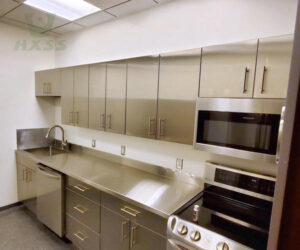
- Food processing equipment
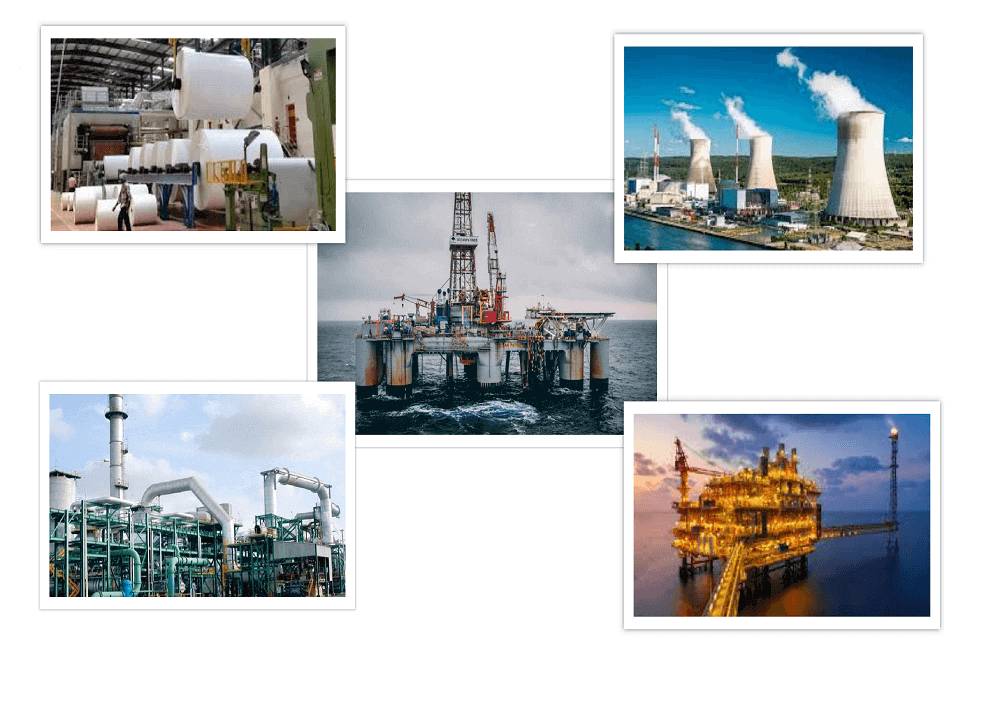
For harsh or corrosive environments, 316 is the best choice.
Contact Huaxiao Metal to get 316 stainless steel sheet, coil, and tube pricing.
409 stainless steel is commonly used in the following scenarios:
- Automotive exhaust systems
- Residential equipment (boilers, burners)
- Building structures
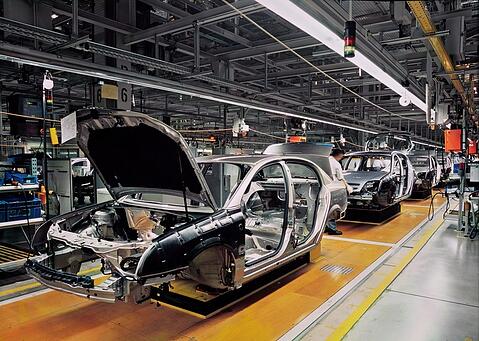
For cost-efficient heat resistance, 409 is the industry standard.
Cost Considerations: Stainless Steel 316 vs 409
316 stainless steel has a relatively high cost due to its high nickel and molybdenum content. Its advantage is that it requires almost no maintenance after long-term use, so despite the higher initial investment, it may be more cost-effective in the long run.
409 stainless steel has a lower price, so it is an economical choice of stainless steel in scenarios with limited budgets and low corrosion requirements. It is widely used in the automotive industry, construction materials, and other applications that do not require extremely high corrosion resistance.
However, the “cheapest” option is not always the cheapest in the long run. Using 409 in a marine application, initially to save money, will inevitably lead to premature failure and higher replacement costs. The key is to select the most cost-effective material for the specific environment.
Want to compare costs for your project?
High-Temperature Resistance
| Temperature Limit | 316 | 409 |
|---|---|---|
| Continuous Use | ~870°C | ~650°C |
| Intermittent Use | up to 925°C | up to 800°C |
- 409 is stable at exhaust temperatures but cannot match 316 in sustained high-temperature chemical environments.
316 stainless steel: Able to withstand temperatures up to 925°C, suitable for use in high-temperature environments.
409 stainless steel: Able to withstand higher temperatures (usually between 650°C and 800°C), so it is often used in high-temperature applications such as automotive exhaust systems.
Magnetism: Stainless Steel 316 vs 409
316 stainless steel: is an austenitic stainless steel and is usually non-magnetic, but may be slightly magnetic after cold working.
409 stainless steel: is a ferritic stainless steel and has significant magnetism.
Weldability: Stainless Steel 316 vs 409
316
Excellent weldability
316L is preferred for welded structures
Minimal carbide precipitation
409
Acceptable weldability but may become brittle
Titanium stabilizes weld joint
Often requires post-weld treatment
Surface Finish Options
| Surface | 316 | 409 |
|---|---|---|
| 2B | ✓ | ✓ |
| BA | ✓ | Limited |
| No.1 | ✓ | ✓ |
| HL | ✓ | Rare |
| Mirror 8K | ✓ | ✗ |
316 is widely used in decorative and architectural applications; 409 is functional, not aesthetic.
How to Choose Between 316 and 409 Stainless Steel
Choose 316 if you need:
High corrosion resistance
Marine performance
Chemical resistance
Hygienic surfaces
Long lifespan
Choose 409 if you need:
Lower cost
High-temperature oxidation resistance
Automotive exhaust system performance
Moderate corrosion resistance
How Huaxiao Metal Can Be Your Partner?
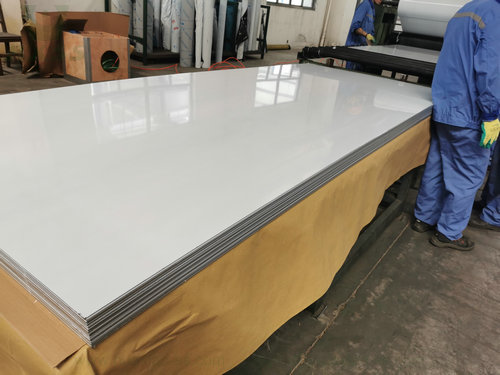
Choosing the right stainless steel supplier is just as important as choosing the right grade. At Huaxiao Metal, we don’t just sell steel; we provide solutions.
Expert Guidance: Our team can help you analyze your project requirements to ensure you select the most effective and economical material.
Guaranteed Quality: We provide MTC (Mill Test Certificates) with all our products, guaranteeing that the chemical composition and mechanical properties meet international standards.
Vast Inventory: Whether you need 316 stainless steel coils for a large chemical tank or 409 sheets for an automotive production line, we have the inventory to meet your demands.
Huaxiao Metal Advantages
- 12,000+ tons of stainless steel in stock
- Exporting to 80+ countries
- MTC / EN10204 3.1 certificates available
- Cut-to-size services for sheet/coil/pipe/bar
- Factory-direct prices
- Fast delivery from Shanghai port
- Full range of 316 / 316L / 409 / 410 / 430 materials
Send us your drawings, specifications, or quantity—we will reply quickly with a competitive quotation.
FAQ: Stainless Steel 316 vs 409
Can I use 409 stainless steel for a project near the ocean?
We strongly advise against it. While 409 has good atmospheric corrosion resistance, the salt in coastal air will cause it to rust quickly. For any marine or coastal application, 316 stainless steel is the correct choice.
Is 316 stainless steel food grade?
Yes, 316 is considered a food-grade stainless steel due to its high resistance to acids, alkalis, and chlorides found in many food products. It is widely used in commercial kitchens and food processing plants.
My 409 steel exhaust has some light surface rust. Is it failing?
Not necessarily. It’s common for 409 to develop a light, cosmetic “red rust” on the surface when exposed to road salt and moisture. This surface rust does not typically affect the structural integrity or performance of the exhaust system.
Is 316 stainless steel better than 409?
Yes. 316 is superior in corrosion resistance, strength, and durability.
409 is only better in cost and some high-temperature exhaust applications.
Does 409 stainless steel rust?
Yes, mild surface rusting may occur in humid or salted environments.
However, it rarely affects structural performance.
Can 409 replace 316?
Not in corrosive environments.
It can only replace 316 in low-corrosion, high-temperature areas like exhaust systems.
What are the equivalent international grades of 316 and 409?
316 ≈ 1.4401 / SUS316 / 022Cr17Ni12Mo2
409 ≈ 1.4512 / SUS409L / 10Cr17Ti
Which stainless steel is best for exhaust systems?
409 is the automotive industry standard.
What certificates can Huaxiao Metal provide?
EN 10204 3.1, MTC, CO, SGS inspection, and customized documentation.
In Conclusion
In conclusion, the choice between Stainless Steel 316 and 409 depends on the specific requirements of the application. Stainless Steel 316 offers superior corrosion and heat resistance, making it suitable for demanding environments, but it comes at a higher cost. Stainless Steel 409, while not as corrosion-resistant as 316, provides a cost-effective solution for applications with less stringent demands.
| Feature | 316 Stainless Steel | 409 Stainless Steel |
| Corrosion Resistance | Excellent (Marine Grade) | Good (Not for salty/wet areas) |
| Heat Resistance | Good | Excellent (Continuous high temps) |
| Cost | Higher | Lower |
| Best For… | Coastal, marine, chemical, medical applications | Automotive exhausts, dry heat applications |
Understanding the differences between these two stainless steel grades is crucial for making informed decisions in various industrial and manufacturing scenarios.