303 vs 304 – Which Stainless Steel Should You Choose?
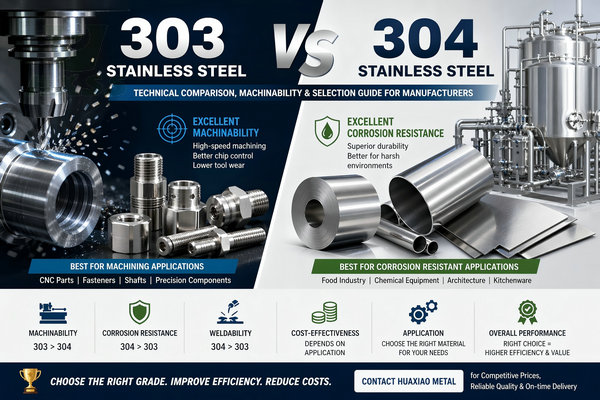
When comparing 303 vs 304 stainless steel, the decision often comes down to one key factor:
👉 Machinability vs Corrosion Resistance
- 303 stainless steel is optimized for high-speed machining
- 304 stainless steel is designed for corrosion resistance and versatility
However, for manufacturers, the real choice depends on your production process, environment, and cost control strategy.
In this guide, we break down:
- Technical differences between 303 and 304
- Machining and welding performance
- Real-world applications
- How to choose the right grade for your business
As a professional metal supplier, Huaxiao Metal provides this guide to help procurement managers and engineers in Europe and South America select the right material for CNC machining, food processing, or structural applications.
303 vs 304 Stainless Steel: Quick Comparison Table
| Feature / Property | 303 Stainless Steel (Free-Machining) | 304 Stainless Steel (General-Purpose) |
| AISI Designation | Grade 303 (Free-Machining) | Grade 304 (Standard 18/8) |
| Material Type | Austenitic (Sulfur-added) | Austenitic (Chrome-Nickel) |
| Machinability Rating | ⭐⭐⭐⭐⭐ 78% (Excellent) | ⭐⭐⭐ 45% (Moderate) |
| Corrosion Resistance | ⭐⭐ Moderate (Risk of pitting) | ⭐⭐⭐⭐⭐ Excellent |
| Sulfur Content | High (0.15% – 0.35%) | Very Low (Max 0.03%) |
| Weldability | ❌ Poor (Risk of hot cracking) | ✅ Excellent |
| Food Grade (FDA) | ❌ No | ✅ Yes (FDA Approved) |
| Magnetic Properties | Non-magnetic (Annealed) | Non-magnetic (Annealed) |
| Surface Finish | Good (Best for machined parts) | Excellent (Best for polished surfaces) |
| Typical Applications | CNC parts, gears, fasteners, valves | Food equipment, chemical tanks, piping |
Chemical Composition Difference
The fundamental difference between 303 and 304 stainless steel lies in sulfur content:
- 303 stainless steel contains added sulfur (S)
- 304 stainless steel has minimal sulfur
Why this matters:
- Sulfur creates chip-breaking behavior → easier machining
- But sulfur also reduces corrosion resistance and weldability
👉 Conclusion:
- 303 = optimized for manufacturing efficiency
- 304 = optimized for durability and corrosion resistance
Machinability: Why 303 is the First Choice for CNC
For manufacturers using CNC machining, turning, or automatic lathes, 303 stainless steel is significantly better.
Advantages of 303:
- Faster cutting speeds
- Reduced tool wear
- Better chip control
- Lower machining cost per part
Limitations of 304:
- Work hardening during machining
- Higher tool wear
- Slower processing speed
👉 If your business focuses on precision parts or mass production, 303 can reduce overall production costs.
Corrosion Resistance: Why 304 is More Reliable
304 stainless steel is one of the most widely used stainless grades due to its excellent corrosion resistance.
304 performs well in:
- Humid environments
- Food processing
- Chemical exposure
- Outdoor applications
303 limitations:
- Reduced resistance due to sulfur inclusions
- Not suitable for aggressive or sanitary environments
👉 If your product is exposed to moisture, chemicals, or food contact, 304 is the safer choice.
Weldability & Fabrication Performance
| Feature | 303 | 304 |
|---|---|---|
| Weldability | Poor | Excellent |
| Formability | Moderate | Very good |
| Post-processing | Limited | Flexible |
👉 303 is not recommended for welding, as sulfur can cause cracking.
👉 304 is ideal for fabrication, welding, and forming processes.
303 vs 304 Stainless Steel Price Comparison
From a material cost perspective:
- 303 is often slightly more expensive per ton
- But reduces machining cost significantly
- 304 is more cost-effective for long-term use
Real insight for buyers:
- Choose 303 → lower processing cost
- Choose 304 → lower maintenance & longer lifespan
📩 Looking for competitive 303 or 304 stainless steel prices? Contact Huaxiao Metal for fast quotations and global supply.
Applications: Where Each Grade is Used
Typical Applications of 303 Stainless Steel
- CNC machined components
- Shafts, bolts, nuts
- Precision turned parts
- Automotive fittings
Best for high-efficiency manufacturing environments
Typical Applications of 304 Stainless Steel
- Food processing equipment
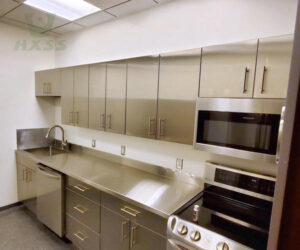
- Kitchenware & sinks
- Chemical tanks
- Architectural structures
Best for corrosion-resistant and hygienic applications
How to Choose: 303 or 304 Stainless Steel?
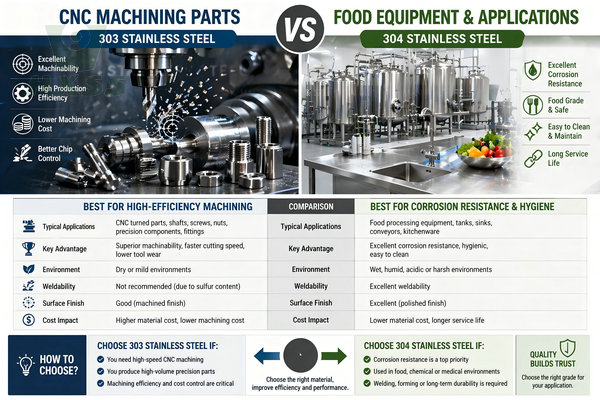
Choose 303 Stainless Steel if:
- You require high-speed machining
- You produce large volumes of parts
- Tool life and efficiency are critical
Choose 304 Stainless Steel if:
- Corrosion resistance is required
- Welding or forming is involved
- Used in food, medical, or chemical industries
FAQ: 303 vs 304 Stainless Steel
Is 303 stainless steel better than 304?
No. 303 is better for machining, while 304 is better for corrosion resistance.
Can 303 stainless steel be welded?
It is not recommended due to high sulfur content, which may cause cracking.
Can I use 303 instead of 304 for food contact?
Generally, no. The sulfur in 303 can create microscopic pits where bacteria can grow. 304 is the safe, “food-grade” choice recommended for the European and South American markets.
Which is more expensive, 303 or 304?
303 may have a higher material cost, but overall cost depends on processing and application.
Conclusion: Manufacturing Efficiency vs Long-Term Performance
The choice between 303 and 304 stainless steel is not about which is “better,” but which is better for your application:
- 303 → Maximum machining efficiency
- 304 → Maximum corrosion resistance and versatility
For manufacturers, selecting the right material can significantly impact production cost, product quality, and long-term performance.
Get a Quote from a Reliable Stainless Steel Supplier
At Huaxiao Metal, we supply:
- 303 stainless steel bars, rods, and profiles
- 304 stainless steel sheets, coils, and tubes
- Custom sizes for global manufacturing needs
Contact us today to get the latest price, stock availability, and technical support.