Call Us Today! +86-13761906384

17-7 Stainless Steel vs 304 – What’s the Difference

17-7 Stainless Steel vs 304 Stainless Steel

Choosing stainless steel for your project? Simply put, if your application requires extreme strength and heat resistance (such as aerospace components), 17-7 PH is the first choice. If cost-effectiveness and excellent corrosion resistance are key (such as kitchen equipment, architectural decoration), 304 is the industry standard.

  • 17-7 PH Stainless Steel = High strength, heat-treatable precipitation-hardening steel, ideal for springs, aerospace, and high-stress components

  • 304 Stainless Steel = Excellent corrosion resistance and formability, ideal for food, chemical, and general industrial applications

Understanding the properties and differences between stainless steel grades is essential. It can help engineers and manufacturers choose the right material for their projects. This article explores the key differences between two commonly used stainless steel grades, 17-7 stainless steel and 304. It examines their composition, mechanical properties, applications, corrosion resistance, and cost.

What is 17-7 Stainless Steel?

17-7 stainless steel is a precipitation-hardened chromium-nickel-aluminum stainless steel known for its high strength and hardness, corrosion resistance, and good formability. The unique properties of 17-7 stainless steel make it an indispensable part of industrial manufacturing.

  • High strength after heat treatment
  • Excellent fatigue resistance
  • Good corrosion resistance
  • High hardness (after aging)

Key Characteristics:

  • Can be strengthened through heat treatment
  • Higher mechanical strength than 304
  • Often used in spring and aerospace applications

Not only can it perform well in high-stress and corrosive environments, but it can also achieve different mechanical properties through precise heat treatment processes. These characteristics make 17-7 stainless steel widely used in aerospace, chemical, medical and machinery manufacturing.
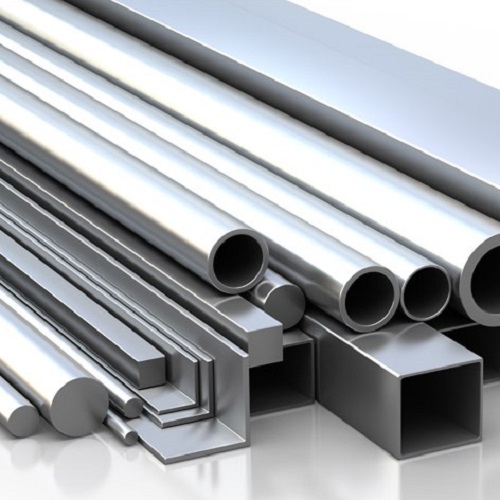
17 4PH

 What is 304 Stainless Steel?

304 stainless steel is one of the most widely used austenitic (non-magnetic) stainless steels. Known for its excellent corrosion resistance and formability, it is a versatile material used in a variety of applications.

Key Characteristics:

  • Excellent corrosion resistance
  • Good formability and weldability
  • Non-magnetic (in annealed condition)
  • Lower strength compared to 17-7PH

It is commonly used in:

  • Food processing equipment
  • Chemical containers
  • Construction and architecture
  • Kitchen and household applications
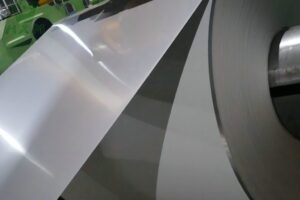
2b 304 Stainless Coil
Cold Rolled 304L/304 Stainless Steel Coil

 17-7 Stainless Steel vs 304 – What’s the Difference

As a specialized manufacturer, Huaxiao Metal provides 17-7 PH according to ASTM A693 and 304 according to ASTM A240 standards.

304 Stainless Steel vs 17-7 PH Stainless Steel Equivalent Grade

Standard / Country304 Stainless Steel Equivalent Grade17-7 PH Stainless Steel Equivalent GradeDescription / Notes
AISI / ASTM (USA)304 (ASTM A240 / A276)17-7 PH (ASTM A693 Type 631)304 is a common austenitic stainless steel; 17-7 PH is a precipitation-hardened stainless steel with higher strength
UNS (Unified Numbering System)S30400S17700Standardized UNS codes for 304 and 17-7PH
EN / DIN (Europe / Germany)1.43011.4568European equivalents under EN standards
JIS (Japan)SUS304SUS631Japanese Industrial Standard (JIS G4303 / G4313)
GB (China)06Cr19Ni100Cr17Ni7AlChinese National Standard (GB/T 20878)
BS (UK)304S15 / 304S3117-7PHBritish Standard grades
AFNOR (France)Z7CN18-09Z8CN17-07French standard designations
GOST (Russia)08Х18Н1007Х17Н7АRussian equivalents
ISOX5CrNi18-10X7CrNiAl17-7International Organization for Standardization equivalent grades

Comparison of Chemical Composition: 17-7 Stainless Steel vs. 304 Stainless Steel

Element17-7 Stainless Steel (%)304 Stainless Steel (%)
Cr16.0-18.018.0-20.0
Ni6.5-7.88.0-10.5
Al0.75-1.50
C0.09 max0.08 max
Mn1.00 max2.00 max
Si1.00 max0.75 max
P0.04 max0.045 max
S0.03 max0.03 max

By comparison, it can be found that 17-7 stainless steel and 304 stainless steel have significant differences in chemical composition, which leads to completely different performance characteristics and application areas.

Comparison of Mechanical Properties: 17-7 Stainless Steel vs. 304 Stainless Steel

Property17-7 Stainless Steel304 Stainless Steel
Tensile StrengthUp to 1035 MPa (after heat treatment)Approximately 515 MPa
Yield StrengthUp to 960 MPa (after heat treatment)Approximately 205 MPa
ElongationApproximately 11-15% (after heat treatment)Approximately 40%
HardnessUp to 375 HV (after heat treatment)Approximately 201 HB
Corrosion ResistanceGood, but slightly less than 304Excellent
FormabilityGood, can be heat treated for high-strengthExcellent
WeldabilityGood, may require post-weld heat treatmentExcellent, weldable with standard methods
Heat TreatmentCan be hardened by heat treatment (solution treatment and aging)Cannot be hardened by heat treatment, typically annealed

17-7 Stainless Steel: Has higher tensile strength, yield strength, and hardness after heat treatment, suitable for high-stress applications requiring high strength and wear resistance.

304 Stainless Steel: Has excellent corrosion resistance, formability, and weldability, making it a versatile choice for a wide range of applications, but has lower strength and hardness than 17-7 stainless steel.

Both materials have their unique advantages and can be selected based on specific application requirements.

Heat Treatment

  • 17-7 Stainless Steel:
    • It can be heat-treated to achieve high strength and hardness.
    • Typical treatments include solution treatment followed by aging.
  • 304 Stainless Steel:
    • It cannot be hardened by heat treatment.
    • Typically annealed to relieve stress and improve ductility.

👉 If you need high-performance spring properties → choose 17-7PH

Corrosion Resistance

  • 17-7 Stainless Steel: Good corrosion resistance but slightly less than 304 in some environments.
  • 304 Stainless Steel: Excellent corrosion resistance in a wide range of environments.

👉 If corrosion resistance is the top priority → choose 304

Strength & Hardness

  • 17-7PH: Very high strength after heat treatment
  • 304: Moderate strength, cannot be significantly hardened by heat treatment

👉 If strength is critical → choose 17-7PH

Applications

17-7 Stainless Steel:

    • Aerospace applications (e.g., aircraft parts, springs)
    • Chemical processing equipment
    • High-stress components requiring high strength and hardness
    • Medical devices and instruments
    • Mechanical components such as diaphragms and bellows
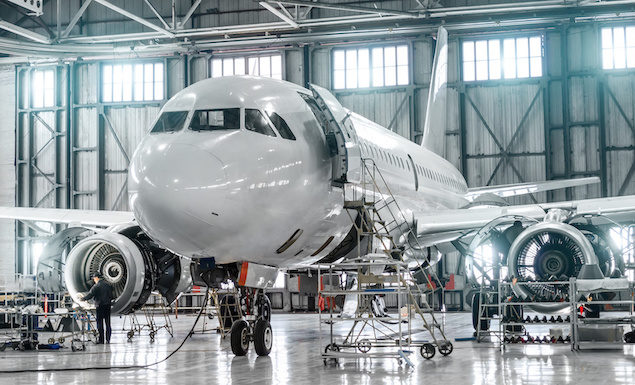
MONEL alloys in the aerospace industry
Passenger aircraft on maintenance of engine and fuselage repair in airport hangar

 304 Stainless Steel:

    • Food and beverage processing equipment
    • Chemical processing and storage
    • Household items (e.g., sinks, appliances, cookware)
    • Construction and architectural applications
    • Automotive and aerospace components (e.g., exhaust systems)
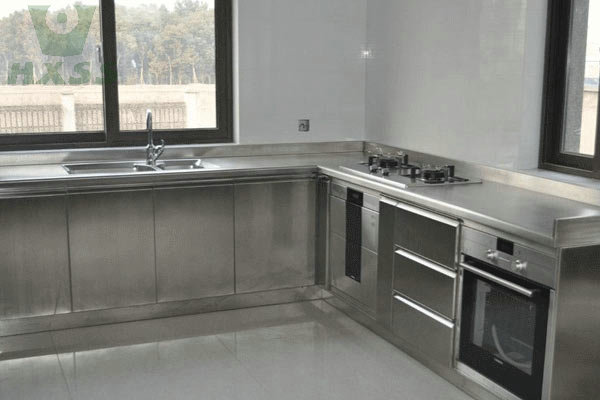
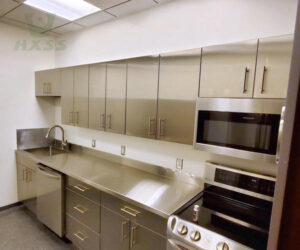
stainless-steel-coil-sheet kitchenware stainless steel cupboard

Formability and Weldability

Weldability and formability are crucial considerations when selecting a stainless steel grade. These factors affect the suitability of the material for various applications. This section will take an in-depth look at these properties of 17-7 stainless steel. It will also introduce 304 stainless steel. These are two widely used grades. They have different properties.

17-7 Stainless Steel Weldability and Formability

17-7 stainless steel is a precipitation-hardening stainless steel that has high strength and good corrosion resistance. However, its weldability and formability are somewhat limited compared to more ductile stainless steels such as 304. Here are the key points about 17-7:

17-7 Stainless Steel Weldability

Welding 17-7 stainless steel requires special care to avoid cracking and deformation. Since it is a precipitation-hardening steel, it must be welded in the aged condition. This ensures optimal phase precipitation. It also prevents loss of ductility and toughness at the weld. Specialized welding processes are recommended. These include TIG (Tungsten Inert Gas) and MIG (Metal Inert Gas). Preheating and post-weld heat treatment may also be necessary to maintain mechanical properties.

17-7 Stainless Steel Formability

17-7 has lower formability than austenitic stainless steel. This is due to its higher strength and hardness. It is more susceptible to springing back during bending and forming operations. Therefore, more powerful machines are required for forming. Heat treatment before forming can improve formability. However, this must be balanced against the potential for reduced corrosion resistance and strength.

 304 Stainless Steel Weldability and Formability

304 stainless steel is an austenitic stainless steel. It is known for its excellent formability. It is also known for its weldability. These properties make it suitable for a wide range of applications.

304 Stainless Steel Weldability

304 is one of the easiest stainless steel to weld because it has a stable austenitic structure. This structure helps avoid problems such as weld corrosion and intergranular corrosion. It does not require post-weld heat treatment, which helps maintain the original corrosion resistance and strength of the weld area. Common welding techniques such as TIG, MIG, and resistance welding work well with 304 stainless steel.

304 Stainless Steel Formability

The formability of this grade is excellent. It can be easily formed into a variety of shapes, from complex geometries to deep drawings. Its low yield strength and high elongation allow it to be machined into complex shapes without much force. This reduces tool wear and energy consumption during the manufacturing process.

Cost

There is no contest here. 304 stainless steel is significantly more affordable than 17-7 PH. The complex alloying elements (like Aluminum) and the necessity of heat treatment make 17-7 PH a premium material.

  • 17-7 Stainless Steel:
    • Generally more expensive due to its specialized properties and heat treatment processes.
  • 304 Stainless Steel:
    • Often more cost-effective, widely available, and suitable for a broad range of applications.
  • What this means for you: Your choice must align with your budget. Is the extreme performance of 17-7 PH a “must-have” for safety and function, or is it a “nice-to-have”? If the superior properties aren’t strictly necessary, 304 will deliver excellent value.

How to Choose: Which Steel is Right for Your Project?

Answer these simple questions to guide your decision:

Is extreme tensile strength or hardness the single most important requirement?

  • Yes: Your project demands 17-7 PH.

Is cost a primary limiting factor for your project?

  • Yes: 304 Stainless Steel is likely your best starting point.

Does your application involve high operating temperatures (above 300°C / 570°F)?

  • Yes: 17-7 PH retains its strength better at elevated temperatures.

Will the part require extensive or complex welding during fabrication?

  • Yes: 304 Stainless Steel will simplify your manufacturing process.

Is the part for a general-purpose application like kitchen sinks, architectural trim, or food storage tanks?

  • Yes: 304 Stainless Steel is the industry standard for a reason.

Choosing the right material is more than just comparing spec sheets; it’s about understanding the interplay between performance, cost, and manufacturability. At Huaxiao Stainless Steel, our expertise goes beyond supplying materials. We help you make the right choice.

Whether you’ve determined that the cost-effective reliability of 304 stainless steel is perfect for you, or you need the high-performance capabilities of 17-7 PH, we have the inventory and the technical knowledge to support your project.
Still unsure? That’s what our experts are for.

Don’t risk project delays or budget overruns with the wrong material. Contact our engineering team for a free consultation.

FAQ: 17-7 Stainless Steel vs 304

17-7 PH is precipitation-hardening with very high strength after heat treatment, while 304 is austenitic with excellent corrosion resistance and formability.

 “PH” stands for “Precipitation Hardening”. This is a heat treatment technique that strengthens the material by causing solid precipitates (particles) to form within the metal’s crystal structure. These precipitates impede dislocations, making the material significantly harder and stronger.

Yes, 17-7 PH is magnetic in all conditions. This is a key difference from 304 stainless steel, which is generally non-magnetic in its annealed state (though it can become slightly magnetic after cold working). If your application requires a non-magnetic material, 304 is the better choice.

You can, but it would defeat the purpose of using this specialty alloy. In its annealed state (Condition A), 17-7 PH has properties similar to 304. Its signature high strength is only unlocked through a specific precipitation-hardening heat treatment process. Using it without heat treatment is not cost-effective.

For general outdoor architectural use, 304 stainless steel is sufficient and widely used. However, in highly corrosive marine environments with direct saltwater spray, neither 17-7 PH nor 304 is the ideal choice. For these applications, you should consider a marine-grade stainless steel like 316L or a duplex stainless steel, which offer superior resistance to chloride-induced corrosion.

17-7 PH has extremely high yield strength and excellent fatigue properties. It can maintain stable shape and elasticity under high stress without permanent deformation. 304 has relatively low strength and is not suitable for precision spring applications with high loads or long-term compression.

No. 304 is an austenitic stainless steel with a stable crystal structure, making it difficult to harden by conventional quenching and tempering. Its only strengthening method is cold working. In contrast, precipitation hardening heat treatment of 17-7 PH can achieve higher strength levels.

If your application requires extremely high strength, excellent fatigue life, or strength retention at high temperatures (e.g., aviation, precision instruments), choose 17-7 PH. If your needs are good general corrosion resistance, excellent formability, and the lowest cost (e.g., kitchens, general purpose containers), choose 304. For a professional material selection evaluation, please contact a Huaxiao Metal expert.

In most atmospheric environments, the corrosion resistance of 17-7 PH is very close to that of 304. However, in strong chloride or marine environments, its pitting resistance is slightly inferior to 304. For such extreme corrosive environments, Huaxiao Metal recommends considering 316L or a higher grade of precipitation-hardening steel.

In the annealed condition (Condition A), the machinability of 17-7 PH is similar to that of 304. However, once hardened by heat treatment, its hardness increases dramatically, making machining more difficult. We recommend completing most of the forming in the annealed condition and then performing the final hardening treatment.

Their corrosion resistance is very similar in most atmospheric conditions. However, in salt-spray or marine environments, 304 (and especially 316) performs slightly better. 17-7 PH is chosen for its strength, not for superior corrosion resistance over 304.

Yes. 17-7PH is significantly stronger due to precipitation hardening, making it suitable for high-stress applications.

17-7PH is better because it offers high strength, elasticity, and fatigue resistance.

17-7 PH can be welded using common methods (like TIG/MIG), but it requires careful control. Unlike 304, the weld zone of 17-7 PH will not have the same properties as the base metal until the entire part is re-heat-treated.

304 stainless steel is more cost-effective and widely available.

In Conclusion

Strength and Hardness: 17-7 stainless excels in applications requiring high strength and hardness, especially after heat treatment, while 304 is known for its excellent formability and moderate strength.

Corrosion Resistance: Both alloys have good corrosion resistance, but 304 stainless steel generally performs better in more environments.

Application Specificity: 17-7 is the preferred choice for aerospace, high-stress, and precision components, while 304 is more versatile and widely used in consumer products, construction, and general industrial applications.

Cost and Availability: 304 is more cost-effective and widely available, while 17-7, while more expensive, has specific advantages in high-stress and high-temperature applications.

We not only offer high-quality 304 austenitic stainless steel and 17-7 PH precipitation-hardening stainless steel raw materials (plate, bar, and wire), but also possess specialized heat treatment and precision machining capabilities.

Contact Huaxiao Metal’s expert team today!

Whether you require standard 304 material or custom 17-7 PH precision parts heat-treated to Condition TH1050, Huaxiao Metal offers the most reliable supply and expert engineering support.

Click here to submit your project specifications and request a quote, and we’ll tailor a cost-effective solution for you.

Facebook
Twitter
LinkedIn
Pinterest
Reddit

Table of Contents

We will answer your email in 24 hours!

Related Posts

Request a Quote

Fill out the form below, and we will be in touch shortly.