Stainless steel seamless tubes are among the most important industrial materials, widely used across industries such as oil & gas, aerospace, automotive, chemical processing, and construction. Their ability to withstand high pressure, resist corrosion, and maintain structural integrity without welding seams makes them a preferred choice for global engineers and buyers.
This guide offers a complete overview of stainless steel seamless tubes and stainless steel seamless pipes, covering their types, specifications, production process, applications, pricing factors, and global supply chain. Whether you are searching for suppliers, manufacturers, or available stock, this article will help you make an informed decision.
Selecting the right stainless steel seamless pipe is more than just picking a grade; it is a critical decision that impacts your project’s safety, longevity, and total budget. With nickel price fluctuations and evolving engineering standards, staying informed is essential for every purchasing agent and engineer.
Whether you are designing a high-pressure heat exchanger or a budget-sensitive automotive exhaust system, this updated 2026 guide covers everything you need to know:
The “Secret” to Cost-Efficiency: Why Grade 430 is outperforming 304 in thermal applications.
Selection Matrix: How to match material properties to your specific service environment.
Quality Red Flags: 5 critical things to check in an MTC (Material Test Certificate).
Custom Solutions: From specialized surface finishes to precision wall thicknesses.
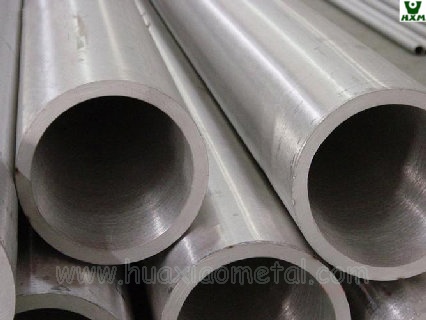
Looking for a reliable seamless piping solution for your project? Contact us today to discuss your specific needs with our experts.
What is a stainless steel seamless tubes? How is it different from a welded pipe?
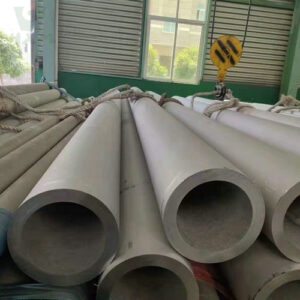
As the name implies, a stainless steel seamless pipe is a steel pipe without any welds. It is extruded from a whole piece of stainless steel billet (solid ingot) through processes such as hot piercing, hot rolling, or cold drawing. This one-piece structure is the source of its excellent performance.
In contrast, a welded steel pipe is made by welding the seams after the steel plate or strip is curled into shape. Although the technology of welded pipes is constantly improving, the welds themselves are always potential weak points.
Core Differences:
- Structural integrity: Seamless pipes are uniform as a whole, while welded pipes have welds.
- Pressure bearing capacity: Seamless pipes can withstand higher pressures and temperatures than welded pipes of the same specifications.
- Corrosion resistance: The inner and outer surfaces of seamless pipes are smooth, there is no risk of intergranular corrosion caused by welds, and the corrosion resistance is more uniform and better.
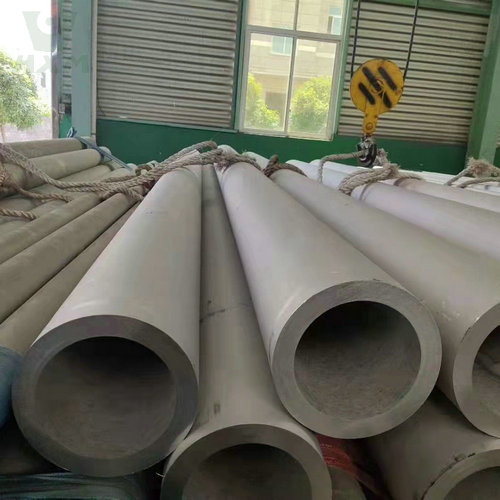
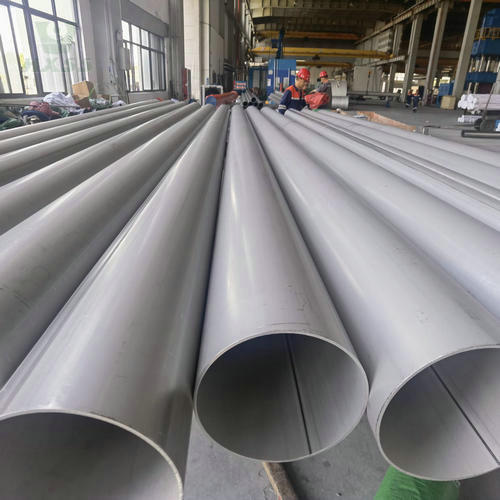
Not sure if seamless or welded pipe is better for your application? Let our engineers help you make the right choice.
Manufacturing Process of Stainless Steel Seamless Tubes
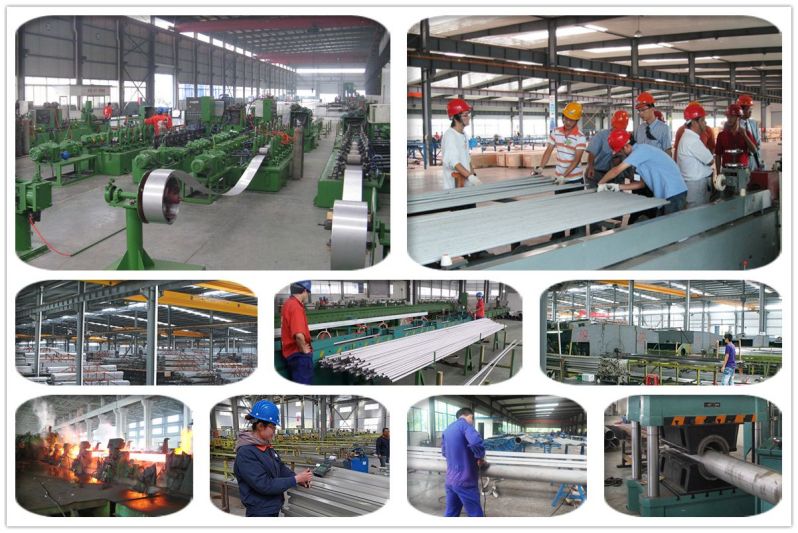
The production of seamless stainless steel pipe follows a rigorous process to ensure durability and performance:
Raw material selection—High-quality stainless steel billets are selected.
Hot extrusion—The billet is heated and perforated to form a hollow tube shell.
Cold drawing—The tube is drawn through a die to precise dimensions.
Heat treatment—Annealing improves ductility and corrosion resistance.
Surface treatment—Pickling, polishing, or passivation enhances corrosion resistance.
Inspection and testing—Ultrasonic testing, hydrostatic testing, and eddy current testing ensure the tubes are defect-free.
This process ensures consistency and reliability for industrial applications.
International Standards & Specifications
Stainless steel seamless tubes must comply with international standards for dimensions, tolerances, and performance.
Common Standards:
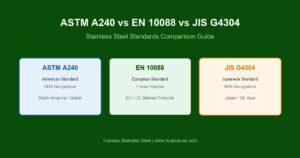
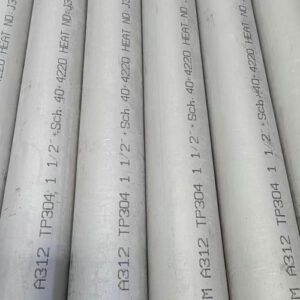
ASTM A213 / A269 / A312 – American standards for heat exchangers, general service, and high-temperature service.
EN 10216 – European standard for seamless tubes under pressure.
DIN 17456 / 17458 – German standards for general and corrosion-resistant tubes.
JIS G3459 – Japanese standard for stainless steel pipes for pressure service.
| Standard | Application | Diameter Range |
|---|---|---|
| ASTM A213 | Heat exchangers, boilers | 6mm – 127mm |
| ASTM A312 | High-temp, corrosive service | 10mm – 400mm |
| EN 10216 | Pressure pipelines | 6mm – 600mm |
| JIS G3459 | Pressure and fluid transport | 10mm – 350mm |
Before purchasing, always confirm with your supplier or manufacturer that the tubes meet the required standard for your project.
Mechanical Properties & Testing
Stainless steel seamless tubes are subjected to rigorous testing to ensure they meet international quality requirements.
Typical Properties (304/316 Grades):
Tensile Strength: 520–750 MPa
Yield Strength: 205–310 MPa
Elongation: ≥ 35%
Hardness: ≤ 90 HRB
Testing Methods:
Non-destructive testing: Ultrasonic, eddy current, hydrostatic test
Corrosion resistance tests: Salt spray, pitting resistance
Dimensional checks: Wall thickness, OD tolerance
This ensures tubes can safely perform under demanding conditions.
Types of Stainless Steel Seamless Tubes
Understanding the types of stainless steel seamless tubes helps you choose the right product for your application:
| Type | Characteristics | Common Applications |
|---|---|---|
| 304 Stainless Steel Tubes | Excellent corrosion resistance, versatile | Food processing, chemical equipment, construction |
| 316 Stainless Steel Tubes | Superior resistance to chlorides and acids | Marine environments, pharmaceuticals, chemical industries |
| 321 Stainless Steel Tubes | Heat-resistant, high strength | Aerospace, heat exchangers |
| 410/420 Stainless Steel Tubes | High hardness, wear resistance | Automotive, mechanical parts |
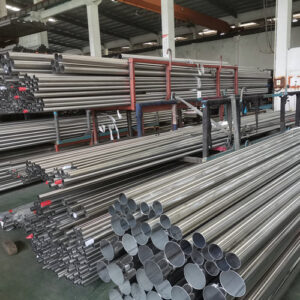
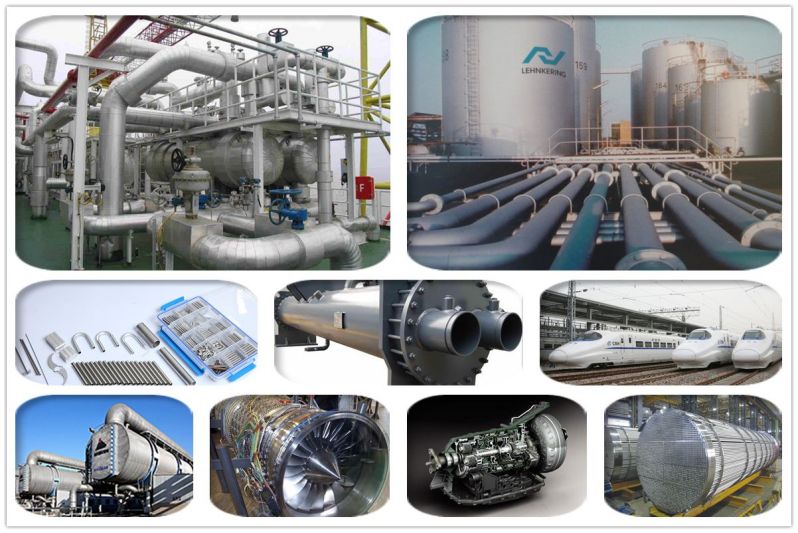
Key Application Areas: Where can you find seamless stainless steel tube?
Seamless stainless steel pipes have become core components in many demanding industries due to their excellent performance.
Oil & Gas: Used in high-pressure, highly corrosive environments in underground pipelines, gathering and transportation pipelines, and refineries.
Chemical & Petrochemical: Transport various corrosive chemicals, used in heat exchangers and reactor pipes.
Power Generation: Including boiler, superheater, and reheater pipes in nuclear and thermal power plants.
Food & Pharmaceutical: Extremely high hygiene requirements, the smooth inner wall of seamless pipes is not easy to breed bacteria, easy to clean and disinfect.
Aerospace & Automotive: Used to manufacture high-precision hydraulic systems, fuel delivery pipelines, and structural parts.
Does your project belong to one of the above key industries? Contact us now to get the best stainless steel seamless pipe grades and specifications for your industry.
How to Select the Right Stainless Steel Seamless Pipe?
1. Understand Your Environment (Corrosion Resistance)
The first step in selection is matching the grade to the service environment. Not all stainless steel is equal:
Mild Environments: For indoor use, architectural trim, or dry atmospheric conditions, Grade 430 is the most cost-effective choice.
Standard Industrial Use: For general food processing or chemical storage, Grade 304 remains the global standard due to its balanced properties.
Highly Corrosive/Marine: In coastal areas or where exposure to chlorides is high, Grade 316L is essential to prevent pitting and crevice corrosion.
2. Temperature and Heat Conductivity Requirements
If your project involves heat transfer or high temperatures, consider the thermal properties:
Heat Exchangers: 430 Stainless Steel offers higher thermal conductivity than the 300 series, making it highly efficient for thermal processing equipment.
Intermittent Heat: Ferritic grades like 430 offer excellent oxidation resistance up to 1500°F (815°C).
3. Pressure Rating and Wall Thickness
As a seamless pipe, the pressure it can handle depends on the outer diameter (OD) and wall thickness (WT). Always verify:
Standard Compliance: Ensure the pipe meets ASTM A268 (for ferritic) or ASTM A312 (for austenitic) to guarantee structural integrity under pressure.
Precision Specs: Huaxiao Metal provides custom wall thicknesses from 0.5mm to 40mm (SCH 5S to SCH XXS) to meet specific high-pressure engineering blueprints.
4. Magnetic vs. Non-Magnetic Needs
This is a common point of confusion for buyers:
Magnetic (Ferritic): Grade 430 is naturally magnetic, which is often required for specific automotive and appliance sensors.
Non-Magnetic (Austenitic): Grade 304 and 316 are non-magnetic in the annealed condition, ideal for sensitive electronic or medical equipment.
5. Budget Optimization
Maximize your ROI by choosing the right alloy:
Nickel-Free Advantage: Since 430 stainless steel contains no nickel, its price is more stable and significantly lower than 304 or 316.
Total Life-Cycle Cost: Sometimes choosing a higher-grade material initially (like 316L) saves more money in the long run by reducing maintenance and replacement costs.
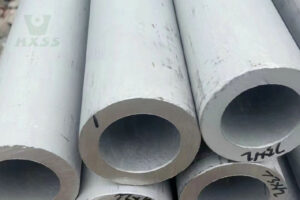
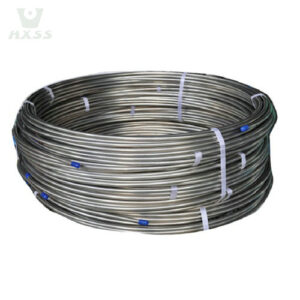
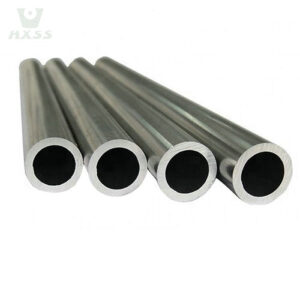
With its unmatched strength, durability, and reliability, stainless steel seamless pipe is a wise investment to ensure the safe and efficient operation of your critical industrial applications. It is more than just a pipe; it is a commitment to the integrity of your entire system.
Is your project facing challenges of high pressure, high temperature, or corrosion?
Don’t compromise when it matters. Contact Huaxiao Metal’s expert team today and let us provide you with a tailor-made stainless steel seamless pipe solution and a competitive quote.
Before you send an RFQ (Request for Quote), make sure you have defined:
- Grade: (e.g., 430, 304, 316L)
- Standard: (e.g., ASTM A268, A312)
- Dimensions: (OD, Wall Thickness, and Length)
- Surface Finish: (e.g., Pickled, Polished 400#, Mirror)
- Application: Briefly describing the use case allows our engineers to provide better material advice.
Why choose Huaxiao Metal as your Supplier?
At Huaxiao Metal, we don’t just sell products, we provide a complete and reliable pipeline solution.
Quality Assurance: We strictly follow international standards, and every stainless steel seamless pipe shipped out of the factory undergoes rigorous quality inspection to ensure excellent performance.
Expertise: Our team of experts has rich industry experience and can recommend the most suitable materials and specifications based on your specific application needs.
Stock and Customization: We have a large amount of regular inventory and provide flexible customization services to meet your special project needs.
Global Supply: No matter where your project is, we can provide efficient and reliable global logistics services.
FAQ About Stainless Steel Seamless Tubes
What is the main difference between seamless and welded stainless steel pipes?
Seamless pipes are manufactured without any weld seams, providing 20% higher working pressure ratings and superior reliability in high-temperature or high-vacuum environments. They are the preferred choice for critical engineering projects where structural integrity is paramount.
What is the standard size range for stainless steel seamless tubes?
Standard sizes range from 6mm OD to 400mm OD, with wall thickness from 0.5mm to 40mm, depending on application.
Can stainless steel seamless tubes be welded?
Yes, although welding is less common, specialized welding techniques ensure joint strength while maintaining corrosion resistance.
How do I maintain stainless steel seamless tubes?
Regular cleaning with mild detergents and avoiding harsh chemicals will prolong lifespan and maintain appearance.
Are seamless tubes more expensive than welded tubes?
Generally, yes, but the durability, strength, and reliability justify the cost for critical applications.
How do I choose between 304 and 430 stainless steel pipes?
Use 304 SS for highly corrosive or marine environments; 430 SS is suitable for moderate corrosion and cost-sensitive applications.
How can I verify the quality of the pipes I receive?
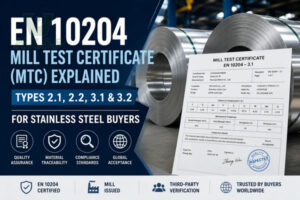
Always check the Material Test Certificate (MTC) for compliance with standards like ASTM A268 or A312. At Huaxiao Metal, we perform 100% PMI testing and hydrostatic testing to ensure every pipe meets the required specifications.
How do I choose between 300 series and 400 series seamless pipes?
It depends on your corrosion and budget requirements. 300 series (like 304/316L) are non-magnetic with superior corrosion resistance for chemical and marine use. 400 series (like 430) are magnetic, offer higher thermal conductivity, and are significantly more cost-effective for thermal and atmospheric applications.
Which stainless steel grade is best for heat exchangers?
Grade 430 (Ferritic) is often preferred for heat exchangers because its thermal conductivity is higher than Grade 304. Additionally, it provides excellent oxidation resistance and lower thermal expansion, ensuring stability in thermal cycling.
Does Huaxiao Metal provide custom specifications for seamless tubing?
es. We offer fully customizable outside diameters (6mm – 600mm) and wall thicknesses (0.5mm – 40mm) to meet international standards such as ASTM A312, A268, and EN 10216.
What certifications should I look for when sourcing seamless pipes?
Always verify that the supplier provides an original MTC (Material Test Certificate) according to EN 10204 3.1. At Huaxiao Metal, all our seamless pipes undergo PMI testing and Hydrostatic testing to ensure 100% compliance with your project specifications.